What is Purgatory in the Bible? Meaning and Verses

Written by Marko Marina, Ph.D.
Author | Historian
Author | Historian | BE Contributor
Verified! See our guidelines
Verified! See our editorial guidelines
Date written: September 9th, 2026
Disclaimer: The views and opinions expressed in this article belong to the author and do not necessarily match my own. - Dr. Bart D. Ehrman
What is Purgatory in the Bible? Whenever someone asks me that question, I find myself thinking back to my teenage years, when I first read Dante Alighieri’s Divine Comedy, which includes the famous Dante’s Inferno.
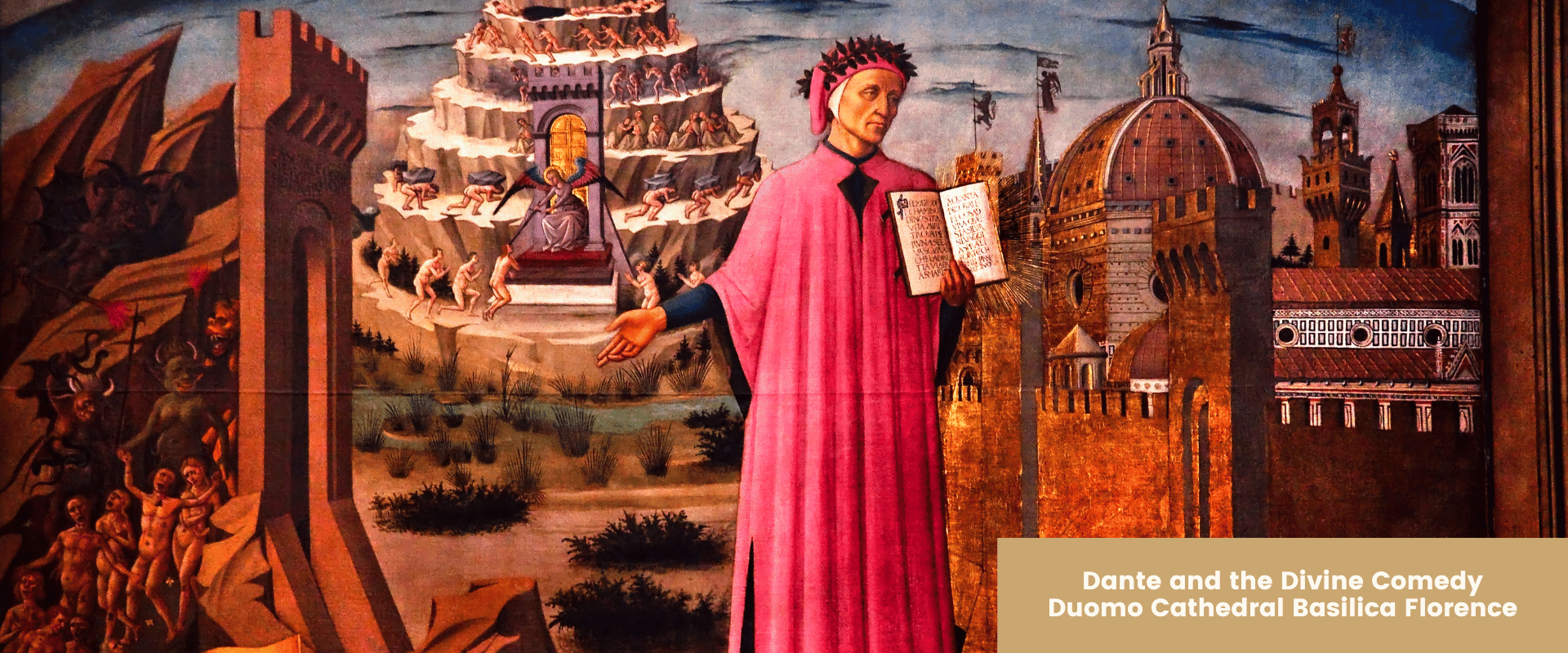
Dante depicts Purgatory as an enormous terraced mountain rising from an island in the Southern Hemisphere. According to his poetic geography, the mountain was formed when the earth recoiled from Lucifer’s fall from Heaven.
Souls climb its successive levels, gradually being cleansed of the sins that still burden them before they are finally prepared to enter Paradise. The image was so vivid that it remained with me for years.
Only later, after considerably more reading and study, did I realize that Dante’s carefully structured “middle realm” was very different from anything explicitly described in the books of the Bible.
Years afterward, while completing my master’s degree in history, I became increasingly interested in the history of concepts. Namely, in the complex processes through which ideas emerge, change, and acquire meanings that earlier generations might not have recognized.
Religious doctrines that appear timeless often have long and complicated histories. They rarely descend fully formed from the sky, nor can they always be traced to a single text, thinker, or historical moment. Purgatory is one such idea.
Although many Christians today associate it naturally with the biblical afterlife, the doctrine didn’t appear in its mature form when the biblical books were written.
It developed gradually as Christians reflected on sin, forgiveness, divine judgment, prayer for the dead, and the possibility of purification after death.
In this article, therefore, we’ll distinguish between the later Catholic doctrine of Purgatory and the biblical passages that came to be interpreted in its support.
We’ll first examine what mainstream Catholic theology actually means by Purgatory, since the doctrine is often misunderstood as either a second chance at salvation or simply a temporary version of Hell.
We’ll then trace the historical origins of the concept before turning to the biblical verses most commonly cited in Catholic discussions. The goal is neither to defend nor to dismiss the doctrine, but to understand how it emerged and how its biblical foundations have been interpreted.

What Is Purgatory? The Catholic Perspective
In his book Catholicism: A Journey to the Heart of the Faith, Bishop Robert Barron writes:
(Affiliate Disclaimer: We may earn commissions on products you purchase through this page at no additional cost to you. Thank you for supporting our site!)
I would submit that the doctrines concerning the so-called Last Things – hell, purgatory, and heaven – are simultaneously the most fascinating and most objectionable of all of the beliefs of the Catholic Church. When people want to critique or dismiss Catholic doctrine they will often point to the supposed incompatibility of affirming the existence of an all-good God and the existence of an eternal hell, a place of unending torture. And at least from the time of Marx and Freud, many would point to the doctrine concerning heaven as an indication of, at best, the church’s naïveté and, at worst, its duplicity.


To be honest, having been raised in a Catholic family, I struggled with the Catholic understanding of the afterlife, especially the definition of purgatory.
That struggle became even more acute when I learned about the medieval controversies surrounding indulgences and the notion that the temporal consequences of sin could somehow be reduced through particular religious acts or financial contributions.
Such practices were among the issues sharply criticized by Martin Luther and other Protestant reformers.
But the historical abuse of a doctrine isn’t necessarily identical to its official theological meaning. So, how should we understand the Catholic view of purgatory?
More specifically, why do Catholics believe in purgatory, and what do Catholics (at least according to the normative teaching articulated by the Church’s official authorities) actually claim happens there?
The most authoritative starting point is the Catechism of the Catholic Church. It teaches:
All who die in God’s grace and friendship, but still imperfectly purified, are indeed assured of their eternal salvation; but after death they undergo purification, so as to achieve the holiness necessary to enter the joy of heaven.
Purgatory, in other words, isn’t presented as a second opportunity for those who rejected God during their lives. Nor is it a temporary form of hell from which salvation remains uncertain.
According to Catholic theology, the people undergoing purgation are already assured of their ultimate salvation. What remains incomplete isn’t their reconciliation with God, but their purification from the effects of sin.
This distinction becomes clearer in light of the Catholic division between mortal and venial sins.
Mortal sin is understood as a decisive rupture in one’s relationship with God, while venial sin damages that relationship without destroying it. Yet even forgiven sins may leave enduring effects: harmful habits, disordered desires, and patterns of conduct that have shaped a person’s character.
Barron compares these effects to wounds that require healing or to a will that has been bent in the wrong direction through repeated choices.
From this perspective, purgatory is best understood as a final process of moral and spiritual transformation.
A person may die in friendship with God while still being selfish, resentful, or otherwise unprepared to participate fully in what Catholic theology understands as the perfect life of Heaven.
Purgation is therefore conceived as a necessarily painful “training in the way of love.” In other words, it’s a purification through which the saved become capable of entering God’s presence without the remaining distortions produced by sin.
That, at least, is the doctrine in its developed and normative Catholic form. It’s considerably more nuanced than the popular image of souls serving fixed sentences amid literal flames, but it also raises an important historical question: was this understanding present from the beginning of Christianity?
To answer that, we must look beyond the concise definitions of the Catechism and examine the long, uneven, and often contested process through which the idea of purgatory emerged.
The Origins and the Development of Purgatory
In his book Heaven and Hell, Bart D. Ehrman notes:
The term ‘Purgatory’ itself was not coined until the twelfth century and the idea was not institutionalized as an official part of church teaching until the Second Council of Lyons in 1274. But the basic idea behind it, that some of those who would ultimately be saved would first experience postmortem suffering, goes far back. We find its beginnings in the early centuries of the church.
Similarly, Isabel Moreira, in her study Heaven’s Purge: Purgatory in Late Antiquity, claims:
Medieval writers did not view purgatory as a novelty. For them, the images of purgation that they read about in visions, and the intercessions that mitigated its horrors, must always have existed, and they looked to scriptures and patristic opinion to support that view. They were probably little aware of how much of the theology of purgatory was an imaginative feat of intellectual engineering and how much their own belief in the idea of purgatory served to enlarge and solidify a notion that was only hinted at in the scriptures.
Purgatory, then, is simultaneously a medieval doctrine and an idea with much older Christian roots. That may sound contradictory, but historians frequently encounter beliefs whose individual components existed long before they were combined into a formal theological system.
On the one hand, the officially defined doctrine familiar from later Catholic theology resulted from centuries of debate and was eventually articulated by medieval and early modern councils, including Lyons and Trent.
On the other hand, Christians had long reflected on temporary suffering after death, purification by fire, prayer for the deceased, and the possibility that morally imperfect believers might still be destined for salvation.
The history was neither continuous nor inevitable: early authors didn’t all share the same beliefs, use the same biblical texts, or understand themselves as contributing to a single doctrine.
Purgatory emerged when later Christians gradually assembled these previously distinct ideas into one theological structure.
One reason for this development was the changing Christian understanding of the end times.
Jesus’ earliest followers expected God’s decisive intervention in history to occur soon with the Parousia, but as generations passed and Christians continued to die before the final judgment, new questions became increasingly urgent.
What happened to the dead while they waited for the resurrection? Were heaven and hell the only possibilities? Would a careless but baptized believer receive exactly the same reward as a martyr? And what would happen to the ordinary Christian who died neither exceptionally holy nor defiantly wicked?
The notion of temporary postmortem suffering offered a more graduated account of divine justice. It allowed Christians to maintain that imperfect believers would ultimately be saved while also insisting that their sins still had consequences.
It’s important to emphasize that such ideas weren’t unique to Christianity: Plato and Virgil had already described morally intermediate souls undergoing punishment or purification before reaching a blessed existence.
These Greco-Roman precedents weren’t “purgatory,” but they made temporary corrective suffering after death culturally intelligible.
Early Christian evidence first reveals not a defined purgatorial realm but a growing conviction that the condition of at least some deceased people might be altered.
In the 2nd-century Acts of Thecla, the dead Falconilla asks that Thecla pray for her so that she may enter “the place of the just.”
In the Passion of Perpetua, the imprisoned Perpetua repeatedly prays for her deceased brother Dinocrates after seeing him suffering, thirsty, and unable to reach water. In a later vision, he appears clean, refreshed, and released from his pain.
Neither account describes purgatory in the later Catholic sense: the texts do not say that suffering purified the dead from venial sins, and Dinocrates may not even have been a baptized Christian.
Their historical significance lies instead in their presentation of effective intercession for the dead.
Over time, prayers were joined by almsgiving, fasting, tears, and Eucharistic offerings performed on behalf of the deceased.
Meanwhile, theologians such as Clement of Alexandria and Origen developed the image of a corrective fire that could educate or cleanse the soul.
Origen, in particular, asked what would happen to Christians whose lives contained both virtue and sin and envisioned a postmortem schola animarum, a “school of souls,” in which divine correction continued after death.
In his Commentary on Romans, Origen wrote:
It is my opinion, in fact, that even if someone could escape God’s judgement, he ought not to desire to. For not to come to God’s judgement would mean not to come to correction, and to the restoration of health and to that which heals.
However, his expectation that purification might eventually restore all rational beings to God (salvation of all, even the devil!) went considerably beyond (and ultimately conflicted with) the later Catholic distinction between the saved in purgatory and the eternally damned.
By the 5th century, some Christian writers moved closer to the later doctrine, although their positions remained diverse and tentative.
Tertullian (writing in the 3rd century!) interpreted Jesus’ warning that a debtor wouldn’t leave prison until paying “the last penny” as referring to sinners who had to discharge their offenses before the resurrection.
Augustine occasionally allowed that some believers might experience temporary “purgatorial punishments,” perhaps passing through purifying fire more slowly or quickly according to their earthly attachments.
Even so, Augustine was far from offering a systematic doctrine. He often understood Paul’s fire in 1 Corinthians as a metaphor for suffering in the present life, insisted that repentance and merit had to be acquired before death, and remained cautious about how much the prayers of the living could change the condition of the dead.
The 8th-century monk Bede went further by bringing together several previously separate elements: purifying fire, temporary punishment, the salvation of the elect, and intercession by the living.
In his Homily for Advent, he writes:
But in truth there are some who were preordained to the lot of the elect on account of their good works, but on account of some evils by which they were polluted, went out from the body after death to be severely chastised, and were seized by the flames of the fire of purgatory [Latin: flammis ignis purgatorii]. They are either made clean from the stains of their vices in their long ordeal up until judgement day, or, on the other hand, if they are absolved from their penalties by the petitions, almsgiving, fasting, weeping, and oblation of the saving sacrificial offering by their faithful friends, they may come earlier to the rest of the blessed.
Here we encounter a system recognizably close to later Catholic purgatory: the sufferers belong to the elect, fire purifies them through chastisement, and the actions of faithful Christians can shorten their ordeal.
The historical evidence therefore suggests neither that purgatory appeared fully formed in the earliest Christian communities nor that medieval theologians invented it without precedent.
It developed through the gradual convergence of ideas about the intermediate state, purifying fire, differentiated judgment, prayer for the dead, corrective punishment, and the Eucharistic intercession of the living.
Yet tracing that development doesn’t by itself answer the question of “What is purgatory in the Bible?”
For the doctrine to carry normative authority within Catholic theology, citing Origen, Augustine, or Bede wasn’t enough! It also needed to be grounded in Scripture. Catholic interpreters therefore identified several biblical passages as containing the foundations (or, at least, the “seeds”) of the doctrine. To these passages we now turn.
DID PAUL AND JESUS HAVE THE SAME RELIGION?
Jesus taught a message of repentance to prepare for the Kingdom of God while Paul taught faith in Jesus. Did they agree? Should they be considered the “co-founders” of Christianity?
Where Is Purgatory In the Bible?: Key Verses
The Catechism of the Catholic Church is quite clear: “This teaching [belief in purgatory] is also based on the practice of prayer for the dead, already mentioned in Sacred Scripture.”
For Catholics, then, purgatory isn’t understood merely as a medieval theological innovation. Rather, several biblical passages are read as containing elements that later became part of the doctrine, even though none presents the fully developed Catholic system.
The most frequently cited example is 2 Maccabees 12:38-46.
After soldiers in Judas Maccabeus’ army die while carrying objects associated with idolatry, Judas arranges a collection for a sin offering in Jerusalem. The narrator praises this action, observing that it would have been “superfluous and foolish to pray for the dead” without belief in resurrection, and concludes that atonement was made so that the dead might be delivered from sin.
Catholic interpreters see here evidence that prayer and sacrifice can benefit deceased persons who are not eternally condemned but remain in need of purification.
The passage is particularly important in Catholic theology because 2 Maccabees belongs to the Catholic Old Testament, although it’s not included in most Protestant biblical canons.
A second relevant passage is 1 Corinthians 3:11-15, where Paul compares Christian ministry to construction upon the foundation of Jesus Christ.
The quality of each person’s work will be disclosed on “the Day,” because “the fire will test what sort of work each has done.” A person whose work is burned will “suffer loss,” although that person “will be saved, but only as through fire.”
Catholic theologians have often understood this saved person’s passage through fire as an image of postmortem purification: the individual is not damned, but something imperfect must be burned away before the fullness of salvation is enjoyed.
In his Commentary on 1 Corinthians, Raymond Collins explains:
The image of construction workers dominates Paul’s exhortation. Those whose works withstand the testing by fire will receive a reward, literally their “wages”; those whose works are destroyed by fire will be penalized. Paul does not say that these workers will be destroyed. Their work suffers destruction. The work will not last. The workers will be penalized. They will, nonetheless, be saved (v. 15). Paul does not tell his readers the grounds for this amazing affirmation. Despite the fact that he has used the apocalyptic imagery of a destructive fire in his exhortation the apostle remains convinced that those who belong to God’s holy people (1:2) will be saved.
The passage doesn’t use the term purgatory, and, in its immediate context, Paul is discussing Christian teachers and their work in the Corinthian community.
Nevertheless, the combination of judgment, loss, fire, and eventual salvation made it one of the most influential biblical texts in the later development of purgatorial theology
Two sayings attributed to Jesus have also played an important role.
In Matthew 12:31–32, Jesus declares that blasphemy against the Holy Spirit will not be forgiven “either in this age or in the age to come.”
Some Catholic interpreters have reasoned that if one particular sin cannot be forgiven in the coming age, the wording may imply that other sins can be.
The passage therefore came to be associated with the possibility of postmortem forgiveness or purification, although its primary rhetorical force may simply be to emphasize that the sin in question will never be forgiven.
Similarly, in Matthew 5:25–26, Jesus warns a person to reconcile with an accuser before being handed over to the judge and imprisoned: “you will never get out until you have paid the last penny.”
Tertullian later interpreted this prison eschatologically, arguing that some sinners would have to discharge the consequences of their offenses before the resurrection.
Within Catholic reception, the apparently temporary imprisonment (lasting until the debt is paid) became another possible image of purgatorial punishment.
Whether these passages genuinely point toward purgatory or whether their original historical and literary contexts suggest different interpretations is beyond the scope of this article.
What can be said historically is that Catholic theologians have read them cumulatively, as distinct scriptural elements that, together with some early Church fathers, such as John Chrysostom, support the later doctrine of postmortem purification.
Conclusion
What is purgatory in the Bible? The most historically precise answer is that the Bible contains no fully developed doctrine corresponding to the later Catholic understanding of purgatory.
Instead, Catholic theologians have drawn together several passages concerning prayer for the dead, judgment, purification by fire, forgiveness in the age to come, and the possibility that a person may suffer loss while ultimately being saved.
Over many centuries, these scriptural motifs were interpreted alongside early Christian practices of intercession for the deceased and increasingly elaborate reflections on the fate of morally imperfect believers.
The resulting doctrine was therefore neither explicitly formulated by the biblical authors nor created without earlier precedent: it emerged through a long process in which distinct biblical images, liturgical practices, visionary accounts, and patristic arguments were gradually combined into a coherent theological system.
Whether this later synthesis represents a legitimate development of biblical teaching remains a matter of confessional interpretation. Historically, however, purgatory is best understood as a doctrine rooted in the cumulative reception of Scripture rather than in any single verse that describes it directly.
NOW AVAILABLE!
In The Beginning™ - History, Legend, & Myth in Genesis
In Part One of Bart's new "How Scholars Read the Bible" Series, dive into the stories of the first book of the Bible from a historical perspective.