
What did Jesus Actually Look Like? (Skin, Hair, Clothes, and More!)

Written by Marko Marina, Ph.D.
Author | Historian
Author | Historian | BE Contributor
Verified! See our guidelines
Verified! See our editorial guidelines
Date written: August 4th, 2025
Disclaimer: The views and opinions expressed in this article belong to the author and do not necessarily match my own. - Dr. Bart D. Ehrman
What did Jesus actually look like? I don’t think there’s a Christian in the world who hasn’t wondered about that at some point.
But the question goes far beyond the boundaries of Christian belief. Jesus of Nazareth is arguably the most influential figure in the history of Western civilization. For nearly 2,000 years, people from a wide range of religious, cultural, and even secular backgrounds have imagined what he may have truly looked like.
We’re all familiar with the iconic images: the long, flowing hair, the neatly trimmed beard, the serene expression, often with pale skin and robes that look suspiciously European.
These images have shaped not only Christian art and worship but also the cultural imagination of generations. And yet, none of them come from Jesus’ own time.
So what do we actually know about his appearance? Can the earliest sources, combined with insights from archaeology, ethnology, and anthropology, bring us closer to a historically grounded portrait of the man behind the movement?
In this article, we’ll explore what scholars have uncovered about Jesus’ physical traits, clothing, and cultural context. We’ll also tackle some of the most commonly asked questions along the way.
Before we dive into the next section, take a moment to check out Bart D. Ehrman’s course Jesus: The Secret Messiah. In this 8-part series, Dr. Ehrman takes you on a fascinating journey through the earliest Gospel in the New Testament, offering fresh insights into how Jesus was portrayed, understood, and misunderstood.

What Did Jesus Actually Look Like? Physical Appearance
The New Testament contains no physical description of Jesus. This absence isn’t incidental. Rather, it reflects a broader tendency in ancient biographical literature, where physical traits were typically recorded only if they were exceptional.
(Affiliate Disclaimer: We may earn commissions on products you purchase through this page at no additional cost to you. Thank you for supporting our site!)
Joan E. Taylor, in her book What Did Jesus Look Like, has argued that the lack of any description suggests Jesus was physically ordinary. In antiquity, people often noted striking features: unusual height, beauty, deformity, or divine radiance.
The silence of the Gospels likely means that, to contemporaries, there was nothing outwardly remarkable about Jesus’ appearance. He looked like any other rural Galilean Jew of his time.
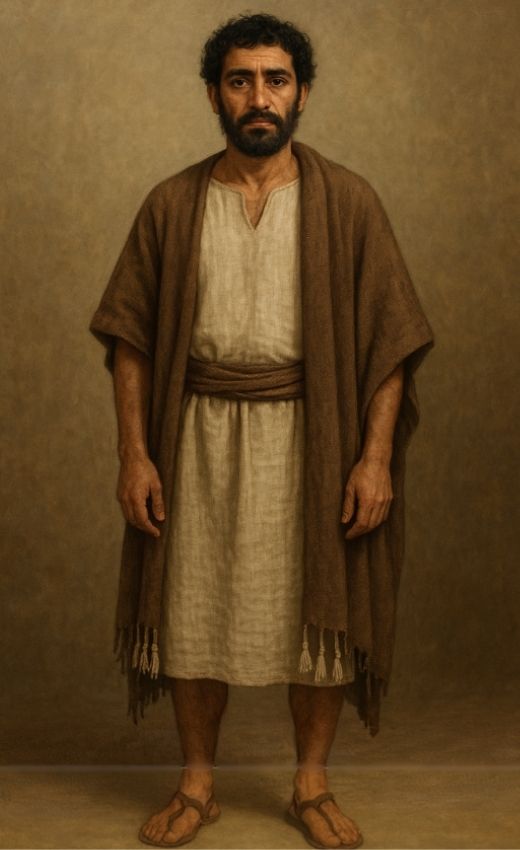
This historically grounded depiction of Jesus of Nazareth portrays him as a 1st-century Galilean Jew, with olive-toned skin, short curly hair, a cropped beard, and simple clothing—a knee-length tunic, belted waist, woolen outer cloak with tassels, and leather sandals based on archaeological finds. You may use, share, or reproduce this image with attribution and a link to this article.
Still, historical inquiry (drawing on archaeology, textual evidence, and bioanthropology) can give us some broad insights into the issue of what Jesus most likely looked like. These are, of course, only educational guesses or deductions based on what we generally know about the appearance of people living in 1st-century Palestine.
However, people have uncovered more details during excavations and skeletal analyses in Judea and Galilee. Due to sites such as Qumran and Givat ha-Mivtar, we now know that the average adult male in Jesus’ region stood around 5 feet 5 inches (166 cm), with a lean build due to a modest diet and a physically demanding lifestyle.
Referring to the so-called “French Qumran Collection,” Susan Guise Sheridan and Jaime Ullinger note:
The estimate for each individual is graphically displayed, illustrating the high degree of consistency of height within each sex. The stature of the Qumran males in this collection ranges from 159-177 cm, and from 152-163 cm for females. Variation within each group is low for both males (CV=3.6; n=11) and females (CV=2.1; n=10).


What about Jesus’ skin tone? It would have been in the range of olive to darker brown, consistent with the Semitic populations of first-century Palestine. This is supported by documentary sources from Egypt, such as Ptolemaic-era papyri (2nd century B.C.E.), which describe Judeans as having “honey-colored skin.”
Jesus almost certainly had black hair and brown eyes, in keeping with the dominant genetic traits of the region. His hair would probably have been short and curly or frizzy. Long hair on men was rare and culturally frowned upon outside of special vows, such as the Nazirite vow (which Jesus, as far as we know, didn’t take).
A short, cropped beard was likely. Jewish men of the time were commonly bearded, and facial hair was a sign of adult male identity, though elaborate grooming was not the norm for rural laborers or ascetics.
Given the Gospel references to his homelessness and rejection of wealth and status, it’s plausible that the real depiction of Jesus appeared unkempt or rough to many who encountered him. Some ancient sources hostile to Christianity (such as Celsus) claimed Jesus was dirty, shamefully dressed, or socially marginal.
While these comments are, first and foremost, polemical, they may reflect how a wandering apocalyptic preacher was perceived by those who never followed him.
So, what did Jesus really look like? He was likely short by modern standards, lean, with sun-baked skin, dark eyes, short dark hair, and a beard. To put it bluntly, he was a typical Semitic man of rural Galilee. As much as many people today would think otherwise, Jesus wouldn’t have stood out in a crowd.
The serene, light-skinned figure in many Western paintings owes more to centuries of artistic imagination than to historical memory. The real Jesus, grounded in time and place, was very much a man of his world.
join bart ehrman's new conference!
New Insights into the Hebrew Bible
March 20-22 | 13 Bible Scholars | Early-Bird Pricing
Inaugural conference will focus on the book of Genesis
What Did Jesus Actually Look Like? FAQ – Just for You!
Before we move on to Jesus’ clothing, it’s wise to pause and address some of the most popular (and sometimes peculiar) questions about his physical appearance. Let’s call this the “What Did Jesus Actually Look Like?” FAQ — just for you!
Think of it as clearing the air before we dive into 1st-century Galilean fashion. And yes, scholars are allowed to have a little fun while keeping things accurate.
Did Jesus Have Long Hair?
Probably not. Long hair on men was generally frowned upon in Jewish and Greco-Roman culture unless one had taken a Nazirite vow, which Jesus probably didn’t. Apostle Paul, writing just a couple decades after Jesus’ death, even argues in 1 Corinthians 11:14 that long hair is dishonorable for a man, suggesting that short hair was the norm.
Did Jesus Have Blue Eyes?
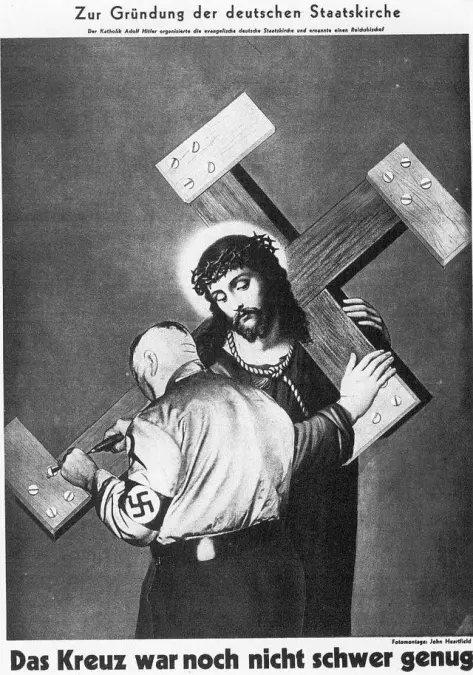
No. The idea of a blue-eyed Jesus is a later myth, popularized through Western art, and (unfortunately) taken to extremes in some 20th-century ideologies. Nazi propaganda, for instance, promoted a racially “Aryan” Jesus with fair skin, blond hair, and blue eyes.
However, there is absolutely no historical or archaeological support for this. Jesus was a Middle-Eastern Jew! His eyes would have been brown, like nearly everyone else in the region at that time.
Was Jesus White?
No. The concept of “whiteness” as used in modern racial categories doesn’t apply to the ancient world. As Bart D. Ehrman explains (although in a different context) in his blog post:
The idea and reality of anti-Semitism are modern, and are based on a modern sense of ’race’ as these were developed by the anthropologists of the 19th century.
Jesus was a Galilean Jew with olive or darker-toned skin, typical of Semitic populations in first-century Palestine. He would not have resembled the pale-skinned figures often seen in European religious art.
Did Jesus Really Look Like the Pictures in Church?
Not at all. The familiar image of Jesus (flowing hair, pale skin, European features) was developed centuries later in Byzantine and Renaissance art. These portrayals were shaped more by the cultures that created them than by historical memory.
How did this particular type of Jesus’ appearance become so popular? Taylor provides an answer:
Over the centuries in European art it was common to depict Jesus in line with the models available in the artists’ communities: a Dutch artist therefore portrayed a Dutch Jesus, an Italian one presented an Italian. However, given European imperialism and colonization, this European representation of Jesus became the normative type worldwide. Missionaries from Europe carried with them the pictures of Jesus they knew and loved.
Was Jesus Handsome?
We simply don’t know. Some early Christians (e.g., Justin Martyr) interpreted Isaiah 53 to mean that Jesus was unattractive, even disfigured, but that was a theological reading, not a historical memory. In reality, he was likely average in appearance, neither notably handsome nor particularly ugly. In other words, just another face in the Galilean crowd.
Did You Know?
The Disturbing Nazi Reinvention of Jesus’ Image
During the Nazi era, propaganda reshaped Jesus into a symbol of Aryan identity. Groups like the German Christians (Deutsche Christen) portrayed Jesus as a blond-haired, blue-eyed warrior who opposed Judaism and embodied so-called “Aryan” virtues.
They rejected Jesus’ Jewishness and even published images of him as a racially pure German, often muscular, idealized, and entirely disconnected from historical fact.
One striking example is the Institute for the Study and Eradication of Jewish Influence on German Church Life, which produced a de-Judaized New Testament and published artwork showing Jesus in explicitly Nordic terms. These depictions were part of an effort to align Christianity with Nazi racial ideology and anti-Semitism, severing Jesus from his Jewish roots.
In his book The Aryan Jesus, Susannah Heschel has documented this ideological manipulation in depth, showing how dangerous and far-reaching the rewriting of religious imagery can become when tied to political agendas.
So, while the details of Jesus’ physical features may remain elusive, one thing is clear: He looked like an ordinary man of his time. No halo, no glowing robes, and certainly no polished Renaissance styling. But how did he dress? That’s a question we can answer with far more confidence.
What Did Jesus Actually Look Like? Clothing and Style
In the contemporary world that often revolves around fashion and clothes, digging into the ancient past is like stepping into a foreign country — one with different values, materials, and cultural codes.
But if we’re seriously asking the question, “What did Jesus really look like?”, we must also examine what he wore.
Remember, clothing is never neutral. It reflects social identity, economic standing, religious observance, and cultural belonging. In Jesus’ case, his garments not only placed him within a specific time and place (1st-century Galilee under Roman rule) but also told others something about how he lived, what he valued, and how he wished for others to perceive him.
The basic male outfit in 1st-century Palestine consisted of two primary garments: An inner tunic (chitōn) and an outer cloak (himation), along with a belt (zōnē), sandals, and occasionally a head covering.
Taylor emphasizes that Jesus’ clothing would have been simple, functional, and modest, just like his teachings. The tunic was a knee-length woolen or linen garment worn directly against the skin, usually undyed or in natural colors such as off-white or light brown.
It would have been cinched with a belt, allowing for movement and modesty. In other words, Jesus’ tunic was probably no different from that of other rural Galilean men: well-worn but not ragged, humble but intact.
Over this tunic, Jesus would have worn a himation, a large rectangular cloak draped over the shoulders and body, especially when outdoors or teaching in public. This cloak served both as protection from the elements and as a visible sign of Jewish identity.
The Gospels make several references to this outer garment. For instance, the woman who touched the “fringe” (Greek: kraspedon) of Jesus’ cloak in Mark 5:27-30 and Matthew 9:20. This fringe was possibly a set of tzitzit, or ritual tassels, commanded in Numbers 15:37-41 and Deuteronomy 22:12.
Jewish men were to wear these tassels at the corners of their garments, and the Gospel stories strongly suggest that Jesus followed this practice. In other words, his clothing was not only practical but also visibly Torah-observant.
His footwear would have consisted of leather sandals, similar to those found in archaeological excavations at sites such as Masada and the Cave of Letters. These sandals typically had leather soles fastened by straps, allowing ventilation in the arid climate.
There is no evidence that Jesus wore closed shoes, which were rare and usually associated with wealthier individuals.
As for headwear, there is little solid evidence that Jesus wore anything distinctive. Contrary to popular imagination, the modern kippah (skullcap) was not yet in use in the 1st century. Taylor notes that some men may have worn cloths or veils on their heads for sun protection, but this wasn’t standardized or religiously required.
Nor is there any indication that Jesus wore a tallit in the modern sense. While later Jewish tradition formalized the tallit as a prayer shawl, in Jesus’ time it’s more likely that his outer cloak, with its ritual fringes, fulfilled a similar function.
Importantly, Jesus didn’t dress as a “rabbi” in any formal sense, since rabbinic ordination and distinctive rabbinic garments hadn’t yet developed. After all, the rabbinic Judaism emerged only after the two devastating wars against the Roman state in 66 and 132 C.E.
Furthermore, Jesus’ clothing didn’t set him apart as elite, priestly, or wealthy. On the contrary, it likely helped him blend in with the crowds of laborers, fishermen, and smallholders who made up much of Galilee’s population.

The Appearance of Jesus: FAQs About Cultural and Religious Considerations
Understanding Jesus’ clothing requires not only knowledge of first-century textile practices but also a grasp of the religious and cultural context of Second Temple Judaism. In this period, dress wasn’t just a matter of function or social status. Rather, it was a visible expression of identity, piety, and community norms.
Did Jesus Wear Tefillin?
While tefillin were certainly in use by the 1st century (as attested by finds at Qumran), there is no evidence in the Gospels suggesting that Jesus wore them, nor are there any references to them in stories about his prayer practices.
A tefillin was a small leather box containing passages of Scripture, traditionally bound to the arm and forehead during prayer in observance of Deuteronomy 6:8 and Exodus 13:9.
Given Jesus' public presence in synagogues and his disputes with Pharisees (who did wear tefillin) it’s indicative that such items are never mentioned.
Did Jesus Wear a Prayer Shawl?
In its modern form, the prayer shawl, or tallit developed only centuries after Jesus’ lifetime. However, the fringes themselves were already a Torah requirement, and Jesus almost certainly wore a garment bearing them. As noted earlier, the Gospels mention a woman touching “the fringe of his cloak” (Matt. 9:20), likely a reference to tzitzit.
But this design detail would have been integrated into his everyday outer garment, not a specialized ritual shawl. In Jesus' context, there was no separate liturgical garment. In other words, everyday clothing could carry religious significance.
Was Jesus Dressed Differently Due to His Role as a Teacher or Rabbi?
Many people also wonder whether Jesus dressed differently because he was a “rabbi.” The short answer is no, but the fuller explanation requires a historical distinction.
Rabbinic Judaism, with its codified teachings, titles, and customs (including distinctive dress associated with scholarly or legal authority) didn’t yet exist during Jesus’ lifetime.
As Rivka Ulmer explains:
Classical rabbinic Judaism flourished from the 1st century CE to the closure of the Babylonian Talmud, c. 600 CE, in Babylonia… The first stage of formative rabbinic Judaism is represented by the Mishnah, a law code that came to closure c. 200 CE, after the destruction of the Second Temple.
In Jesus’ day, “rabbi” was an honorific title, not an institutional office, and it didn’t imply special robes, hats, or visual status markers. This means that Jesus’ clothing, while certainly reflective of Jewish religious norms, didn’t set him apart visually from his disciples or other pious laymen.
And so, when we ask what Jesus actually looked like, we are looking not for a figure in ornate prayer garb or Pharisaic vestments, but for a man whose religious identity was expressed through simplicity, not spectacle.
Did Jesus Have Particular Garments for Special Occasions?
There’s no evidence in the Gospels that Jesus owned or wore special garments for holidays or ritual occasions. His teachings consistently emphasized internal piety over external display (e.g., Matthew 6:1-18), and his lifestyle suggests a commitment to simplicity and detachment from status symbols.
That said, like other observant Jews of his time, Jesus would have participated in festivals such as Passover or Sukkot. During these times, people might wear cleaner or better-maintained garments, especially when traveling to Jerusalem for pilgrimage.
What Are the Differences Between Galilean vs. Jerusalemite Dress Codes?
In the 1st century, there were indeed subtle distinctions in clothing between different regions of Judea and Galilee, often related to economic status, cultural influences, and proximity to urban centers.
Galilean dress tended to be simpler and more practical, reflecting the rural, agrarian setting of the region. The fabrics used were often coarser, and dyes or decorations were rare among the lower classes.
By contrast, in Jerusalem (the political and religious heart of the region) clothing could reflect greater affluence and diversity. Wealthier inhabitants, including priests and members of the elite, might wear more finely woven garments, sometimes dyed or embroidered.
Moreover, we should remember that Jerusalem was a hub for pilgrimage and trade so its population was probably more “exposed” to foreign fashions (e.g., Roman, Nabatean, or Hellenistic styles), which may have influenced how some locals dressed.
Conclusion
In the end, while we may never know every detail of Jesus’ physical features, the historical evidence allows us to make well-informed, responsible deductions. Jesus of Nazareth was not the serene, fair-skinned figure of medieval and modern iconography.
He was a Galilean Jew of modest means: Short by modern standards, dark-haired, sun-weathered, and clothed in the simple garments of his time.
So, what did Jesus actually look like? He likely resembled the everyday people around him: Those he taught, healed, and walked beside.
There was nothing outwardly majestic or ethereal in his appearance, and that may be precisely the point. But to pursue that point would mean entering into the realm of theology and Christian tradition. We’ll leave that for another article!
join bart ehrman's new conference!
New Insights into the Hebrew Bible
March 20-22 | 13 Bible Scholars | Early-Bird Pricing
Inaugural conference will focus on the book of Genesis