
What is the Testimony of Truth? Summary and Details

Written by Joshua Schachterle, Ph.D
Author | Professor | Scholar
Author | Professor | BE Contributor
Verified! See our editorial guidelines
Verified! See our guidelines
Date written: July 12th, 2026
Disclaimer: The views and opinions expressed in this article belong to the author and do not necessarily match my own. - Dr. Bart D. Ehrman
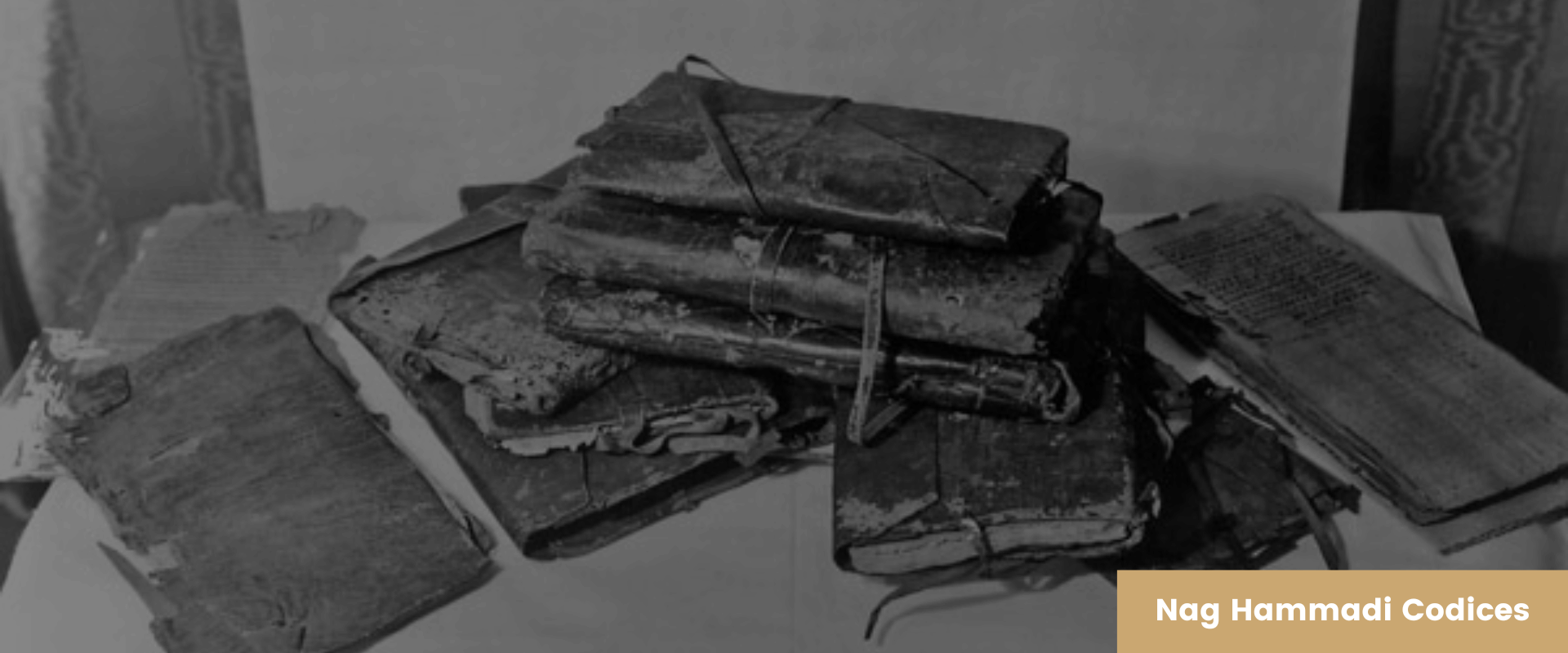
The Testimony of Truth is one of the more unusual writings discovered among the famous Nag Hammadi Library in Egypt in 1945, offering a glimpse into the diversity of beliefs among early Christian groups. It presents radically different interpretations of familiar biblical stories and the requirements for salvation.
In this article, I'll explain what the Testimony of Truth says, how it compares with other writings from Nag Hammadi, and why it was ultimately excluded from the New Testament canon.
What Is the Testimony of Truth?
The Testimony of Truth is an early Christian text found in a collection of Gnostic gospels, apocalypses, and dialogues known as the Nag Hammadi Library in Egypt (click this link for a more complete description of the Nag Hammadi Library).
This version is from the 4th century CE, but the original text was written much earlier. Like many of the texts found at Nag Hammadi, it is generally classified as a Gnostic text, but we have to remember that modern scholars have found that category problematic. It is far too broad to cover all the diverse groups older generations of scholars placed within it. For more on that topic, see our other article on Gnosticism.
Birger Pearson, one of the original English translators of the Nag Hammadi Library, notes that the original title of the Testimony of Truth is undetermined. Whoever edited the manuscript version from Nag Hammadi seems to have fashioned the title based on phrases used repeatedly in the text. Birger also notes that although the Testimony of Truth from Nag Hammadi is written in Coptic—the last form of the ancient Egyptian language—the original was almost certainly written in Greek. In a general sense, the book can be classified as a homily, a kind of religious text meant to encourage its hearers/readers. As such, the author urges his audience to acknowledge the spiritual truths he explains and to renounce the physical world (a common Gnostic trope, as we’ll see).
Unfortunately, though, while the opening section of the document is well-preserved, the entire rest of the text is missing words, and even whole pages, including the last page, due to manuscript damage. In fact, Pamela Reaves writes that about 45% of the text is either missing or damaged, often leaving translators to speculate about the missing content.
Summary of the Testimony of Truth
The beginning of the text sets out its purpose and its audience:
I will speak to those who know to hear not with the ears of the body but with the ears of the mind. For many have sought after the truth and have not been able to find it; because there has taken hold of them the old leaven of the Pharisees and the scribes of the Law. And the leaven is the errant desire of the angels and the demons and the stars. As for the Pharisees and the scribes, it is they who belong to the archons who have authority over them.


While the two opening sentences may sound like ideas that could be found in the New Testament —arguments against Christians following the requirements of the Torah and the Pharisees—the second part invokes divine beings, both good and evil, including beings called “archons” (“rulers” in Greek). These archons, in much of Gnostic literature, are evil spirits that keep humanity trapped in physical bodies. Since Gnostics generally believed that the material world was created by the Demiurge, an evil false god, they strove to escape the material realm. Note, then, that according to the text, the Pharisees and scribes “belong to the archons.”
According to the text, following the dictates of Jewish Law will not provide salvation, “For no one who is under the Law will be able to look up to the truth." Furthermore, since the Pharisees are said to be under the authority of the archons, those who follow their teachings, though they may want salvation, will instead be enslaved to "… passion, which is a delight to them,” and which “constrains the souls of those who are begotten."
Jesus, however, often called the Son of Man in the Testimony of Truth, was able to overcome the passions since he “came forth from Imperishability" and "those who have known Imperishability… have been able to struggle against passions." In other words, Jesus came from divine infinity, and was therefore not trapped by the material world.
Next, we see an interesting argument against those who willingly become martyrs for the sake of Christ. This is strange since martyrdom was often understood in early Christianity to be the mark of a true Christian, which would only make the church continue to grow (as early church father Tertullian put it, “The blood of Christians is seed.”). The Testimony, however, says that those who believe they attain salvation by being martyrs are mistaken.
Like many Gnostics, the author of the Testimony believes that the only true way to salvation is through secret knowledge (Greek: gnosis). He goes on to write "Do not expect, therefore, the carnal resurrection, which is destruction." Why would he equate bodily resurrection with destruction? Because, again, the material world is evil. Why would anyone want to return to a body after their souls are free from them?
To illustrate these ideas, the Testimony of Truth then describes the path of one who correctly rejects the physical world and thus attains divine knowledge: "He bore witness to the truth [...] the power, and he went into Imperishability." This is the author’s vision of what salvation is because “when man knows himself and God who is over the truth, he will be saved, and he will be crowned with the crown unfading."
Additionally, the text calls the God of the Old Testament, and particularly Genesis, evil and jealous. But perhaps more startling is the text’s revelation of the identity of the serpent in the Garden of Eden, often portrayed as Satan in later Christian interpretations. The author begins by invoking the story of the brass serpent from Numbers 21:6–9:
Then the Lord sent poisonous serpents among the people, and they bit the people, so that many Israelites died. The people came to Moses and said, “We have sinned by speaking against the Lord and against you; pray to the Lord to take away the serpents from us.” So Moses prayed for the people. And the Lord said to Moses, “Make a poisonous serpent, and set it on a pole, and everyone who is bitten shall look at it and live.” So Moses made a serpent of bronze and put it upon a pole, and whenever a serpent bit someone, that person would look at the serpent of bronze and live.
Since Gnostic texts claim that only divine knowledge is saving, the text goes on to say that the serpent who instructed (not deceived) Adam and Eve was wise, trying to give them the divine knowledge they needed to be saved. While the original Hebrew describes the serpent as “cunning,” the Greek Old Testament, known as the Septuagint, calls the serpent pronimotatos, meaning “wise.” As the serpent says in Genesis 3:5, “God knows that when you eat of [the tree] your eyes will be opened, and you will be like God.” Remember also that this “God,” according to the Testimony of Truth, is the evil creator of the physical world.
Referring back to the passage from Numbers, the Testimony of Truth then says “’for the one who will gaze upon this bronze serpent, none will destroy him, and the one who will believe in this bronze serpent will be saved.’ For this is Christ; those who believed in him have received life. Those who did not believe will die.”
The later more fragmentary sections of the text discuss different Gnostic sects and their leaders, including Valentinus, Basilides, and Simon Magus. In fact, the Testimony of Truth is actually the only text in the Nag Hammadi Library to do this. Interestingly, the author condemns these other Gnostic leaders and their disciples as heretics who follow the archons.
The final section of the Testimony speaks about finding the true knowledge of “the Father of Truth” after which the seeker “… has ceased seeking, having found. And when he found he became silent." He says again that this will only come about by rejecting the material world. One of the last complete passages puts forward a novel interpretation of David and Solomon:
Others have demons dwelling with them, as did David the king. He is the one who laid the foundation of Jerusalem; and his son Solomon, whom he begat in adultery, is the one who built Jerusalem by means of the demons, because he received power.

Testimony of Truth vs. Other Gnostic Texts
As I noted above, the Testimony of Truth is usually called a Gnostic text, and there are certainly many similarities between it and other Gnostic texts. One of those shared Gnostic themes is a reinterpretation of the creation and fall narrated in Genesis. Like other Gnostic texts, such as the Hypostasis of the Archons, the Testimony of Truth turns the traditional creation story on its head by viewing the serpent as a benevolent wisdom teacher, while portraying the creator deity as a jealous, tyrannical figure who tries to keep humanity trapped in ignorance on the physical plane.
Speaking of the physical realm, another common theme between the Testimony of Truth and other Gnostic texts is the rejection of the material world. The Testimony of Truth rails against the passions of the soul, such as lust and gluttony, encouraging radical asceticism, denouncing marriage and procreation, and viewing the material body as a prison for the soul.
Finally, the text provides a reinterpretation of Christ, as do many other Gnostic texts. It even denies the bodily resurrection of Jesus, emphasizing instead a bodiless, spiritual understanding of salvation, according to Kimberley Fowler.
A couple of significant differences do exist, however, between the Testimony of Truth and other Gnostic texts. For instance, the text reinterprets the serpent not as an evil tempter, but rather as a compassionate teacher attempting to pass divine knowledge on to Adam and Eve. This is not the only such interpretation of the serpent in Gnostic literature, but the Testimony of Truth is unique in identifying the bronze serpent of Moses with Christ.
In addition, Fowler notes that while many Gnostic texts debated how the flesh should be dealt with, the Testimony of Truth sternly condemned marriage and having children. It is not the only Gnostic text to do so, but it is one of only a handful that do. Specifically, it argues that procreation binds the soul to the material realm. Only celibacy, therefore, can help the soul achieve spiritual purity.
Why Isn’t the Testimony of Truth in the New Testament Canon?
One reason the Testimony of Truth was left out of the New Testament is that it was written much later than any of the texts ultimately included in the canon (late 2nd to early 3rd century CE), all of which were likely written by the early 2nd century. The canonical book of 2 Peter, for instance, is estimated to have been written between 110 and 130 CE. By the time the Testimony of Truth was written, the boundaries of the NT canon, while certainly not entirely fixed, were beginning to be established.
Perhaps more importantly, the Testimony of Truth championed ideas that many early church leaders condemned as heretical. Most of these ideas can be generally described as Gnostic: that the God of the Old Testament was an evil creator, that the material world itself was evil, that marriage and procreation should be condemned as part of the material world, that salvation came only through secret, mystical knowledge rather than faith in Christ's physical death and resurrection. These ideas differed greatly from the messages in the books eventually included in the canon.
In addition, the book lacked any reference to apostolic authority, an important claim for all the books of the New Testament, and there is no evidence of its widespread liturgical use within churches at all.
Conclusion
The Testimony of Truth is one of many early Christian texts discovered in the Nag Hammadi Library. It can be broadly classified as Gnostic, along with many others in the collection. Unfortunately, there are words, and even whole pages, missing from it due to manuscript damage.
From the perspective of 2,000 years of Christian theology, the Testimony of Truth puts forth some unusual ideas, to say the least. It says that the serpent from Genesis 3 was actually a wise revealer attempting to enlighten Adam and Eve who were under the control of an evil creator god. It also says that Solomon built Jerusalem with the help of demons, and thus reflects strong polemics against Jewish scripture and its traditional interpretation.
These ideas and others set the text apart from all those in the New Testament, eventually causing its rejection and condemnation by orthodox Christian authorities. Perhaps this is why it was hidden away for centuries in Egypt. However, the fact that it was hidden rather than destroyed indicates that at least some early Christians valued it.