Prosperity Gospel: Meaning, Verses, & List of Prosperity Pastors

Written by Joshua Schachterle, Ph.D
Author | Professor | Scholar
Author | Professor | BE Contributor
Verified! See our editorial guidelines
Verified! See our guidelines
Date written: May 31st, 2026
Disclaimer: The views and opinions expressed in this article belong to the author and do not necessarily match my own. - Dr. Bart D. Ehrman
Popularized in the United States and exported around the world, the prosperity gospel claims that faith is not only spiritually transformative but also materially rewarding. Drawing on biblical interpretation, charismatic preaching, and the power of media, celebrity preachers have helped bring this message to millions.
But what exactly does the prosperity gospel teach, and how do its proponents justify their claims? Just as importantly, what do its critics say about its interpretation of Scripture and its real-world consequences? This article explores the meaning of the prosperity gospel, the biblical verses often cited in its defense, the passages used to challenge it, and the influential prosperity gospel preachers/pastors who have shaped—and sometimes scandalized—the movement.
Prosperity Gospel Meaning
The prosperity gospel is a movement within various forms of Evangelical Christianity, particularly the Pentecostal and charismatic branches, which originated in the United States, but has had a broad influence on churches worldwide. In her book Blessed: A History of the American Prosperity Gospel, Kate Bowler writes that the movement “centers on four themes: faith, wealth, health, and victory.” She goes on to elaborate on these themes:
(Affiliate Disclaimer: We may earn commissions on products you purchase through this page at no additional cost to you. Thank you for supporting our site!)
(1) It conceives of faith as an activator, a power that unleashes spiritual forces and turns the spoken word into reality. (2) The movement depicts faith as palpably demonstrated in wealth and (3) health. It can be measured in both the wallet (one’s personal wealth) and in the body (one’s personal health), making material reality the measure of the success of immaterial faith. (4) The movement expects faith to be marked by victory. Believers trust that culture holds no political, social, or economic impediment to faith, and no circumstance can stop believers from living in total victory here on earth.


This seems to imply that those who are sick or poor must merely be deficient in faith. In addition, in his book The Globalisation of Charismatic Christianity, Simon Coleman adds nuance to Bowler’s picture of the Prosperity Gospel:
Three areas of teaching give the Movement its distinct theological profile: healing, prosperity and ‘positive confession’… As a born-again Christian, the believer is a possessor of faith, and learns to draw upon new-found power not only through obedience to God, but also through specific acts that draw divine influence into the world. Thus ‘positive confession’ is a statement that lays claim to God’s provisions and promises in the present…
Coleman notes that some paraphrase the movement as “What you say is what you get,” meaning that “humans, made in God’s image, can have divine dominion over creation by deploying language.” Candy Gunther Brown therefore notes that members of such churches are urged to repeatedly make positive statements about the prosperity they want, which, if spoken with true faith, will bring the desired prosperity to them. In Strange Fire, Holy Fire: Exploring the Highs and Lows of Your Charismatic Experience, Michael Klassen notes that pastors of prosperity churches leaders often claim that, for a large donation to their ministry, God will give them a material blessing of some kind, a claim which has led to much criticism from both Christians and non-Christians.
Furthermore, Jonathan Walton writes in his book Watch This!: The Ethics and Aesthetics of Black Televangelism, that prosperity theology believes there is a contract, represented by the Bible, between God and humanity. In return for unwavering faith in God, believers will receive well-being and affluence. Moreover, this theology claims that salvation through Christ’s atonement on the cross includes not only eternal life but also relief from illness and scarcity in this life.
As we’ll see later on, many leaders in prosperity theology movements have been embroiled in scandals, often having to do with living conspicuously lavish lifestyles and accusations of the inappropriate management of funds.
Scriptural Passages Used to Justify the Prosperity Gospel
There are a number of Bible verses frequently used by prosperity preachers to claim that God wants believers to have health and wealth in this life. One of the most common comes from Malachi 3:10:
Bring the full tithe into the storehouse, so that there may be food in my house, and thus put me to the test, says the Lord of hosts; see if I will not open the windows of heaven for you and pour down for you an overflowing blessing.
The word tithe simply means a tenth part. Forgetting the fact that there was no such thing as a “church” when the prophetic book of Malachi was written, this verse does seem to outline a connection between giving to God and receiving blessings. God goes on to say that if the Israelites give ten percent of their wealth to God, likely in the form of agricultural products, God will prevent locusts from destroying their crops and will make the crops grow and thrive.
Many of the other verses most frequently used to grant authority to the idea of the prosperity gospel are from the New Testament and involve quotations from Jesus. For instance, in Matthew 25:14–30, Jesus tells the Parable of the Talents. A “talent” (Greek: talanton) in the 1st century was a unit of weight (about 80 pounds) and when used as currency, represented that amount of weight in silver.
In the parable, a wealthy man is preparing to go on a journey and entrusts some of his talents to his servants. The first receives five talents, the second gets two talents, and the third gets one talent. The first two invest their talents (or “trade with them”) and when the master returns, they have doubled the value of what he gave them. The last one simply hides his talent and returns it to the master. The master praises the first two and angrily throws the last servant out.
One interpretation of this parable common to prosperity preachers is that God grants material blessings unequally, and that those who receive more should create more with them. In other words, God expects you to use whatever wealth he has given you to make more wealth, like the first two servants. Keep in mind, though, that there are other interpretations of this parable. (See, for example, The Parables of Jesus: A Commentary). Some, for instance, have the talents as God-given abilities which Christians should use in God’s service, while others have read them as God’s love which he grants to us in expectation of receiving our love in return.
Prosperity preachers also make use of verses that include the word “abundance.” One example is John 10:10, wherein Jesus says “I came that they may have life and have it abundantly.” Prosperity leaders, such as Oral Roberts who claimed this was his favorite verse, often interpret this abundance as an abundance of wealth rather than eternal life.
Additionally, Mark 11:24 is often invoked as a promise of prosperity for believers: “So I tell you, whatever you ask for in prayer, believe that you have received it, and it will be yours.” The King James Version says you can ask for “whatsoever ye desire.” This is not in the original Greek manuscripts.
Despite these verses, critics of the prosperity gospel point to many other verses which seem to argue against the idea of unlimited prosperity as a divine reward for faith.
Scriptural Passages Used to Criticize the Prosperity Gospel
While the above verses may seem to demonstrate Jesus’ approval of prosperity theology, Matthew 6:19–21 is preeminent among verses used by its critics, portraying Jesus as saying
Do not store up for yourselves treasures on earth, where moth and rust consume and where thieves break in and steal, but store up for yourselves treasures in heaven, where neither moth nor rust consumes and where thieves do not break in and steal. For where your treasure is, there your heart will be also.
A theological note from the Orthodox Study Bible on this verse says
By attaching themselves to treasures on earth, people cut themselves off from heavenly treasures. They become slaves to earthly things rather than free in Christ. The heart of discipleship lies in (1) disentangling ourselves from the chains of earthly things, and (2) attaching ourselves to God, the true treasure.
As if to agree with this interpretation, Matthew 6:24 has Jesus saying “You cannot serve God and wealth,” while in Luke 6:24 he says, “But woe to you who are rich, for you have received your consolation.” Meanwhile, in Luke 12:15, Jesus says “Take care! Be on your guard against all kinds of greed, for one’s life does not consist in the abundance of possessions.” Finally, Jesus’ most explicit and most famous reference to the dangers of wealth is found in Mark 10:25: “It is easier for a camel to go through the eye of a needle than for someone who is rich to enter the kingdom of God.” This is a lot of evidence for Jesus’ position on wealth, but these are far from the only Bible verses in which excessive greed and wealth are condemned.
In the Hebrew Bible, a prayer from Proverbs 30:8–9 asks God to “give me neither poverty nor riches; feed me with the food that I need.” This is akin to the phrase from the Lord’s prayer “Give us this day our daily bread” (Matt 6:11). Both ask only for what is sufficient for the day rather than the fulfillment of all our desires. The Greek word used in the Lord’s prayer, epiousios, literally means “sufficient for the coming day.”
Moreover, Hebrews 13:5 encourages its audience to “keep your lives free from the love of money, and be content with what you have.” 1 Timothy 6:9–10 issues a warning about the desire for wealth:
But those who want to be rich fall into temptation and are trapped by many senseless and harmful desires that plunge people into ruin and destruction. For the love of money is a root of all kinds of evil, and in their eagerness to be rich some have wandered away from the faith and pierced themselves with many pains.
Finally James 1:9–11 says that the rich will ultimately have to be humbled:
Let the brother or sister of humble means boast in having a high position and the rich in having been humbled, because the rich will disappear like a flower in the field. For the sun rises with its scorching heat and withers the field; its flower falls, and its beauty perishes. It is the same way with the rich; in the midst of a busy life, they will wither away.
By the way, if you’re interested in what Jesus taught about money, check out Bart Ehrman’s new course about it here.
DID PAUL AND JESUS HAVE THE SAME RELIGION?
Jesus taught a message of repentance to prepare for the Kingdom of God while Paul taught faith in Jesus. Did they agree? Should they be considered the “co-founders” of Christianity?
Prosperity Gospel Preachers List
Oral Roberts
There are far too many preachers of the prosperity gospel to list all of them. Instead, I’ll list three of the most famous/infamous and give you a bit of background on them.
One of the earliest and most influential prosperity gospel preachers, although certainly not the first, was Oral Roberts. The son of a preacher, Roberts was born in Oklahoma in 1918. After dropping out of college, he became a traveling faith healer, holding tent meetings across America. He later became one of the early televangelists and in 1963, he founded a university, which he named after himself.
Over the years, he was able to raise large sums of money and loved to live a luxurious lifestyle as a result. Even when times were tough for him, a less-than-complimentary obituary in The Guardian said, he “continued to wear his Italian silk suits, diamond rings and gold bracelets – airbrushed out by his staff on publicity pictures.” He also owned multiple houses in multiple parts of the country.
While sex scandals plagued many of his fellow prosperity preachers, Roberts’ scandals were all related to his fundraising methods. Kate Bowler writes that, in the 1970s, “Roberts began recruiting ‘partners’, wealthy donors who received exclusive conference invitations and ministry access in exchange for support.” The biggest scandal, though, occurred in January 1987, when Roberts announced to a television audience that if donors did not donate $8 million to his university by March, God would “call him home.” He was quickly able to raise $4.5 million, but in March near the deadline, a dog track owner donated the rest of the money, apparently fearful that Roberts would starve himself to death if he didn’t get the money.
Roberts died in 2009 at the age of 91.
Creflo Dollar
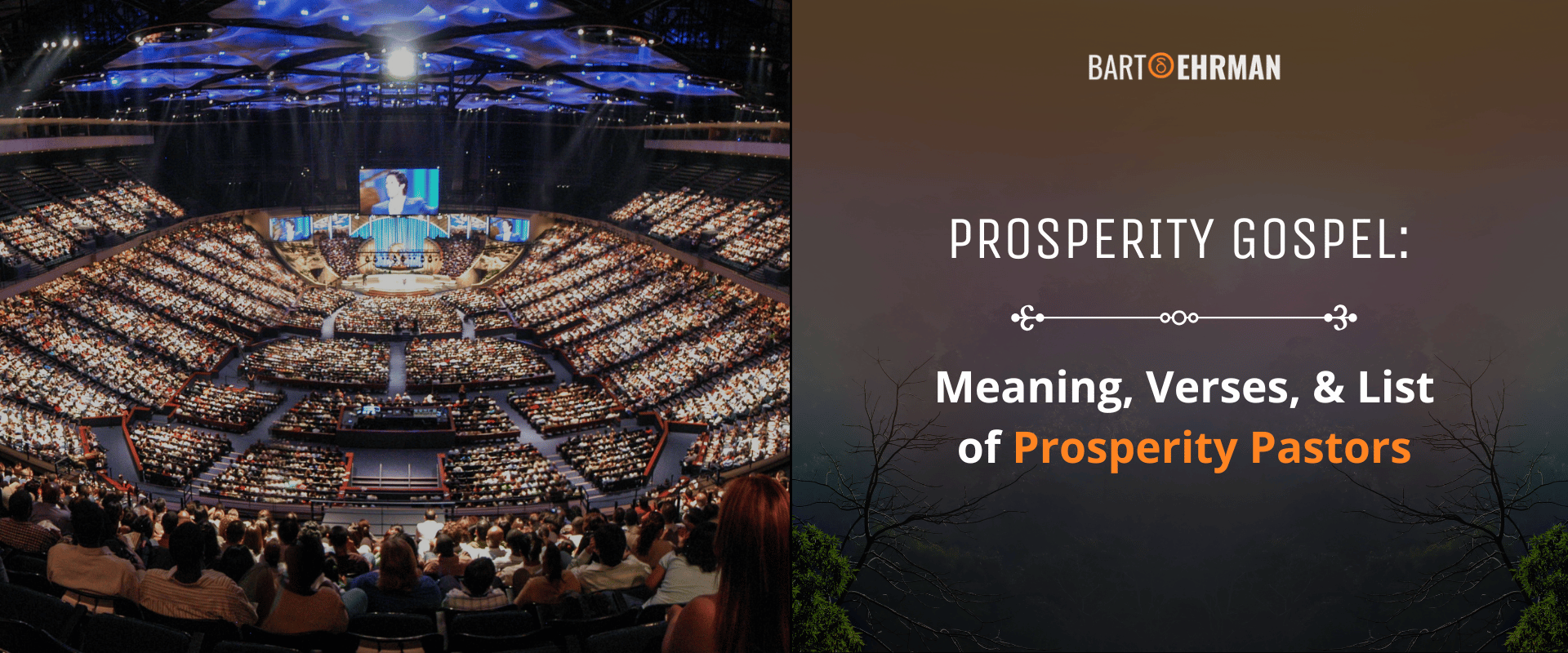
Creflo Dollar (yes, that is his real last name), born in Georgia in 1962, is the founder of the World Changers Church International in College Park, Georgia and a well-known televangelist. His church meets in a large, domed building known as the World Dome, which seats 8,500 people. He has written several books on the prosperity gospel, including The Holy Spirit, Your Financial Advisor: God’s Plan for Debt-Free Money Management and You’re Supposed to Be Wealthy: How to Make Money, Live Comfortably, and Build an Inheritance for Future Generations.
He owns a lot of real estate, including an apartment in Manhattan which he bought for 2.5 million 20 years ago and sold for $3.75 million in 2012, according to The Observer. In 2015, there was a large-scale uproar when Dollar started a fundraising campaign to buy a $65 million jet after his first jet was wrecked in an accident, according to CBS News. Dollar withdrew the campaign after the outcry, but continues to live a lavish lifestyle.
Joel Osteen
Osteen is a Houston, Texas-based pastor, televangelist, and author known best for his propagation of prosperity theology. He was born in Houston in 1963. As a young man, he briefly attended Oral Roberts University but never graduated. His father, John, was the founder and pastor of Lakewood Church in Houston and a televangelist. When his father died, Joel Osteen took over as the pastor of Lakewood Church.
In addition to his pastorship, Osteen is a very popular television preacher. He has at times been associated with the rapper Kanye West, as well as singer Mariah Carey and filmmaker Tyler Perry, all of whom have taken part in events at Lakewood Church. A 2014 article in the Vancouver Sun, citing another media outlet, notes that Osteen’s tweets outranked those of Lady Gaga and Justin Bieber. He is also a popular author, having written 26 books including Your Best Life Now: 7 Steps to Living at Your Full Potential and Become a Better You: 7 Keys to Improving Your Life Every Day.
Despite this, Joel Osteen has been widely decried for his perspective that God wants to give massive wealth to all good Christians. On a “60 Minutes” episode, conservative Reformed theologian Michael Scott Horton criticized this theology, stating that "it makes religion about us instead of about God."
In addition to preaching it, Osteen’s life exemplifies the prosperity gospel. His net worth is estimated at more than $50 million, while his church takes in more than $40 million per year in collections. Despite all this wealth, though, Osteen seems to do very little for those in need. After Hurricane Harvey hit in 2017, for instance, while other Houston churches offered their buildings as shelter for those whose houses were damaged or destroyed, Osteen’s church did not.
In addition to these three prominent prosperity preachers, there are, of course, many others, including Benny Hinn, Robert Tilton, Kenneth Copeland, Kenneth Hagin, and Jesse Duplantis.

Conclusion: The Nestorianism Heresy
Although the prosperity gospel has spread to countries around the world, it is a particularly American brand of Christian theology. In the United States, a wealthy country founded on the individualism of the Enlightenment and Protestantism, the notion that God rewards faithfulness with material gains makes perfect sense.
The tenets of prosperity theology argue that the power of individual faith can bring health and money into our lives. The implication, of course, is that if one is poor and/or ill, one does not have sufficient faith and thus, perhaps, deserves to be poor and ill. Despite this disturbing inference, the prosperity gospel has proven to be widely popular, due, perhaps, to the notion that each person controls his or her fate.
While there are certainly biblical texts that seem to support such an idea, there may be more verses that contradict it, noting that greed is spiritually harmful, that you cannot serve both God and money, and that squeezing a camel through the eye of a needle is easier than getting a rich person into the divine kingdom.
However, the popularity of this theology has rocketed some preachers to the top of the TV ratings and the bestseller lists. Does this prove that the prosperity gospel is God’s will? Does it show that if we have enough faith, we can all have our own private jets? What do you think?
NOW AVAILABLE:
The Genius of Mark: Jesus the Secret Messiah
Mark is the most brilliant AND most underrated Gospel of the New Testament. But, did Mark have first-hand knowledge of Jesus’ life or was he just makin’ stuff up? Explore the answer in this course.