
Second Temple Period: Dates & Literature (TIMELINE)

Written by Marko Marina, Ph.D.
Author | Historian
Author | Historian | BE Contributor
Verified! See our guidelines
Verified! See our editorial guidelines
Date written: February 6th, 2026
Disclaimer: The views and opinions expressed in this article belong to the author and do not necessarily match my own. - Dr. Bart D. Ehrman
One of the earliest phrases I encountered, back when I was first getting acquainted with the historical study of Jesus and the origins of Christianity, was the “Second Temple period.”
This shouldn’t surprise us. The phrase designates the broad historical context within which Jesus of Nazareth lived and preached, and from which the earliest forms of Christianity emerged.
Anyone attempting to understand the social world of Jesus, the theological debates reflected in the Gospels, or the diversity of Jewish thought in antiquity inevitably encounters this period early on.
The Second Temple period functions as a kind of historical framework. You can imagine it as a shared point of reference that allows scholars to situate texts, movements, and ideas within a coherent chronological and cultural setting.
My students often resist learning what they perceive as “date-like” information, arguing that the mere memorization of years and events doesn’t constitute serious historical understanding. To a large extent, they are right.
History isn't about rehearsing bare facts detached from interpretation. At the same time, certain dates matter. Not as items to be memorized for their own sake, but as anchors for historical thinking.
They help us organize complex developments, trace long-term change, and recognize moments of continuity and rupture. This is especially true for the Second Temple period, which spans several centuries and witnessed profound political, religious, and literary transformations.
Many of the texts later included in the Bible were shaped during this time, while (often overlooked) others reflect debates that didn’t find a place in the Second Temple in the Bible as it eventually came to be defined.
What follows, then, isn’t an exhaustive history, but a guided chronological overview designed to highlight why certain moments in this period continue to matter for historians today.
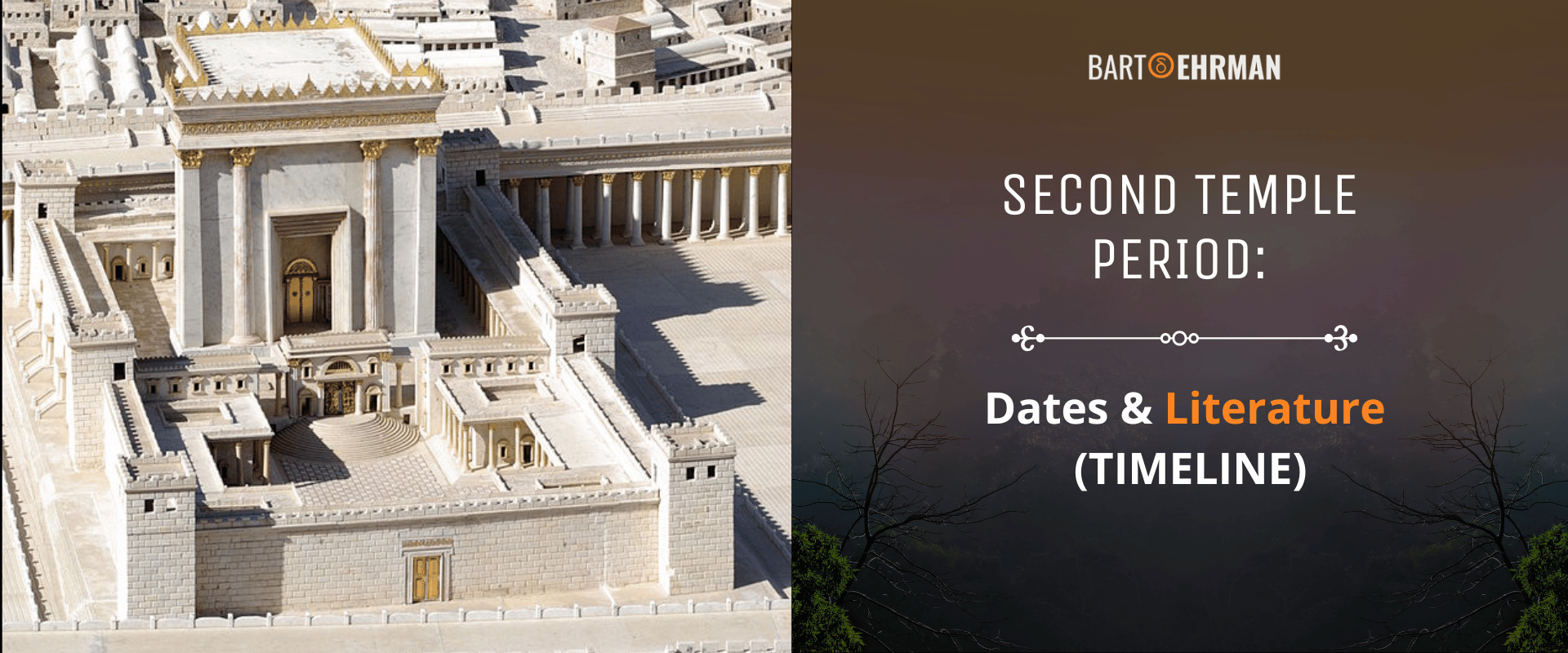
Second Temple Period: Definition
Before turning to specific dates, it’s worth pausing to clarify basic terminology. The expression “Second Temple period” is widely used in scholarship, but it’s not always self-explanatory, especially for readers encountering it outside a specialist context.
A concise definition is offered by Loren T. Stuckenbruck in the T&T Clark Encyclopedia of Second Temple Judaism, where he writes:
(Affiliate Disclaimer: We may earn commissions on products you purchase through this page at no additional cost to you. Thank you for supporting our site!)
The period between the ‘Babylonian Exile,’ literarily marked by an edict attributed to Cyrus the Great in 538 bce permitting a return to the land of Judah (Ezra 1:1–4) and by the immediate aftermath of the Bar Kokhba revolt (132–135 ce), was pivotal. Within this frame, the period is flanked by traditions concerned with the construction and existence of a ‘second’ Temple in Jerusalem: replacing the Solomonic Temple destroyed in 586 bce, it was erected by 516 bce (cf. Ezra 5:1–17), rebuilt in grandeur beginning with the rule of Herod the Great, and destroyed on the ninth of Av in 70 ce (Josephus, J.W. 6.229–280).


As this definition makes clear, the Second Temple period cannot be reduced to a single political regime or religious outlook. Rather, it encompasses centuries marked by profound socioreligious and political transformations that reshaped Jewish life in both the land of Judea and the wider Mediterranean world.
Empires rose and fell, patterns of worship and authority shifted, and new forms of religious literature emerged alongside older traditions.
With this basic terminology now in place, we are better positioned to explore a series of key dates that help illuminate how this complex period unfolded and why it remains central to the historical study of Judaism and early Christianity.
538 B.C.E.: The Persian Conquest and the Beginning of the Second Temple Period
The period of the First Temple came to an end in 587/586 B.C.E., when Babylonian forces conquered Jerusalem, executed members of the royal family, deported others, and destroyed the Temple that had long stood at the center of Judean religious and political life.
This catastrophe marked both the collapse of Davidic monarchy and a profound crisis of identity and theology. While some Judeans were deported to Babylon, many remained in the land, now under foreign rule, forced to adapt to a radically altered social and political reality.
The destruction of the Temple and the experience of displacement raised urgent questions about divine justice, covenant, and communal survival that would continue to shape Jewish thought for centuries.
This situation changed dramatically in 538 B.C.E., when a new imperial power entered the scene. In that year, the Persians, under the leadership of Cyrus, conquered Babylon and inherited control over its vast territories, including the lands once ruled by the Neo-Babylonian Empire.
Unlike their predecessors, the Persian rulers adopted policies that allowed deported populations to return to their ancestral homelands and restore local cultic practices. For the Judeans, this shift meant the possibility of return, reconstruction, and renewed communal life centered once again on Jerusalem.
It’s for this reason that many historians designate 538 B.C.E. as the conventional beginning of the Second Temple period. It’s not because the Temple itself was rebuilt immediately, but because the conditions were set for its eventual restoration and for a new phase of Jewish history to begin.
The broader imperial context is crucial for understanding why Persian rule proved so consequential. As Hersh Goldwurm explains in The History of the Jewish People: The Second Temple Era:
The extent of the Persian Empire under Cyrus was enormous, ranging from India in the east to Lydia (in present-day Turkey) on the eastern coast of the Aegean Sea. Altogether, 127 countries were tributary to his government. He established local law and order and maintained a fine network of roads for quick and efficient communications throughout his far-flung empire. Many and varied peoples, each with its own language and culture, inhabited this vast kingdom. Cyrus allowed each people to speak its own language and live its own way of life, and the kings who succeeded him likewise followed this policy.
This approach created a relatively stable environment in which local traditions, including Judean religious practices, could reassert themselves.
Within this political framework, the Persian period exerted a lasting influence on the development of Jewish religious life. The absence of a native monarchy, combined with imperial tolerance, encouraged new forms of leadership and authority, particularly among priests and scribes.
At the same time, the gradual rebuilding of the Temple (completed later in the 6th century B.C.E.) re-established Jerusalem as a cultic center, even as many Judeans continued to live outside the land.
These conditions fostered reflection on law, worship, and communal boundaries, laying important foundations for later Jewish traditions.
Scholars have long debated the literary productivity of this era, but its significance is difficult to overlook.
Lester L. Grabbe, in An Introduction to the Second Temple Judaism, highlights one influential line of argument, observing that
Some scholars have argued that the Persian period was one of the most productive for Hebrew literature. During these two centuries, earlier Israelite literature and traditions were edited and others were written, or so many scholars think; if they are right, this was one of the most prolific times of Jewish literary activity.
Grabbe himself adopts a more cautious position, yet he concludes that “we are not completely ignorant: for some parts of this 200-year period we have a fair amount of information, and for other parts we have some outline information provided by archaeology and other sources.”
Taken together, these perspectives underscore why the events set in motion in 538 B.C.E. mark both a political transformation and the beginning of a formative era in Jewish history that would shape religious thought well into the Roman period and beyond.
332 B.C.E.: Alexander the Great and the Arrival of Hellenism
It’s almost impossible to overemphasize the influence of Alexander the Great on the history of the ancient Mediterranean and Near East.
Few individuals altered the political and cultural landscape of antiquity so decisively, and fewer still left consequences as enduring for Jewish history. For the study of the Second Temple period, Alexander’s significance doesn’t lie merely in the brevity of his reign or the scale of his military success, but in the transformations set in motion by his conquests.
To understand why his impact was so profound, one must look not only at what he conquered, but at what followed from that conquest.
In 332 B.C.E., Alexander completed his campaign through the eastern Mediterranean, bringing Syria, Phoenicia, and the land of Judea under Macedonian control before moving on to Egypt and, eventually, deep into the Persian heartlands.
With astonishing speed, the Achaemenid Persian Empire collapsed, replaced by a new political order that stretched from Greece to the borders of India. For Judea, this meant the end of Persian rule and incorporation into a vastly different imperial system.
It was a system shaped by Greek language, institutions, and cultural assumptions. Although Alexander himself died only a few years later, the world he created endured long after him.
The broader significance of these events is captured with particular clarity by Simon Claude Mimouni in Le judaïsme ancien du VIe siècle avant notre ère au IIIe siècle de notre ère (Ancient Judaism from the 6th century B.C.E. to the 3rd century C.E.). He argues:
“Alexander the Great [editorial note: the original French text refers to Alexander of Macedon; the usual English designation is used here] is regarded as the founder of Hellenistic civilization — that is, as the originator of the Hellenization of ancient societies — which remains the common designation for all ‘Hellenistic’ phenomena: the insertion of Greeks into Egyptian society and into other societies of the Near East (such as those of Syria, Babylonia, or Iran), as well as the diffusion, even in the West itself, of the civilization that resulted from this process. Hellenistic civilization is, in fact, one of the direct consequences of the conquests of Alexander the Great. His contemporaries very quickly grasped the importance of this considerable figure, whose achievement was ultimately not the creation of an empire, but the creation of a civilization.” (my translation)
After Alexander’s death in 323 B.C.E., his empire fractured into competing kingdoms ruled by his former generals.
Judea found itself caught between two major Hellenistic powers: the Ptolemies in Egypt and the Seleucids in Syria. Control over the region shifted several times, often peacefully, sometimes violently, but always within a broader Hellenistic framework.
Jewish communities now lived both in Judea and across a network of Greek-founded cities and royal capitals, from Alexandria to Antioch, embedded within new political and economic systems that reshaped daily life during the Second Temple period.
These developments ushered in what scholars commonly call Hellenism: a complex process involving the spread of Greek language, education, urban institutions, and cultural practices. Mimouni explains:
“Hellenistic civilization manifested itself primarily through the spread of the Greek language (specifically that known as the koine), through the adoption of Greek techniques (in banking, craftsmanship, commerce, and sculpture), and through the aspiration of Egyptians and peoples of the Near East to receive a Greek education (the ephebia), which functioned as a vehicle of social advancement, even though they were theoretically excluded from it. Enrollment in the ephebic registers and attendance at the gymnasium in fact attested to Greek birth and upbringing, thereby serving as markers of belonging to the “ethnicity of the ruling class.” (my translation)
For Jewish populations, Hellenism didn’t function as a single, uniform force imposed from above. Rather, it created new social realities that prompted negotiation, adaptation, and debate.
Greek became a language of administration and, increasingly, of literature. Jewish thinkers encountered Greek philosophy, historiography, and modes of reasoning that influenced how they articulated their own traditions.
Responses to Hellenism among Jews are often described in terms of two broad tendencies: adoption and resistance.
Some Jews embraced aspects of Greek culture, seeing no contradiction between Hellenistic forms and Jewish identity; others viewed these influences as a threat to ancestral traditions and communal boundaries.
While this binary is a simplification, it captures a real tension that runs through Second Temple Period literature and history..
The consequences of Alexander’s conquests went, therefore, beyond the dimension of politics and military conquests.
They reshaped the cultural horizons within which Jewish life, thought, and literature developed. Finally, It’s precisely these political and cultural transformations that explain why the New Testament Gospels (texts rooted in Jewish tradition and concerns) were nevertheless composed in Greek rather than Hebrew or Aramaic.
167-164 B.C.E.: The Maccabean Revolt
As noted in the previous section, one stream of the Jewish population responded to Hellenism with firm resistance, viewing it as a dangerous distortion of ancestral traditions and religious practices.
What began as cultural and religious opposition, however, eventually escalated into open revolt. This transformation, of course, didn’t emerge in a vacuum. It was the result of mounting pressures, political interference, and a series of actions that convinced some Judeans that compromise was no longer possible.
Did You Know?
When Alexander the Great Stopped and Bowed
According to Josephus, Alexander the Great once marched toward Jerusalem and then did something no one expected. Instead of attacking the city, Alexander reportedly dismounted from his horse and bowed before the Jewish high priest.
His own generals were baffled. Why would the most powerful conqueror of the ancient world show deference to a priest from a small, recently subjugated people? Alexander’s explanation was simple and rather convenient: he had already seen this very priest in a dream, and the priest’s God had promised him victory over Asia. Clearly, this was not the sort of dream one ignores.
The story continues with Alexander entering Jerusalem peacefully, offering sacrifice to the Jewish God, and being shown passages from Jewish Scripture that supposedly predicted a Greek ruler who would overthrow the Persian Empire. Unsurprisingly, Alexander was delighted.
Modern historians are quick to point out that this episode is almost certainly legendary, but that is precisely what makes it interesting, and a little funny. The tale is less about what Alexander actually did and more about how Jewish writers imagined their place in a Hellenistic world dominated by his empire.
Central to this crisis was Antiochus IV Epiphanes, the Seleucid ruler who reigned from 175 to 164 B.C.E.
Antiochus inherited a fragile empire marked by internal rivalries and external threats, and his policies toward Judea must be understood within that broader context. Seeking to consolidate control, he intervened directly in Jerusalem’s internal affairs, supporting factions favorable to aggressive Hellenization and undermining traditional forms of religious authority.
What might otherwise have remained an internal cultural conflict thus became entangled with imperial power, dramatically raising the stakes.
The immediate catalyst for rebellion, however, came in 167 B.C.E. with a series of actions that struck at the heart of Jewish religious life.
As Daniel M. Gurtner explains in the T&T Clark Encyclopedia of Second Temple Judaism:
What seemed to topple Judea into rebellion was an event on the 15th day of the ninth month, 167 bce: the Seleucid overlords erected a ‘desolating sacrilege’ upon the altar of burnt offering (1 Macc 1:54). This is best seen as a ‘pagan altar’ (βωμός, bōmos; 1:59; cf. Josephus, Ant. 12.253), later called ‘the stones of loathsomeness’ (τοὺς λίθους τοῦ μιασμοῦ, 1 Macc 4:43) and distinct from the defiled stones of the Jewish altar (cf. 1 Macc 4:44–46). Moreover, anyone concealing books of the law was executed and the books themselves were shredded and burned (1 Macc 1:55–58).” These measures represented not merely political domination but a direct assault on sacred space, scripture, and communal identity.
The revolt that followed, led by the Hasmonean family, resulted in the rededication of the Jerusalem Temple and ushered in a period of Jewish self-rule unprecedented since the Babylonian conquest. Its historical and religious significance is difficult to overstate.
Beyond its immediate political consequences, the Maccabean Revolt fundamentally reshaped internal Jewish life.
The new Hasmonean regime combined priestly authority with political power, a development that provoked debate and, in some cases, opposition among different segments of the population.
It’s within this post-Maccabean context that many scholars locate the emergence (or at least the clearer visibility) of distinct Jewish schools of thought, including groups later known as the Pharisees, alongside other movements with competing interpretations of law, authority, and communal identity.
These developments contributed decisively to the diversification of Judaism (or perhaps “Judaisms” in plural!) during the Second Temple period.
Disagreements over how the Torah should be interpreted, who possessed legitimate religious authority, and how Jewish identity should be preserved under changing political conditions didn’t fracture Judaism into chaos, but rather generated a dynamic and intellectually vibrant religious culture.
63 B.C.E.: Roman Control of Judea
Another date included in this exploration of the Second Temple period is 63 B.C.E., which marks the beginning of sustained Roman political control over Judea.
This development is often treated as a regional turning point in Jewish history, but its significance extends far beyond Judea itself. Rome’s expansion into the eastern Mediterranean transformed not only the societies it conquered but also Rome’s own political and cultural character.
As Mimouni observes:
“It was the conquest of the East that gave Rome its true political and cultural dimension, bringing it the immense riches of Anatolia (the former kingdom of the Attalids), of Syria (the former kingdom of the Seleucids), and of Egypt (the former kingdom of the Lagids). Control of trade in the eastern Mediterranean, particularly of Delos and Rhodes, served as a ‘financial pump’ for maintaining the legions during the civil wars: that of Caesar against Pompey (the battle of Pharsalus in 48), that of Antony and Octavian against Brutus and Cassius (the battle of Philippi in 42), and that of Antony against Octavian (the battle of Actium in 31). The Romans thus appeared as the worthy successors of Alexander the Great.” (my translation)
How, then, did Rome come to exert control over Judea?
Rome’s involvement in Judean affairs began through intervention in a local dynastic conflict. In the mid-1st century B.C.E., rival claimants to Hasmonean rule appealed to Roman authorities for support, drawing Judea into the orbit of Roman power.
In 63 B.C.E., the Roman general Pompey the Great entered Jerusalem, effectively ending Judean independence. Although the Temple wasn’t destroyed, Judea was subordinated to Roman authority and incorporated into Rome’s expanding eastern sphere. What followed wasn’t immediate annexation, but a gradual process of political dependency.
Over the ensuing decades, Roman control took different administrative forms, including indirect rule through client kings.
The most prominent of these was Herod the Great, appointed with Roman backing and ruling from 37 to 4 B.C.E. Herod’s reign illustrates the complex nature of Roman domination: while he owed his position to Rome and enforced its interests, he also pursued ambitious local projects, most notably the massive expansion and renovation of the Jerusalem Temple.
After Herod’s death, Judea experienced increasing instability, eventually coming under direct Roman administration.
Roman prefects (and, during Claudius’ reign, “procurators”) governed the region, maintaining order, collecting taxes, and representing imperial authority. The most popular, at least from our modern perspective, was Pontius Pilate, a prefect of Judea who sentenced Jesus to death.
For many Judeans, this new arrangement intensified feelings of political subjugation and economic strain. The presence of Roman troops, symbols of imperial power, and non-Jewish officials sharpened existing grievances and fostered resentment, particularly among groups already critical of foreign rule.
The impact of Roman control on the Second Temple period was, therefore, profound. Roman domination reshaped political expectations, altered patterns of leadership, and heightened debates about authority, law, and resistance.
Apocalyptic hopes, messianic speculation, and renewed attention to divine justice flourished in a context where imperial power appeared overwhelming and often unjust.
At the same time, the Temple in Jerusalem remained a central religious institution, now operating under the shadow of Rome.
These tensions formed the immediate historical background of the 1st century C.E. The world in which Jesus lived and the earliest Christian communities emerged was one defined by Roman imperial rule, mediated through local elites and enforced by military power.
Consequently, understanding the Roman takeover of Judea in 63 B,C.E. and the aftermath is essential both for reconstructing Jewish history and for grasping the political realities that shaped religious thought and practice in the final centuries of the Second Temple period, including the emergence of the Christian movement.
NOW AVAILABLE!
Finding Moses: What Scholars Know About The Exodus & The Jewish Law
Riveting and controversial, the "FINDING MOSES" lecture series takes you on a deep dive into the stories of Moses, the exodus, and a whole lot more...
70 C.E.: Destruction of the Second Temple
There are few events in Jewish history whose impact rivals that of the destruction of the Jerusalem Temple in 70 C.E. This catastrophe reshaped the religious, social, and intellectual contours of Judaism for centuries to come.
The destruction was the culmination of the First Jewish Revolt against Roman rule, a conflict whose consequences extended far beyond the battlefield. What was lost in 70 C.E. wasn’t only a monumental building, but an entire cultic system that had stood at the center of Jewish life.
Mimouni offers a particularly nuanced assessment of this rupture, noting:
“The first great Judean revolt against Rome, which ended in a politico-military-religious disaster, constitutes a brutal rupture in the destiny of the Judean people – at least for those in Palestine, for this was far less the case for those of the Diaspora. Beyond the definitive disappearance of the sanctuary and the sacrifices, the crushing of the revolt marks the disappearance of the numerous Judean movements, with the exception of those of the Pharisees or rabbis and of the Nazoreans or Christians, who were still extremely minoritarian; movements that would nonetheless transform themselves in relation to synagogal Judaism, whether Hellenized or Aramaic, which remained predominant both before and after the failure.” (my translation)
The causes of the revolt were complex and cumulative rather than the result of a single provocation. As Grabbe explains:
Apart from the unsatisfactory governors, the Jewish leadership seems to have failed its own people. National mythology was also likely to have played an important role; that is, Jewish memory of their free and autonomous past, suitably embroidered and idealized, was a constant reminder of how much below that model state was their present situation. They had been free – they could be free again!
The revolt itself unfolded with increasing brutality. Roman forces responded decisively, culminating in the siege of Jerusalem and the destruction of the Temple in 70 C.E.
Josephus explains both the destruction itself and the widespread violence against the city’s population. Thousands were killed, enslaved, or crucified, with bodies reportedly left hanging outside the city walls as a grim display of Roman power.
The religious implications of this destruction were immediate and far-reaching. With the Temple gone and the sacrificial system permanently ended, Jewish religious life could no longer be organized around its central institution.
Groups that depended on the Temple for their authority or practices disappeared from the historical record. Others, particularly within the Pharisaic-rabbinic tradition, proved more adaptable, emphasizing study, interpretation of the law, and communal worship in synagogal settings.
In this sense, the destruction functioned also as a catalyst for transformation, including a beginning of the sharper distinction between the earliest followers of Jesus and the rest of the Jewish population.
Seen in a longer perspective, 70 C.E. marks the beginning of the final phase in the dissolution of the Second Temple Period.
Scholarly Insights
The Revolt That Closed an Era
The destruction of the Temple in 70 C.E. wasn’t the end of violent uprisings in Judea. Roughly sixty years later, the Bar Kokhba Revolt (132–135 C.E.), led by Simon bar Kokhba against the Roman emperor Hadrian, resulted in catastrophic losses, mass expulsions, and the reconfiguration of Judea as the Roman province Syria Palaestina.
Many scholars therefore treat the revolt’s suppression in 135 C.E. as the final historical marker closing the Second Temple period, even though the Temple itself had already been destroyed decades earlier.
Although Jewish life continued and even flourished in new forms, the world structured around the Jerusalem Temple was irrevocably gone. A few decades later, the brutal suppression of another revolt against Roman rule would confirm this reality and solidify new trajectories for Judaism and Christianity alike.
Second Temple Period: Timeline
Before we wrap up our exploration of the notable Second Temple period dates, we decided to give you something truly exceptional, or at least something genuinely useful.
Historians may insist (correctly) that history is more than a list of dates, but a well-organized timeline still has its virtues. It allows us to see, at a glance, how political upheavals, cultural shifts, and religious transformations unfolded over several centuries.
What follows is a concise, chronological table designed to pull together the major moments discussed above and place them within a broader historical frame. You are welcome!
Date | Event | Historical Significance |
|---|---|---|
583 B.C.E. | Persian conquest of Babylon | Marks the political conditions that allowed Judean return from exile and the beginning of the Second Temple period |
516 B.C.E. | Completion of the Second Temple in Jerusalem | Re-establishment of the Jerusalem Temple as the central institution of Judean religious life |
322 B.C.E. | Conquests by Alexander the Great | Introduction of Hellenistic political and cultural frameworks that reshaped Jewish society and literature |
167–164 B.C.E. | Maccabbean Revolt | Armed resistance against Seleucid religious interference |
63 B.C.E. | Roman conquest of Judea | End of Judean independence and beginning of Roman political dominance |
37–4 B.C.E. | The reign of Herod the Great | Roman-backed kingship combined with extensive temple expansion and internal social tensions |
70 C.E. | Destruction of the Temple | Permanent end of temple-centered worship |
132–135 C.E. | Bar Kokhba Revolt | Final suppression of Jewish resistance and the conventional end-point of the Second Temple era |
Appendix: The Second Temple Period in the Bible and Related Jewish Literature
Before turning to specific texts, a brief clarification is in order. The expression “Second Temple period” is a modern scholarly category, not a term found anywhere in the Bible itself.
In other words, it’s used by historians to describe a long and complex stretch of Jewish history rather than a clearly defined biblical era. The Bible, understood as a collection of diverse books written and transmitted over many centuries, spans multiple historical periods, some of which overlap with what scholars call the Second Temple period.
The precise dating of many books of the Bible is a contested issue within mainstream scholarship, and there is often no single scholarly consensus regarding when a given text was first composed, revised, or brought into its final form.
What follows, therefore, represents one accepted and methodologically sound way of identifying biblical books that are commonly associated (either by composition, final redaction, or historical setting) with the Second Temple period.
#1 – Ezra
#2 – Nehemiah
#3 – Zechariah
#4 – Malachi
#5 – Esther
#6 – Daniel
While scholarly debates continue over the precise chronology of each work, these books are regularly situated within the historical, political, and religious contexts that characterize the Second Temple period.
However, Jewish literary tradition associated with the Second Temple period goes well beyond what today forms part of the Jewish Bible or the Christian (Protestant) Old Testament.
As it turns out, a large and diverse body of Jewish writings from this era circulated widely, was read authoritatively by many communities, and in some cases entered the biblical canons of particular Christian (e.g., Catholic) traditions.
Commonly associated with this period are texts often grouped under the labels Deuterocanonical and Pseudoepigrapha, which include:
#1 – 1 Maccabees
#2 – 2 Maccabees
#3 – Tobit
#4 – Judith
#5 – Sirach
#6 – Wisdom of Solomon
#7 – 1 Enoch
#8 – Jubilees
#9 – Psalms of Solomon
#10 – Testaments of the Twelve Patriarchs
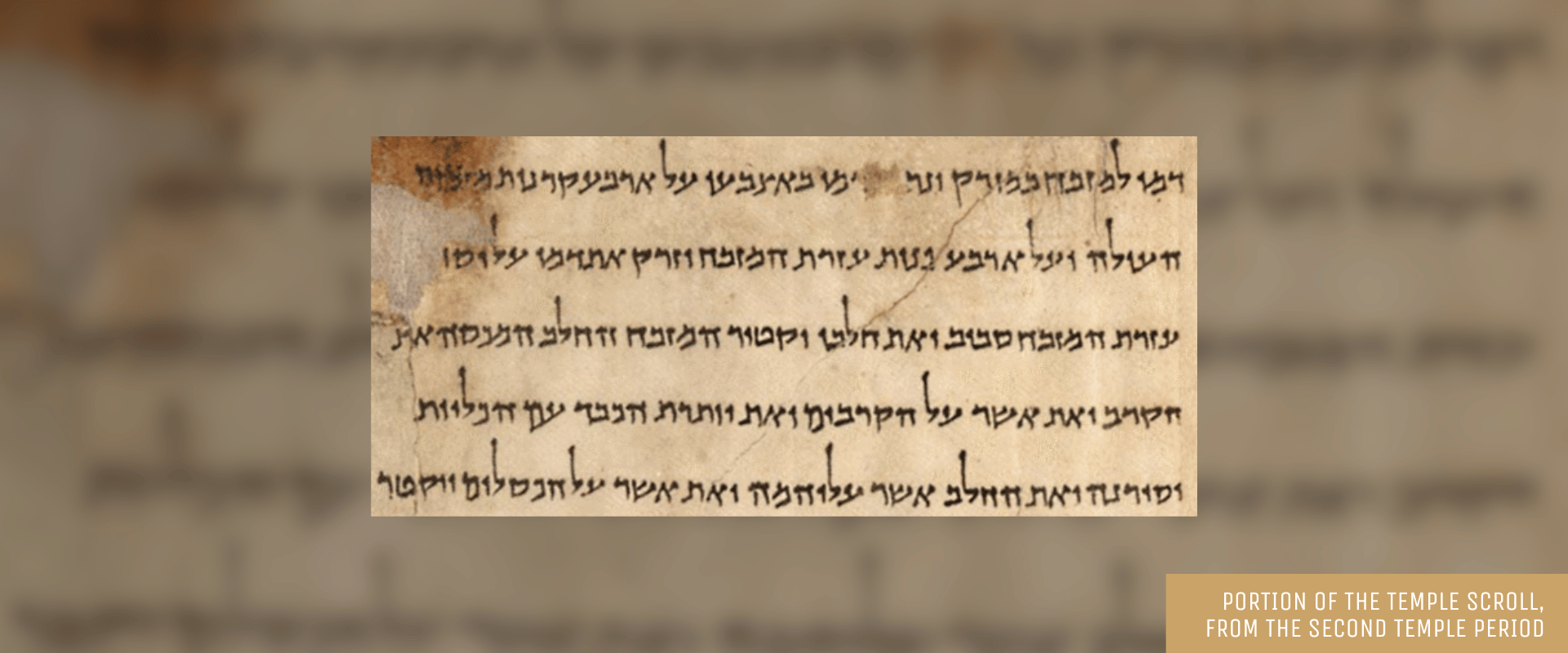
Finally, to these must be added the Dead Sea Scrolls, which preserve both biblical manuscripts and “sectarian” compositions, as well as Jewish-Hellenistic authors writing in Greek. The most notable of these are Philo of Alexandria and Josephus.
Together, these texts illustrate the remarkable literary productivity and diversity of Jewish thought during the Second Temple period.
Conclusion
Instead of offering a conventional conclusion that simply recaps the key dates of the Second Temple period, it’s worth ending with an invitation to continue exploring the history and thought that emerge from this extraordinarily formative era.
Chronology provides a framework, but real historical understanding comes from engaging the sources, arguments, and debates that animate scholarly study of ancient Judaism.
One accessible way to do so is through Bart D. Ehrman’s 8-lecture online course Finding Moses: What Scholars Know About the Exodus and the Jewish Law, which introduces viewers to how contemporary historians and biblical scholars critically analyze one of the most influential (and contested) foundational narratives in Jewish tradition.
Was the Exodus a historical event, a collective memory shaped over time, or something else entirely? Rather than assuming an answer, the course models how scholars ask these questions, evaluate evidence, and weigh competing explanations.
For readers interested in moving beyond dates and timelines to see the historical method in action, it offers a natural next step!
NOW AVAILABLE!
Finding Moses: What Scholars Know About The Exodus & The Jewish Law
Riveting and controversial, the "FINDING MOSES" lecture series takes you on a deep dive into the stories of Moses, the exodus, and a whole lot more...