
Who is Satan? And Where Did the Devil Come From?

Written by Joshua Schachterle, Ph.D
Author | Professor | Scholar
Author | Professor | BE Contributor
Verified! See our editorial guidelines
Verified! See our guidelines
Date written: October 8th, 2026
Disclaimer: The views and opinions expressed in this article belong to the author and do not necessarily match my own. - Dr. Bart D. Ehrman
In popular culture, the Devil is often imagined as a single, unmistakably evil supernatural being: the enemy of God, the tempter of humanity, and the ruler of Hell. But that familiar image is the result of centuries of religious interpretation. The figure we now call Satan did not begin as a fully developed embodiment of evil, and the Bible itself presents several very different ideas about who—or what—Satan is.
Who is the Devil—and where did Satan come from? In this article, I’ll trace the evolution of the idea of Satan from the Hebrew Bible through the Second Temple Period, the New Testament, the Book of Revelation, and Islam.
Check out our related course, Demons and Ghosts in the Bible, taught by Dr. Travis Proctor!
Origins and Evolution of Satan
Hebrew Bible
What does “Satan” mean? In his book Satan: A Biography, Henry Kelly writes that the Hebrew word satan (pronounced sa-TAWN) simply meant “adversary” or “accuser.” In addition, Elaine Pagels notes in her book The Origin of Satan that this lowercase satan was not originally the name of a particular character in the Hebrew Bible, but was rather “any one of the angels sent by God for the specific purpose of blocking or obstructing human activity.” In some of these Hebrew Bible cases, the word had a definite article attached—not “Satan” but “the satan” (Hebrew: ha-Satan).
Unlike later conceptions of the Devil, though, “the satan” did not always act out of evil intent. As Neil Forsyth says of such satans, “If the path is bad, an obstruction is good.” We see this sense in the story of Balaam from Numbers 22. In verse 22, when Balaam decides to go where God told him not to go, God sent an angel to block his path “as a satan” (Hebrew: le·satan). Eventually, Balaam realizes that God’s angel is blocking him from doing something displeasing to God.
Most instances of the word ha-Satan in the Hebrew Bible, however, are found in chapters 1 and 2 of the book of Job. At the beginning of Job’s story, God boasts to the satan (sometimes translated as “the accuser” but also simply as “Satan” in other translations) before a council of heavenly beings about how righteous Job is. The satan, however, says that Job is only righteous because God has given him so many blessings.
(Affiliate Disclaimer: We may earn commissions on products you purchase through this page at no additional cost to you. Thank you for supporting our site!)
Have you not put a fence around him and his house and all that he has, on every side? You have blessed the work of his hands, and his possessions have increased in the land. But stretch out your hand now, and touch all that he has, and he will curse you to your face” (1:10–11).


The satan, given permission by God to test Job’s loyalty to God, proceeds to make Job suffer in just about every way possible, taking his wealth, his family, and his health. However, it’s clear that the satan and God are not enemies in this book in the way they are in later traditions. As Bart Ehrman notes,
Satan should not be seen here as an evil being who is the cause of all misfortune. He is one of the sons of God, a member of God’s divine council, who afflicts Job only because God tells him to do so.
The other Hebrew Bible book where the satan appears is the prophetic book of Zechariah. Specifically, in 3:1–7, Zechariah has a vision of the High Priest, representing the sinful nation of Judah, who is on trial:
Then he showed me the high priest Joshua standing before the angel of the Lord and the accuser (Ha-satan) standing at his right hand to accuse him. And the Lord said to the accuser, “The Lord rebuke you, O accuser!”
Again, although God rebukes the satan, he is still part of God’s court, specifically the prosecutor, which aligns with the Hebrew meaning of the word (“accuser”).
One confirmation that “the satan” was not “Satan” when much of the Hebrew Bible was written comes from the fact that the word is not used at all in the book of Genesis. The talking serpent, while crafty, is simply called a serpent. Its identification with the Devil came through much later interpretations (see, for instance, Justin Martyr’s 2nd-century Dialogue with Trypho, chapter 103).
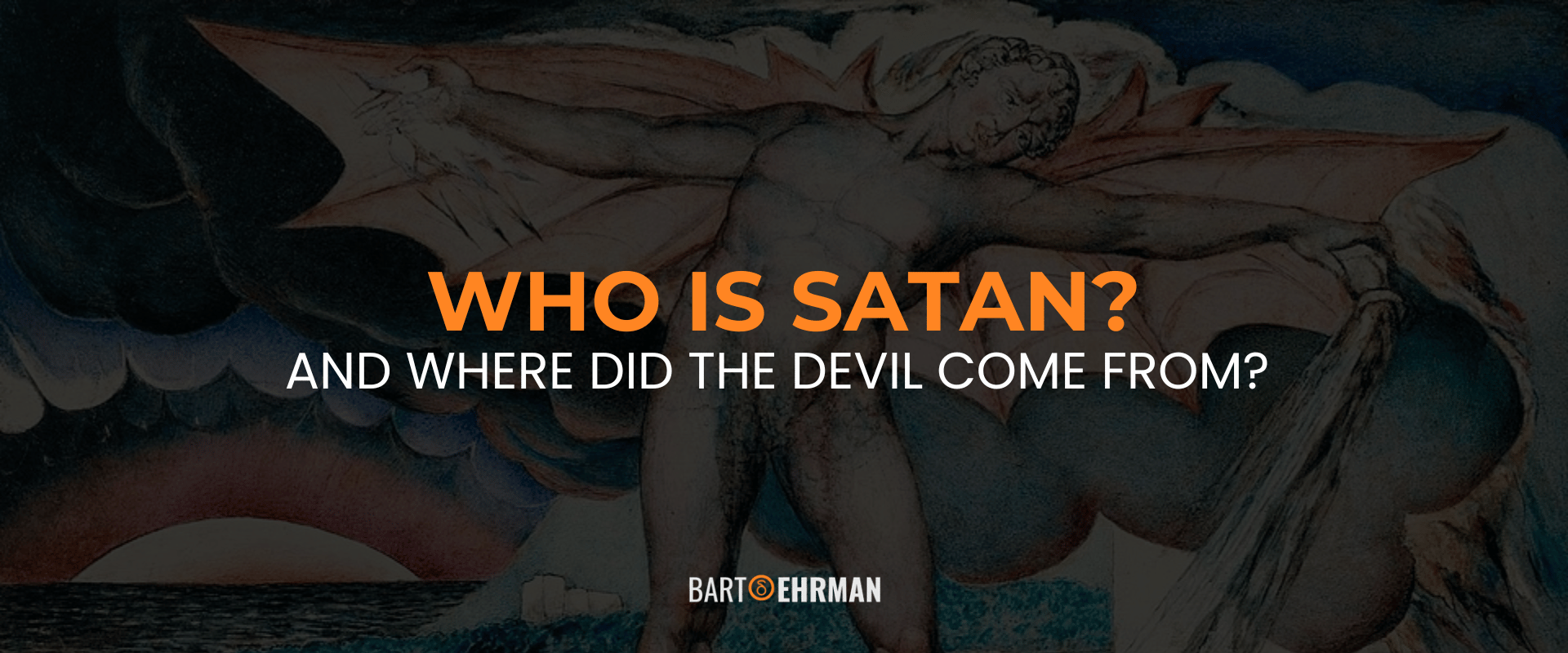
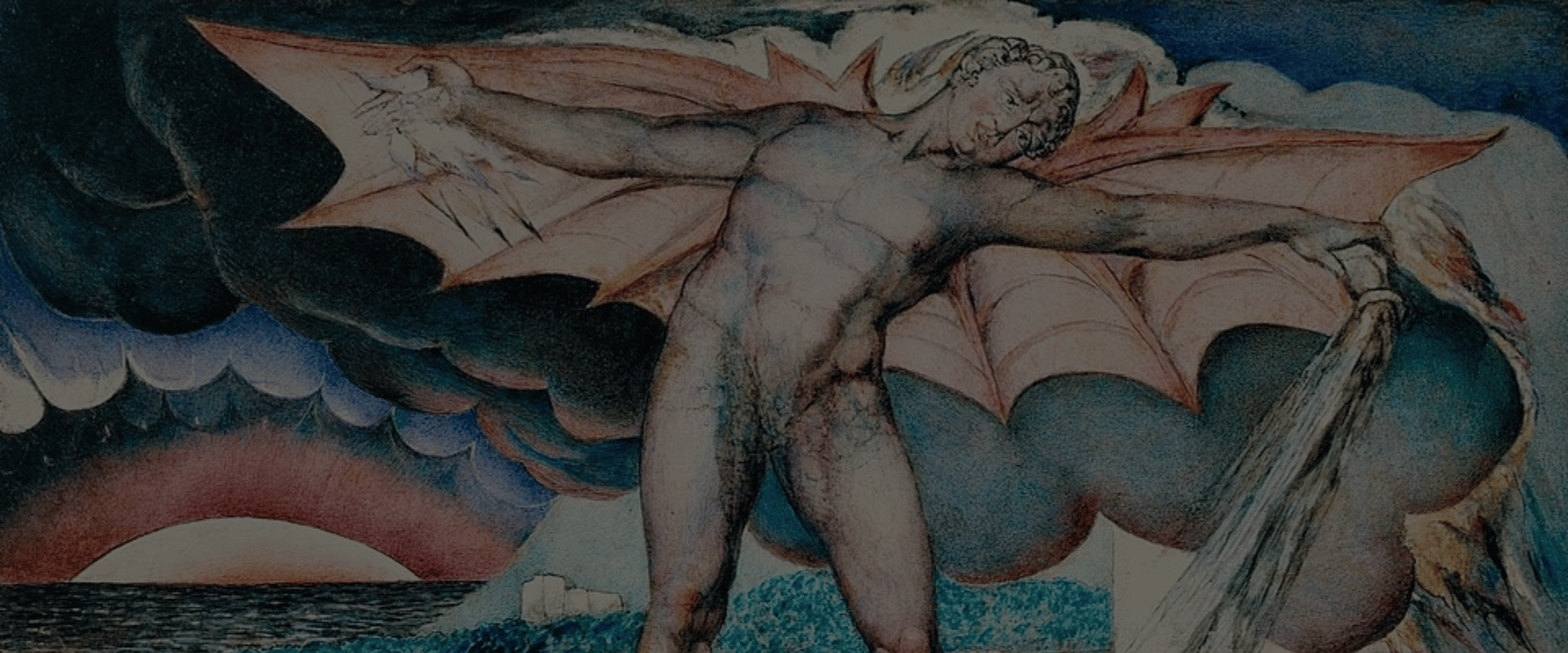
What does Satan look like? It’s interesting to note that popular ideas of his appearance are not explicitly written in the Bible. The familiar horned, red, pitchfork-carrying Devil is overwhelmingly a product of later Christian art, literature, folklore and iconography.
So when did “the satan” become “Satan?”
Second Temple Period
After the Babylonian Captivity—the forced deportation of the Jewish people from the Kingdom of Judah to Babylon between 587 or 586 BCE and 538 or 539 BCE—the Israelites underwent a long period living under the Achaemenid or Persian Empire. The Persian ruler Cyrus the Great allowed them to return and rebuild Jerusalem. However, Persian culture continued to have an impact on Israel.
In The Devil: Perceptions of Evil from Antiquity to Primitive Christianity, Richard Burton Russell writes that during this period, Zoroastrianism, the religion of the Persians, may have influenced Israelite religion. In particular, Russell notes that Jewish conceptions of “the satan” were affected and changed by the conception of Angra Mainyu, the Zoroastrian spirit of evil and darkness.
This period under the Persians ended around 330 BCE. However, when the Septuagint—the Greek version of the Hebrew Bible—began to be translated (beginning between 280–250 BCE), the Hebrew word Ha-satan was translated into the Greek diabolos, meaning “slanderer” (and later translated into English as “devil”). This was a step closer to the familiar Satan, the evil adversary of God which would gradually develop during the Second Temple Period with the proliferation of a literary genre known as apocalypses.
The apocalyptic book 1 Enoch contains one of the earliest and most influential fully developed Jewish traditions about rebellious heavenly beings. This very popular apocalyptic book tells of 200 angels, the Watchers, who are sent to supervise the earth but instead rebel and have sex with human women. One Watcher, Azazel, intentionally spreads sin among human beings. The Watchers are eventually captured and forced to face judgment.
However, the book of Jubilees, another Jewish writing only considered canonical within Ethiopian Christian and Jewish traditions, adds to the story of the Watchers. During the judgment scene, a powerful spirit named Mastema begs God to let him keep some of the condemned Watchers to work for him, a request that God grants. Mastema then uses these fallen angels to tempt human beings into more sinful acts so that he can punish them. This Mastema is one important precursor to the more developed Satan figure found in later Jewish and Christian traditions.
So, was Satan an angel? While he was not originally conceived of in this way, in the intertestamental period, the connection between Satan and fallen angels developed. But do Jews believe in Satan today? In general, they do not believe in the Christian concept of the Devil as an independent, all-evil force or a fallen angel at war with God.
Having looked at the evolution of the concept of Satan in the Hebrew Bible and beyond, we’ll next look into conceptions of Satan in the New Testament.
New Testament
Henry Kelly notes that Matthew, Mark, and Luke—the Synoptic Gospels—all narrate the temptation of Christ in the desert after his baptism (Matt 4:1–11, Mark 1:12–13, and Luke 4:1–13). Mark, the earliest written Gospel we have, merely says that Jesus was generally tempted by Satan, but Matthew and Luke agree there were three specific temptations.
First, Satan tempts Jesus, who has fasted for 40 days, to turn a stone into bread. Next, he takes Jesus to the top of the Temple and tells him to jump off so the angels will catch him before he hits the ground. Finally, he shows Jesus all the kingdoms of the earth and offers to give them to Jesus if Jesus will bow down and worship him. Jesus seems to easily withstand these temptations, but the last is interesting since it assumes that Satan owns all those kingdoms. In other words, Satan is the ruler of the world.
Meanwhile, Jesus refers to Satan in some of his parables. For instance, in his explanation of the Parable of the Sower, Jesus says that when some hear the truth, “Satan immediately comes and takes away the word that is sown in them” (Mark 4:15). In the Parable of the Sheep and Goats, Jesus says that those who are not kind to people in need will “depart from me into the eternal fire prepared for the Devil and his angels” (Matt 25:41).
Interestingly, Kelly notes that the author of Luke (and Acts) seems to believe that Satan has more power than do the authors of Matthew or Mark. For instance, among the Synoptics, only in Luke 22:3–6 is Satan identified as the true motivation behind Judas’ betrayal of Jesus:
Then Satan entered into Judas called Iscariot, who was one of the twelve; he went away and conferred with the chief priests and officers of the temple police about how he might betray him to them. They were greatly pleased and agreed to give him money. So he consented and began to look for an opportunity to betray him to them when no crowd was present.
Luke also writes that when Jesus predicts Simon Peter’s denial, Satan plays a role:
“Simon, Simon, listen! Satan has demanded [or has obtained permission] to sift all of you like wheat, but I have prayed for you that your own faith may not fail, and you, when once you have turned back, strengthen your brothers” (Luke 22:31–32).
And in Acts, the author shows Peter accusing one of the early members of the church, Ananias, of being influenced by the Devil:
“Ananias,” Peter asked, “why has Satan filled your heart to lie to the Holy Spirit and to keep back part of the proceeds of the land (Acts 5:3)?
Unlike the Synoptic Gospels, the Gospel of John only mentions the name “Satan” three times. The first used to impugn Jesus’ enemies. In John 8:44, Jesus says that his Jewish (or Judean) opponents are the children of the Devil instead of the children of Abraham as they claim. The same verse also says Satan was "a murderer from the beginning and does not stand in the truth because there is no truth in him. When he lies, he speaks according to his own nature, for he is a liar and the father of lies." The idea of Satan here is used as a rhetorical device designed to accuse Jesus’ enemies of evil.
Meanwhile, John 13:2, like similar verses in Luke, implies that Satan motivated Judas to betray Jesus. Like the story of Jesus’ temptation in Matthew and Luke, John 12:31–32 identifies Satan as "the ruler of this world," who is destined to be overthrown through Jesus's death and resurrection.
Outside the Gospels, we see clearly that the conception of Satan as God’s opponent has become fully developed. For instance, the epistle to the Hebrews calls the devil “the one who has the power of death” (Heb 2:14), and Romans 16:20 says that “The God of peace will shortly crush Satan under your feet,” reflecting Paul’s imminent eschatology. In fact, there are many Pauline verses describing Satan as a tempter and a deceiver:
2 Corinthians 2:11
And we do this so that we may not be outwitted by Satan, for we are not ignorant of his designs.
1 Corinthians 7:5
Do not deprive one another except perhaps by agreement for a set time, to devote yourselves to prayer, and then come together again, so that Satan may not tempt you because of your lack of self-control.
2 Corinthians 4:4
In their case the god of this world has blinded the minds of the unbelievers, to keep them from seeing clearly the light of the gospel of the glory of Christ, who is the image of God.
Book of Revelation
It is perhaps in the book of Revelation where Satan’s power over the world becomes clearest in the New Testament. The author, John of Patmos, sees the Devil as a supernatural ruler, a kind of evil patron deity, of the Roman Empire, and thus the definitive cause of all evil in the world.
In the beginning epistolary section of Revelation, John writes to the church at Smyrna that those Gentile church members who falsely claim to be Jews are "a synagogue of Satan" and that "the Devil is about to throw some of you into prison so that you may be tested, and for ten days you will have affliction" (Rev 2:9–10).
Then in Revelation 2:13–14, the letter to the church of Pergamum, John warns that Satan lives among them and that "Satan's throne" is in their midst. Henry Kelly notes that the city of Pergamum was the capital of the Roman province of Asia and that "Satan's throne" may refer to a temple dedicated to the deified Roman emperor Augustus.
However, despite all his power over the world through Rome, in Revelation 20:1–3 Satan is tied up with a chain and thrown into the bottomless pit, where he is imprisoned for one thousand years. In Revelation 20:7–10, he is then freed and prepares to war upon the righteous but is finally defeated and thrown into the lake of fire.
DID PAUL AND JESUS HAVE THE SAME RELIGION?
Jesus taught a message of repentance to prepare for the Kingdom of God while Paul taught faith in Jesus. Did they agree? Should they be considered the “co-founders” of Christianity?
Other Names for Satan
We’ve already discussed the origin of the names “Satan” and “the Devil,” but what about other names for this malevolent being? Where did they come from?
Lucifer
Are Lucifer and Satan the same? This is a common question from those interested in this topic. According to Ángel Manuel Rodríguez, this word is “the English rendering of the Hebrew term hêlēl ("shining or brilliant one")” from Isaiah 14:12:
How you are fallen from heaven,
O Morning Star (hêlēl), son of Dawn!
How you are cut down to the ground,
you who laid the nations low!
Rodriguez notes that “Lucifer” resulted from a series of translations of the Hebrew term, which did not originally signify Satan in Isaiah but came to be interpreted that way by the early church:
The meaning of the Hebrew noun was preserved in the Greek translation of the Hebrew Bible through the Greek term heōsphoros ("bright one," "morning star"). The English "Lucifer" comes from Latin; it renders the Greek heōsphoros into the Latin lucifer, which simply means "light bearer, morning star." The early Church Fathers employed the Latin lucifer as a proper name to refer to Satan.
Is Lucifer Satan, then? Yes, for those who used the name “Lucifer,” like the eminent Christian author Augustine of Hippo, Lucifer and Satan were the same being.
Beelzebub
Like Lucifer, this name, which can be translated as “Lord of the Flies,” has Old Testament origins. The first written use of the name appears in the Hebrew Bible in 2 Kings 1:2, where it is written as Ba'al Zevuv and refers to a Philistine god.
In the The Dictionary of Deities and Demons in the Bible, the authors suggest that the name may have originally been a sarcastic alteration or play on words for Ba'al Zevul, meaning "lord of the heavenly dwelling" or "lord of the high place." Is Beelzebub Satan? The Greek form Beelzebul (or Beelzeboub) appears in the Gospels (Matt 12:24, Mark 3:22), where Jewish leaders use it as a name for the prince of demons such that Satan and Beelzebub were the same.
Abaddon
The first written use of the name Abaddon is in the Hebrew Bible, where it appears six times in the original Hebrew. Among these, its earliest composition can be traced to Proverbs 15:11 and Job 26:6, among other verses.
In the Hebrew Bible, Abaddon is derived from the Semitic root abad, meaning "to perish" or "destruction." At this early stage, it was not a character's name but a place, specifically used as a synonym for Sheol, the dark realm of the dead. However, in Revelation 9:11 it’s written as the proper name of an individual: "They have as king over them the angel of the bottomless pit; his name in Hebrew is Abaddon, and in Greek he is called Apollyon (‘The Destroyer’).”
Mephistopheles
The exact etymology of this name remains a mystery. Scholars generally debate whether it is a corrupted Greek compound meaning "not loving light" (mē-phōs-philos) or a combination of Hebrew words meaning "destroyer" (mephiz) and "liar" (tophel).
The first written use of the name only dates back to 1587, appearing in the anonymous German book known as the Faustbuch. The name is then used in literature by such luminaries as Christopher Marlowe and Johann Wolfgang von Goethe from the 17th through the 19th centuries.
Muslim Perceptions of Satan
We’ve already investigated Satan in Judaism and Christianity, but there’s one more religious tradition in which Satan plays a pivotal role: Islam. The Arabic equivalent of the word Satan is Shaitan. The word itself is an adjective which can mean "astray" or "distant" and can be applied to both human beings and jinn (supernatural beings from Arabic and Islamic tradition).
However, the word is also used to refer to the Devil in particular. In the Quran, Satan's proper name is Iblis which may be a derivative of the Greek word diabolos, according to Kelly. Unlike Christians, however, Muslims see Satan not as the original cause of all evil, but merely as a tempter who often takes advantage of the human propensity for selfishness.
In the Quran, seven chapters narrate a scene in which God orders all the angels and Iblis to bow before the newly-created Adam. Predictably, Iblis refuses, claiming to be superior to Adam because he was made from fire, whereas Adam was made from mere clay. For this offense, God expels Iblis from Paradise. Iblis subsequently becomes a kafir, "an ungrateful disbeliever," whose sole mission is to lead humanity astray.
One Quranic verse implies that those who truly obey God's laws are impervious to the temptations of Iblis. However, another verse warns that Iblis tries to keep Muslims from reading the Quran and refers to the Shaitan as the enemy of humanity.
Conclusion
Who is the Devil? A look at history reveals that the figure familiar to modern Judaism, Christianity, and Islam did not emerge fully formed. Instead, the concept developed gradually across centuries as religious ideas, cultural influences, translations, and interpretations transformed the meaning of earlier traditions. In the Hebrew Bible, satan originally functioned primarily as a common noun meaning “adversary” or “accuser,” and the satan was generally understood as a member of God’s heavenly court whose role was to challenge, test, or accuse human beings. He was not yet the independent embodiment of evil who would later become Satan.
Answering who is Satan and tracking his evolution also reveals a history of how societies have understood evil itself. What began in the Hebrew Bible as a role—an adversary, accuser, or tester— gradually became personified as a supernatural enemy responsible for temptation and opposition to God.
The story of Satan therefore illustrates how religious concepts can change as they pass through different historical periods, languages, cultures, and interpretive traditions. Rather than being a single, unchanging figure across all religious texts, Satan is the product of a long and fascinating process of theological evolution.
Interested in this topic? Check out What The Hell, Bart Ehrman’s free online course on Jesus’s teachings about the afterlife.
NOW AVAILABLE:
The Genius of Mark: Jesus the Secret Messiah
Mark is the most brilliant AND most underrated Gospel of the New Testament. But, did Mark have first-hand knowledge of Jesus’ life or was he just makin’ stuff up? Explore the answer in this course.