
What Are “Good Works”? Meaning and Examples

Written by Joshua Schachterle, Ph.D
Author | Professor | Scholar
Author | Professor | BE Contributor
Verified! See our editorial guidelines
Verified! See our guidelines
Date written: July 7th, 2026
Disclaimer: The views and opinions expressed in this article belong to the author and do not necessarily match my own. - Dr. Bart D. Ehrman
The relationship between faith and good works has been a point of contention throughout Christian history. But what are good works? Are believers saved by faith alone, or do their actions play a role in salvation?
In this article, I’ll look at what the Bible says about good works, examining key passages from the Gospels, Paul’s letters, and other New Testament writings. It also traces how early Christians understood the role of good deeds, how Catholic and Protestant traditions developed different doctrines of justification, and why the distinction between “good works” and “works of the law” remains crucial for understanding one of Christianity’s most enduring theological debates.

Passages About Good Works in the Bible
Gospels
What are good works? Let’s begin by looking at the Gospels and what Jesus said about doing good works or good deeds. In Matthew 5, in the beginning of the famous Sermon on the Mount, Jesus says this to his followers:
You are the light of the world. A city built on a hill cannot be hid. People do not light a lamp and put it under the bushel basket; rather, they put it on the lampstand, and it gives light to all in the house. In the same way, let your light shine before others, so that they may see your good works and give glory to your Father in heaven.


While Jesus makes no mention here of faith (although he did, of course, mention it elsewhere), he does insist that his followers do good works in order to show non-believers that they are following Christ. Good works, in this case, are a kind of missionary work, of which one of the benefits is attracting non-believers to Christ.
Later on in Matthew, Jesus speaks of the last judgment, telling his listeners the requirements for being saved rather than condemned in the eschaton:
Then the King will say to those on his right, ‘Come, you who are blessed by my Father, inherit the kingdom prepared for you from the foundation of the world. For I was hungry and you gave me food, I was thirsty and you gave me drink, I was a stranger and you welcomed me, I was naked and you clothed me, I was sick and you visited me, I was in prison and you came to me… ‘Truly, I say to you, as you did it to one of the least of these my brothers, you did it to me.’
This is an interesting passage, to say the least. According to Jesus, those who do good to others—his examples include feeding the hungry and thirsty, giving hospitality to strangers, clothing the naked, caring for the sick and visiting those in prison— will be received into the Kingdom of Heaven. In other words, people will be judged by their actions. This contradicts at least some forms of Christian teaching which emphasize belief over good works as necessary for salvation. But what did Paul say about this?
The Undisputed Letters of Paul
Many Christian denominations point to Paul as the scriptural originator of the idea that faith rather than good works is the determining factor in salvation. But is this accurate? In his undisputed authentic letters (1 Thessalonians, Galatians, 1 Corinthians, 2 Corinthians, Philemon, Philippians, and Romans), Paul actually emphasizes the importance of doing good in several of his letters:
So let us not grow weary in doing what is right, for we will reap at harvest time, if we do not give up. So then, whenever we have an opportunity, let us work for the good of all and especially for those of the family of faith (Gal 6:9–10).
He [God] will repay according to each one’s deeds: to those who by patiently doing good seek for glory and honor and immortality, he will give eternal life (Rom 2:6–7).
And we urge you, brothers and sisters, to admonish the idlers, encourage the fainthearted, help the weak, be patient with all of them. See that none of you repays evil for evil, but always seek to do good to one another and to all (1 Thess 5:14–15).
Clearly, Paul exhorted the members of his churches to do good to other people. In these brief passages, we see no indication of Paul’s reputation for a strict insistence on faith alone.
What about other letters in the New Testament, including those in which the author claims to be Paul — such as Ephesians and Titus—but probably isn’t? Do they say that good deeds are required for followers of Christ?
Other New Testament Letters
Even these later letters, probably written long after Paul’s death, according to most scholars, stress the significance of doing good to others.
For we are what he has made us, created in Christ Jesus for good works, which God prepared beforehand so that we may walk in them (Eph 2:10).
He [Jesus] it is who gave himself for us that he might redeem us from all iniquity and purify for himself a people of his own who are zealous for good deeds (Titus 2:14).
Let us hold fast to the confession of our hope without wavering, for he who has promised is faithful. And let us consider how to provoke one another to love and good deeds… (Heb 10:24).
So, if all these letters say that doing good is necessary, not optional, where did some Christian traditions get the idea that only faith is needed for salvation?
Faith and Works
The Epistle of James is an interesting text in the Bible. Its author identifies himself as “James, a servant of God and of the Lord Jesus Christ” (1:1). This has led generations of Christians to identify him as James, the brother of Jesus who was apparently one of the leaders of the early Jerusalem church (see, for instance, his authoritative speech at the Council of Jerusalem in Acts 15, as well as Paul’s reference to him in Galatians 1:19). However, historians see this as far from certain.
In fact, in the The Jewish Annotated New Testament, Herbert Basser notes that the quality of the Greek in this letter is so high that most scholars doubt that it could have been written by James, who came from a rural, Aramaic-speaking background. With that in mind, in his exhaustive commentary on the Epistle of James, Dale Allison writes that since the letter “shows a likely knowledge of at least Romans and 1 Peter, it was likely not composed before 100.” In other words, it was likely written decades after Paul’s death (scholarly consensus generally puts the date of composition between 70 and 100 CE).
Why is this important? Because at first glance, the author of the Epistle of James seems to be responding to Paul’s teachings. In fact, Bart Ehrman writes that the letter is specifically responding to
(Affiliate Disclaimer: We may earn commissions on products you purchase through this page at no additional cost to you. Thank you for supporting our site!)
some Christians who are evidently saying that to be right with God, all one needs is faith; for them, doing “good works” is irrelevant to salvation, so long as you believe. James thinks this is precisely wrong, that if you do not do good deeds, then you obviously don’t have faith.
In fact, the author makes a passionate argument against this idea:
What use is it, my brothers, if a person says he has faith but has no works? Is faith able to save him? If a brother or sister is naked and has no daily food, and one of you says to them, “Go in peace; keep warm and be filled,” without giving them what their bodies need, what use is that? So also faith, if it does not have works, is dead, being by itself. (James 2:14–17)
Again, this seems to be an argument against Paul differentiating faith and works. However, it turns out that the author of James was not actually arguing with Paul: he was arguing with a misunderstanding of Paul. In Galatians 2:16, Paul wrote that “we know that a person is justified not by the works of the law but through the faith of Jesus Christ.” But what are “works of the Law?”
In The Jewish Annotated New Testament, Shaye Cohen writes that this phrase from Galatians could alternatively be translated as “works of the Torah,” meaning legal observances from the Jewish Law, including Sabbath observance and kosher food requirements. In other words, Paul is telling the Gentile converts in Galatia that they do not have to become Jewish to follow Christ. Instead they must have faith, which Ehrman notes “means trusting that Christ’s death and resurrection can restore a person to a right standing before God.”
In short, then, the phrase “good works” means good deeds (being kind and generous to people, for example), while the phrase “works of the law” means observing the legal requirements of the Torah (such as being circumcised and keeping kosher). This shows that the author of James was arguing with a misinterpretation of Paul’s point in Galatians. This author, of course, didn’t know this, and it’s likely that this misinterpretation was common in later Pauline churches. Given this, how did Christians in the first few centuries after Jesus interpret the need for good works in the quest for salvation?
Good Works Interpreted Throughout Christian History
While many modern Christians have concluded that good works are irrelevant in the quest for salvation in Christ, Christian authors in the first few centuries of Christianity did not see it this way. Take, for instance, Justin Martyr (c. 100–165 CE), who wrote that
We have learned from the prophets and we hold it as true that punishments and chastisements and good rewards are distributed according to the merit of each man’s actions (First Apology 43).
Moreover, Tatian the Syrian (c. 117–c. 185 CE), who composed the Diatessaron, a harmony of Matthew, Mark, Luke, and John that became the standard religious text of the four gospels in Syriac-speaking churches, agreed:
[T]he wicked man is justly punished, having become depraved of himself; and the just man is worthy of praise for his honest deeds, since it was in his free choice that he did not transgress the will of God” (Address to the Greeks 7).
Meanwhile, Theophilus of Antioch (d. 183 CE), a theologian and bishop, wrote that
To those who seek immortality by the patient exercise of good works [Rom. 2:7], [God] will give everlasting life, joy, peace, rest, and all good things, which neither eye has seen nor ear has heard, nor has it entered into the heart of man [1 Cor. 2:9]. (To Autolycus 1:14).
In addition, Sechnall of Ireland (c. 372–447 CE), a disciple of St. Patrick, according to tradition, wrote
Hear, all you who love God, the holy merits of Patrick the bishop, a man blessed in Christ; how, for his good deeds, he is likened unto the angels, and, for his perfect life, he is comparable to the apostles (Hymn in Praise of St. Patrick 1).
So much for ancient views on good works. These early Christian writers clearly believed that good deeds would be the basis of God’s final judgment. So, how is the importance of good works interpreted in Christianity today? Do Catholics and Protestants agree or disagree with the early Christian writers above?
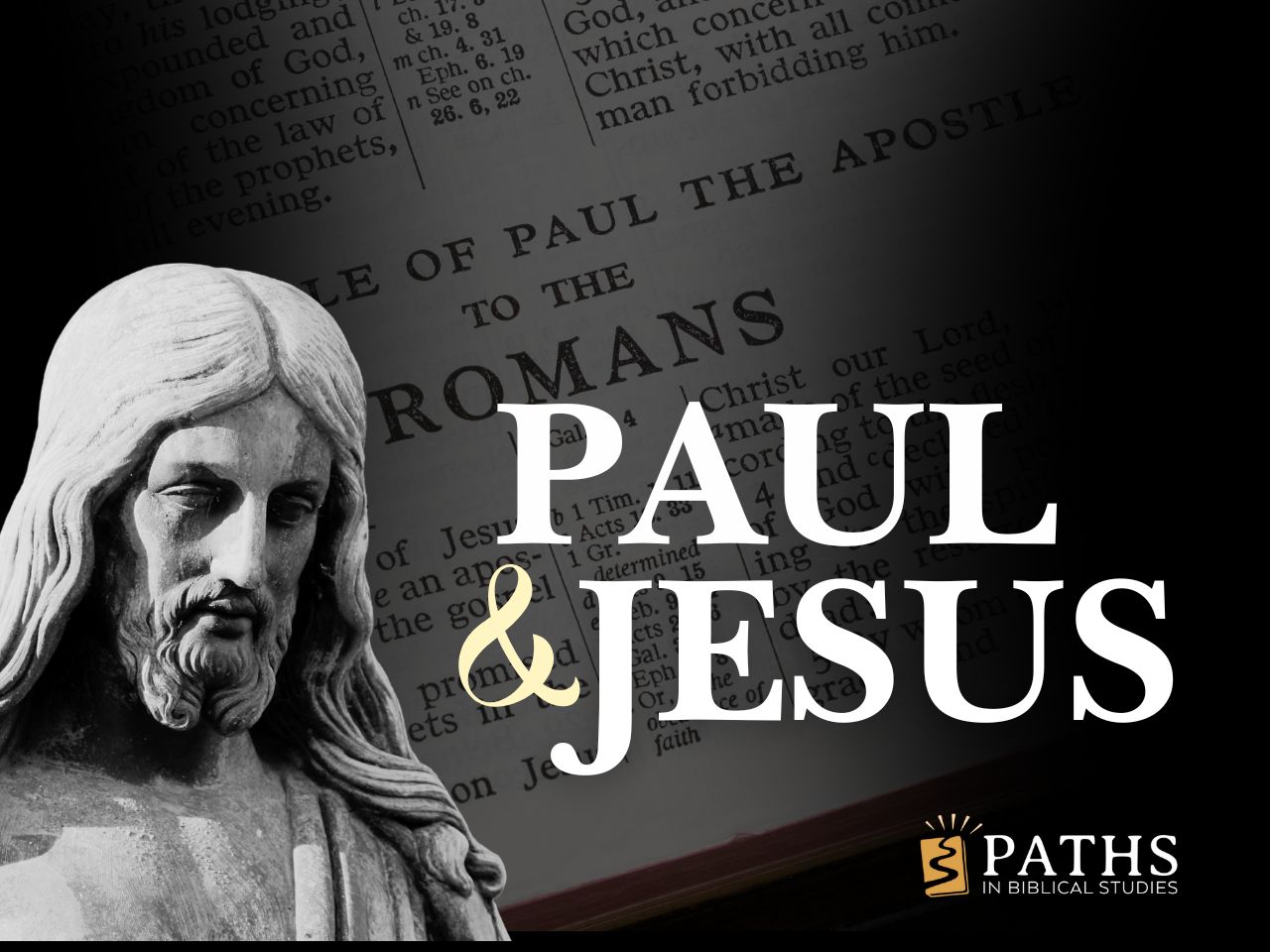
DID PAUL AND JESUS HAVE THE SAME RELIGION?
Jesus taught a message of repentance to prepare for the Kingdom of God while Paul taught faith in Jesus. Did they agree? Should they be considered the “co-founders” of Christianity?
Catholic vs. Protestant Views on Good Works
Views of Good Works in Catholicism
The Catholic Church says that there are two forms of equally important “justification,” which, in this context, means the process of being made righteous, not the personal defense of one’s actions. The first is called initial justification, an effect solely of God’s unearned grace which is conferred on a believer at baptism. As the Catechism of the Church, section 1262 says, “the two principal effects [of baptism] are purification from sins and new birth in the Holy Spirit.” However, for Catholics, this is only the first step in the long process of justification.
The next, lifelong step is known as ongoing justification and involves doing good works. In Catechism 1033, it says “Our Lord warns us that we shall be separated from him if we fail to meet the serious needs of the poor and the little ones who are his brethren.” That is, good works, chosen by the free will human beings are granted, continue the process of sanctifying humans until their deaths. This means that justification and eternal salvation are accomplished through the cooperation of God’s grace and human free will.
By the way, the Eastern Orthodox Church has a position quite similar to that of the Catholic Church. Commenting on Ephesians 2:8–10 which says
For by grace you have been saved through faith, and that not of yourselves; it is the gift of God, not of works, lest anyone should boast. For we are His workmanship, created in Christ Jesus for good works, which God prepared beforehand that we should walk in them.
the Orthodox Study Bible says
How can one get from the one kingdom to the other (vv. 1–7)? By the unity of grace, faith, and works (v. 9). Not that these are equal, for grace is uncreated and infinite, whereas our faith is limited and can grow; good works flow out of authentic faith. Works cannot earn us this great treasure—it is a pure gift—but those who receive this gift do good. We are not saved by good works, but for good works.
The Protestant View
The Protestant perspective on good works and salvation is generally derived from the German Reformer Martin Luther’s interpretation of Paul.
Luther apparently came to his most important epiphany on justification and good works while reading Romans 1:17, which says
For in it [the gospel] the righteousness of God is revealed through faith for faith, as it is written, “The one who is righteous will live by faith.”
Luther, reading Paul’s words in Greek, realized that while the above translation of the quote from Habakkuk 2:4 was the most common, it could also be translated as “The one who is righteous by faith will live.” In the first translation, human beings first receive Christ by faith and then live in Him according to that faith. In the second translation, though, a person is made righteous by faith. Nothing more than faith in Christ is necessary for salvation.
It must be said that Protestants, of course, value good works, as well. However, they generally believe that good works are merely confirmation of their faith, unnecessary for any ongoing justification which is conferred automatically by faith. Thus, Luther wrote, "He is not righteous who does much, but he who, without work, believes much in Christ” (1518 Heidelberg Disputation). It’s not surprising, by the way, that Luther was not a fan of the Epistle of James from the New Testament canon, since it literally argued against his own position on faith and works in the economy of salvation.
Another prominent Reformer and contemporary of Luther named John Calvin agreed, writing "We explain justification simply as the acceptance with which God receives us into his favor as righteous men. And we say that it consists in the remission of sins and the imputation of Christ's righteousness."(Institutes of the Christian Religion, specifically Book 3, Chapter 11, Section 2).
Adding to this Protestant notion, Gerald Bray, in his book Anglicanism: A Reformed Catholic Tradition, writes of an implicit benefit to Luther’s notion:
The doctrine of justification by faith alone was the central teaching of the Lutheran Reformation and is fully accepted by Anglicans. Apart from anything else, it is a guarantee that everyone is saved equally—there is no special reward for those who do more (or better) works than others.
To sum up the difference between Catholic and Protestant doctrines of justification, then, we might say that Catholics see justification as a gradual infusion of grace (after the initial grace at Baptism), effecting a moral transformation in people through good works. Protestants, meanwhile, see justification as a change in legal status before God. God declares them innocent in his court because of their faith.
Unfortunately, though, both Catholic and Protestant views have led to a mischaracterization of Judaism as “legalistic.” What does this mean and is it accurate?
Misconceptions About Judaism
Since Christians, like the opponents of the author of the Epistle of James, have sometimes conflated Jewish “works of the law” with “good works”—viewing both as futile attempts to become righteous through human effort—this has often led to views of Judaism as a “legalistic” religion. Legalism, in the context of religion, means faithfully following moral rules while ignoring the importance of individual faith. But is even this true of Judaism?
In 1977, scholar E.P. Sanders wrote Paul and Palestinian Judaism, an influential book which compared Pauline thought with the Judaism of Palestine in the 1st century CE. One of his conclusions was that Judaism as practiced during Paul’s life was not legalistic. Instead he called it “covenantal nomism,” a system in which “one’s place in God’s plan is established on the basis of the divine covenant and that the covenant requires, as the proper response of man, his obedience to its commandments.”
In other words, Jews of Paul’s time were not trying to earn their salvation through good works or works of the law; they didn’t believe that it could be earned. Instead, they were honoring the covenant God had made with them by following the dictates of the God-given Torah. Doing the works of the law was an act of love and gratitude to God.
We can see this idea in the writings of 1st-century Jewish philosopher Philo of Alexandria. In The Sacrifices of Abel and Cain, Philo writes
he who conceives that he was deserving to receive the possession and enjoyment of good things may be taught to change his opinion by the oracle which says, “You do not enter into this land to possess it because of your righteousness, or because of the holiness of your heart; but, in the first place because of the iniquity of the nations, since God has brought on them the destruction of wickedness; and in the second place that he may establish the covenant which he swore to our fathers” [Deut 9:5]. (Philo, Sac. 54-57).”
For Philo, Jews could not earn their rewards from God. Rather, they were given them freely by God, who promised them (again, without merit) to their ancestors. Keeping kosher and observing the Sabbath were free acts of love toward God that Jews performed in gratefulness for their covenant with God, which they also saw as a free, unearned gift.

Conclusion
What are good works, and are faith and works mutually exclusive? It’s clear throughout the New Testament that good deeds are considered requirements for followers of Christ. Jesus declares in the Gospels that it will be those who were kind and generous to those in need who are allowed to enter the Kingdom of Heaven after the judgment.
Paul, too, wrote that his Gentile converts must be kind and generous to all, promising the rewards of eternal life for those who were faithful in doing good. This message even appears in the letters written in Paul’s name. However, in the Epistle of James, we see that some later Christians misunderstood Paul’s intent.
While Paul, in Galatians and elsewhere, told his Gentile converts that they need not fulfill “works of the law” to follow Christ, he meant those requirements intended to make Jews a distinct people, including circumcision and eating kosher foods. Some later Gentile Christians, however, apparently thought that Paul meant “good works,” indicating that faith in Jesus, even without doing good to others, would ensure their salvation. For the author of James, however, “faith without [good] works is dead.”
This distinction again became relevant with the split between Catholics and Protestants. While both believe in the free gift of divine grace, Catholics believe that this is only the first step toward salvation, which must be deepened over time by doing good works. However, like James’ opponents, Protestant reformers insisted that good works, while laudatory, were ultimately irrelevant to salvation.
NOW AVAILABLE!
In The Beginning™ - History, Legend, & Myth in Genesis
In Part One of Bart's new "How Scholars Read the Bible" Series, dive into the stories of the first book of the Bible from a historical perspective.