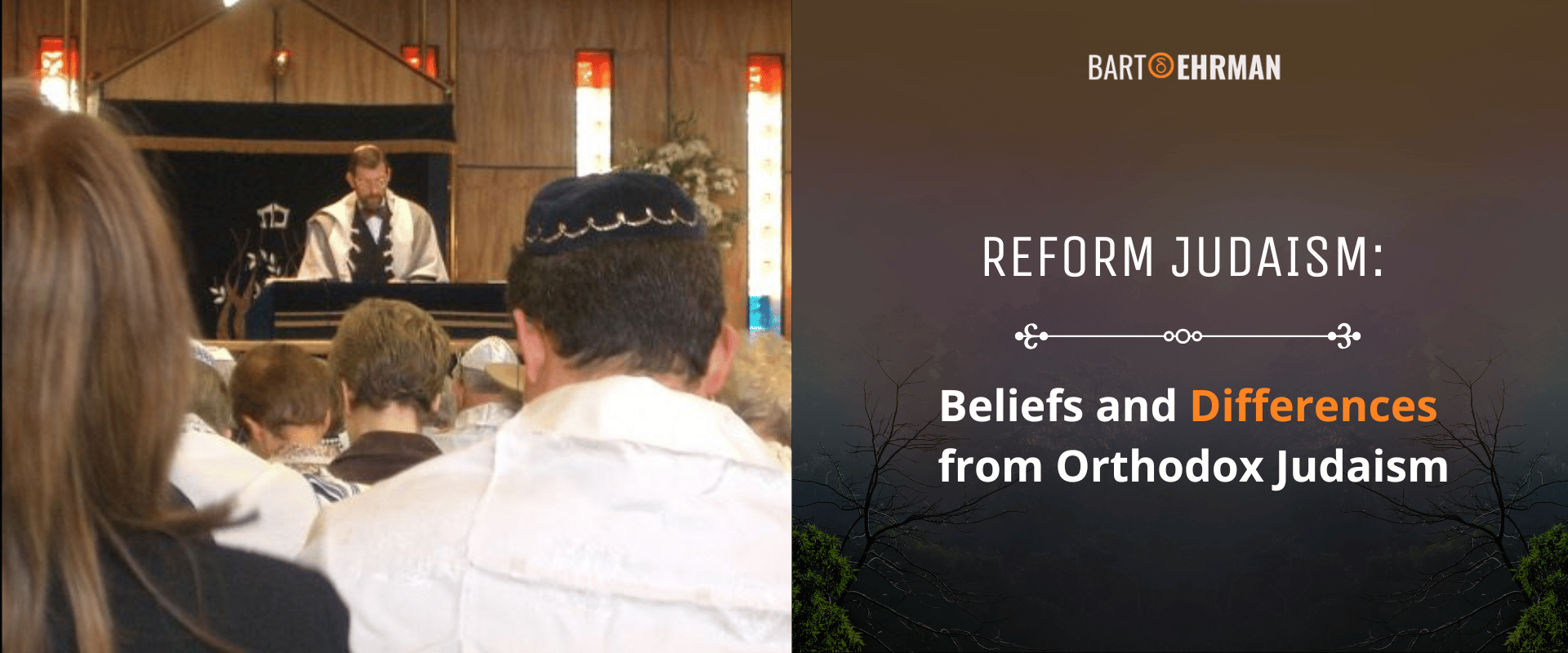
Reform Judaism: Beliefs and Differences from Orthodox Judaism
Written by Marko Marina, Ph.D.
Author | Historian
Author | Historian | BE Contributor
Verified! See our guidelines
Verified! See our editorial guidelines
Date written: March 27th, 2026
Disclaimer: The views and opinions expressed in this article belong to the author and do not necessarily match my own. - Dr. Bart D. Ehrman
I'm sure you have heard the term Reform Judaism, yet many people are not entirely certain what it actually means.
Judaism is a tradition deeply rooted in a powerful sense of collective past. For Jews, memory is not simply a record of events that once happened. It’s a story to be studied, transmitted from generation to generation, and in certain cases even ritually re-experienced.
Through sacred texts, liturgy, and shared traditions, the past remains a living dimension of Jewish identity. At the same time, that very past reveals something important about Judaism itself: there has never been only a single, uniform way of being Jewish.
Like many long-standing religious traditions, Judaism has always contained internal diversity. Different communities, historical contexts, and intellectual currents have shaped how Jews understood their traditions and practiced their faith.
Over time, these differences gave rise to various streams within modern Judaism. Among them, Reform Judaism occupies a particularly significant place.
Emerging in response to changing social and intellectual conditions, it represents one of the most influential attempts to rethink Jewish life in light of modern realities. As a result, Reform Judaism beliefs and practices have become an important part of the broader Jewish landscape.
Understanding Reform Judaism, therefore, requires more than simply listing its teachings or practices. It involves situating the movement within the larger story of Jewish history and recognizing how Jewish communities have continually negotiated the relationship between tradition and change.
In what follows, we’ll first clarify what scholars and practitioners mean when they speak about Reform Judaism.
We’ll then briefly explore the historical circumstances in which the movement emerged before examining some of the central Reform Judaism beliefs and the ways they differ from those found in Orthodox Judaism.
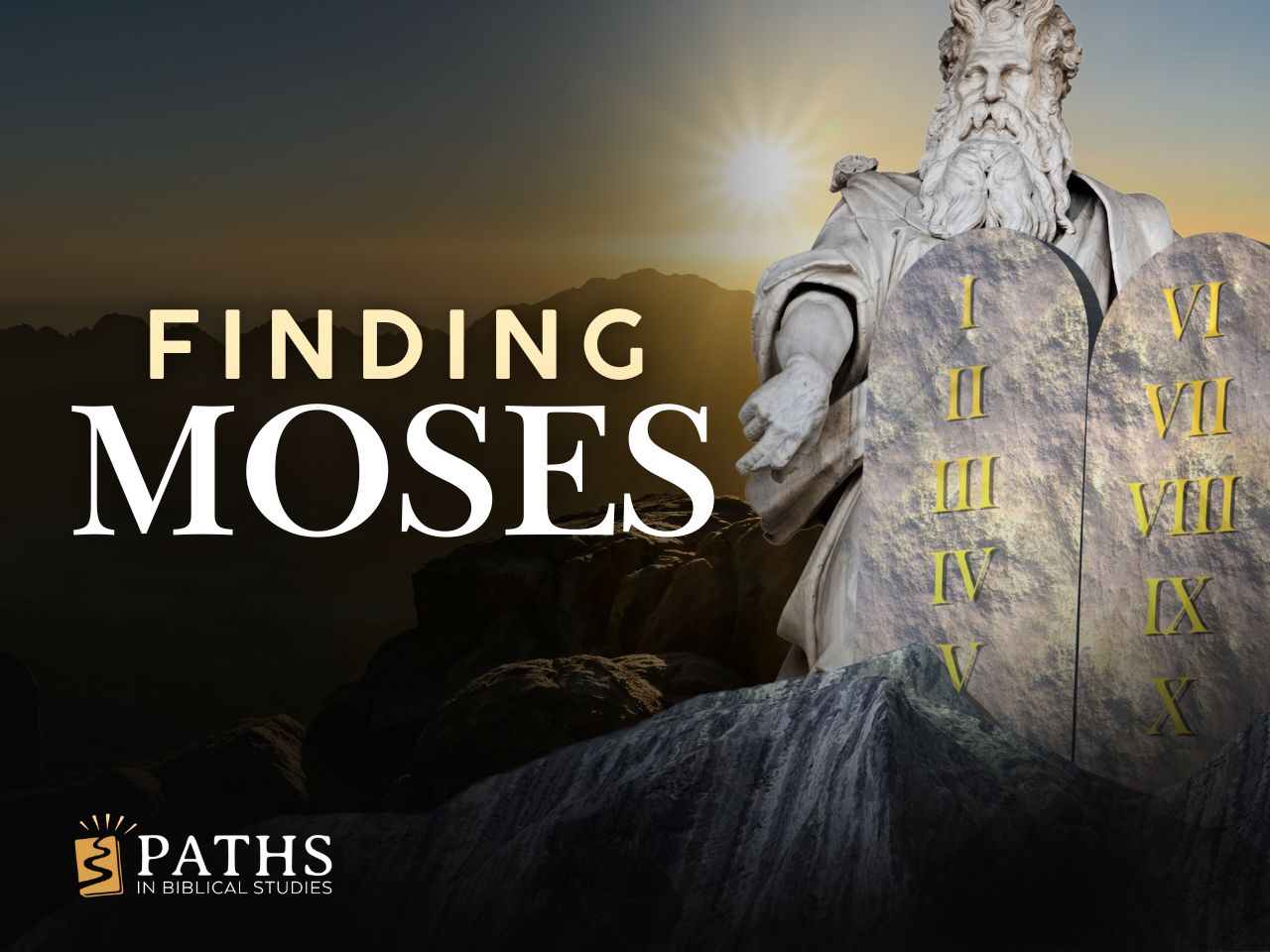
Since we are talking about Judaism, perhaps you’d enjoy exploring one of the most famous figures in Jewish tradition: Moses.
In his 8-lecture online course Finding Moses: What Scholars Know About the Exodus and the Jewish Law, acclaimed Bible scholar Dr. Bart D. Ehrman examines what historians and biblical scholars can actually say about Moses, the Exodus, and the origins of Jewish law.
If you’re curious about how modern scholarship investigates these foundational stories of the Hebrew Bible, this course offers a clear and engaging introduction.
What Is “Reform Judaism”? Clarifying the Terminology
In his book The Rise of Reform Judaism, Gunther Plaut notes:
(Affiliate Disclaimer: We may earn commissions on products you purchase through this page at no additional cost to you. Thank you for supporting our site!)
Reform Judaism is a phenomenon of man’s restless spirit. At its best, it is a dynamic faith – and its very dynamism makes it difficult to describe it adequately. Its traditional roots speak of yesterdays; its branches combine the ancient spirit with the special beauty of each new generation. Reform speaks of man’s longing for the sure ways of his fathers and at the same time of his own surging and daring struggle for new ways. It is Jewish to the core, although occasional and temporary acceptance of the habits of changing environments may deceive the casual onlooker.


His observation opens up the basic terminology that we have to unpack before we can understand the core beliefs, practices, and history of Reform Judaism.
In other words, it leads us to several crucial terminological questions: What exactly is meant by the term “Reform Judaism”? What is a reform Jew? And why do scholars and practitioners generally avoid the expression “Reformed Judaism”?
The term Reform Judaism refers to a modern Jewish religious movement that emerged in Europe during the nineteenth century and that sought to reform Jewish religious life aspects in response to new intellectual, social, and political circumstances.
The word “Reform” derives from the German “Reformbewegung” (“Reform movement”), which was used by early advocates who believed that certain religious practices and institutional structures of Judaism could be reconsidered in light of modern conditions while maintaining a commitment to the enduring ethical and spiritual foundations of Jewish tradition.
In this sense, the term “Reform” doesn’t imply the creation of a new religion but rather a movement within Judaism that aimed to reinterpret inherited traditions in changing historical contexts.
What is a reform Jew, then? In contemporary usage, the expression usually refers to an individual who identifies with the institutions, communities, and religious outlook associated with Reform Judaism.
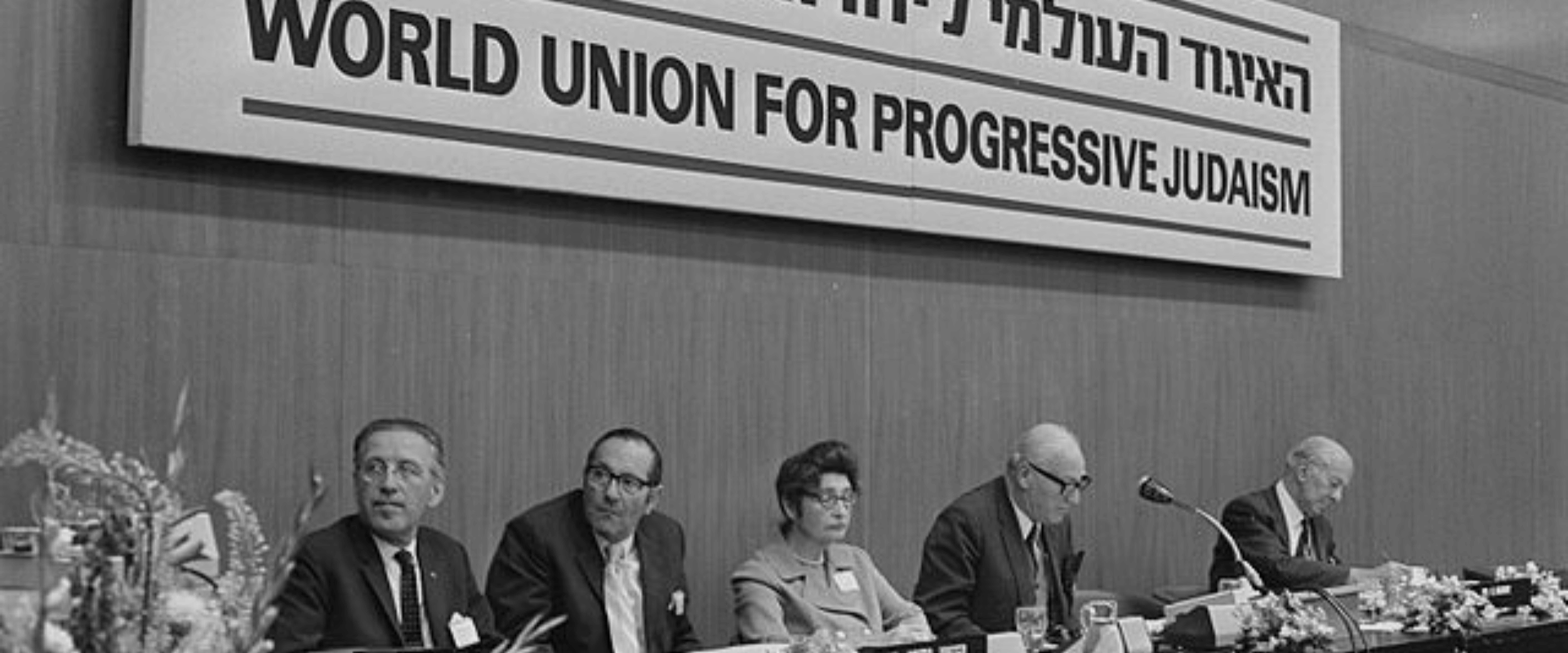
Many adherents simply describe themselves as Reform Jews, indicating affiliation with congregations and organizations connected to the movement, such as those within the broader network of Reform or Progressive Judaism.
The term therefore functions primarily as a marker of religious orientation and communal belonging rather than as a rigid doctrinal label that one would expect if this was one of the Christian religious movements.
What is a Reformed Jew? That description, and the related phrase “Reformed Judaism,” is generally considered inaccurate.
While it occasionally appears in casual usage, the term is rarely employed by scholars or by members of the movement itself. “Reformed Judaism” may suggest that Judaism as a whole has already undergone a completed process of reform, whereas the expression “Reform Judaism” refers specifically to a particular historical movement within modern Judaism.
For this reason, both academic literature and institutional bodies associated with the movement consistently prefer the formulation “Reform Judaism.”
Historical Origins of Reform Judaism
The historical origins of Reform Judaism are closely connected to the profound intellectual and social transformations that reshaped Europe in the 18th and 19th centuries.
The Enlightenment, together with the gradual emancipation of Jews in many European states, created new opportunities for Jewish participation in broader cultural and civic life.
These changes also raised pressing questions about how Jewish religious traditions should function in a modern society increasingly shaped by secular learning, scientific thought, and expanding civil rights.
In his book American Reform Judaism: An Introduction, Dana Evan Kaplan explains:
Jews had been a persecuted minority in Christian Europe for hundreds of years. Despite or perhaps because of this, they developed a thriving spiritual and religious life inside their own community. But the increasing political centralization of the late eighteenth and early nineteenth centuries undermined the societal structure that perpetuated this way of life. At the same time, Enlightenment ideas began to influence not only a small group of intellectuals but also wider circles. The resulting political, economic, and social changes were profound. From a religious point of view, Jews felt a tension between Jewish tradition and the way they were now leading their lives.
In this environment, some Jewish thinkers and communal leaders began exploring ways to adapt aspects of Jewish religious life while preserving what they regarded as the enduring ethical and spiritual foundations of the tradition.
The earliest concrete expressions of Reform Judaism appeared in the German-speaking lands of Central Europe in the early 19th century. One of the most frequently cited pioneers of the movement was Israel Jacobson, who introduced a reformed style of worship in his school chapel in Seesen in 1810, and later promoted similar practices in Berlin.
These early reforms focused primarily on the character of synagogue worship. Services were shortened, sermons were delivered in the vernacular rather than exclusively in Hebrew, and elements such as choirs and organ music were introduced.
In 1818, the Hamburg Temple was established, often regarded as the first synagogue to institutionalize many of these innovations.
As Dana Evan Kaplan explains in an article on the subject, these early Reformers were attempting to make Jewish worship more meaningful and accessible to Jews living in a rapidly changing cultural environment.
As the movement developed, a new generation of rabbinic leaders began to articulate a more systematic intellectual defense of religious reform.
Among the most influential figures was Reform rabbi Abraham Geiger, a German scholar and religious leader who argued that Judaism had always evolved in response to historical circumstances.
Reform-minded rabbis held conferences in the 1840s (in Brunswick, Frankfurt, and Breslau) to discuss the theological and practical implications of religious change.
Although participants differed in their views about how far reforms should go, these gatherings marked an important stage in the consolidation of the movement and helped shape a distinct reformist approach to Jewish religious life.
During the 19th century, Reform Judaism also spread beyond Central Europe, particularly to the United States, where it would eventually become one of the most influential streams of modern Judaism.
Jewish immigrants from German-speaking regions helped introduce reform ideas into American congregations, and leaders such as Isaac Mayer Wise played a decisive role in building durable institutions for the movement.
Wise founded Hebrew Union College in 1875 and helped establish national organizations that coordinated congregational life and rabbinic leadership. Through these institutions, Reform Judaism gradually developed into an organized religious movement that continued to evolve in response to the changing conditions of modern Jewish life.
With this historical background in mind, we can now turn to the central beliefs and practices of Reform Judaism and examine how they differ from those found in Orthodox Judaism.
NOW AVAILABLE!
Finding Moses: What Scholars Know About The Exodus & The Jewish Law
Riveting and controversial, the "FINDING MOSES" lecture series takes you on a deep dive into the stories of Moses, the exodus, and a whole lot more...
Core Beliefs and Practices of Reform Judaism and Differences from Orthodox Judaism
The beliefs and practices associated with Reform Judaism developed in close connection with the historical circumstances described above.
As Jewish communities entered modern European societies and later the social landscape of North America, many Reform-minded thinkers argued that Judaism had always evolved in response to changing historical realities.
Rather than viewing Jewish law as an unchanging system fixed for all time, Reform Judaism generally understands religious tradition as the product of a long historical process.
Jewish teachings, rituals, and interpretations have developed across centuries of Jewish life, and, therefore, they may continue to develop as new ethical insights, intellectual developments, and social conditions arise. This perspective has profoundly shaped Reform Judaism beliefs, particularly in relation to religious authority and the interpretation of tradition.
One of the most significant areas in which Reform Judaism differs from Orthodox Judaism concerns the status of halakhah, the body of Jewish law derived from the Hebrew Bible, rabbinic literature, and later legal traditions.
Orthodox Judaism generally regards halakhah as divinely mandated and therefore binding in its traditional form. Reform Judaism, by contrast, tends to treat halakhic tradition as historically shaped and therefore open to reinterpretation.
In some cases, this resulted with a quite strong view of the importance (or the lack) of halakhic tradition. Michael E. Meyer, in his book Response to Modernity, recalls the example of Rabbi Emil G. Hirsch:
“As a rationalist, Hirsch had little regard for sentiment, which he depicted as feminine; as a religious moralist, he regretted that symbolism distracted Jews from religion's principal object. His opposition to Halakhah was absolute. Judaism, as he affirmed it, lived under the moral law alone. Repeatedly Hirsch defined his God in the words of the English poet and literary critic Matthew Arnold as "that Power, not ourselves, which makes for righteousness," a force independent of humanity but working through it. The Jew lived his "moral theism" preeminently by works in the world. Social justice – a minor theme in Kohler's writing and practical work – was for Hirsch of the essence.
Not everyone, of course, agreed with Hirsch. But many Reform thinkers emphasized the importance of ethical principles and individual conscience when determining how Jewish practices should be observed in contemporary life.
While the classical Reform movement of the 19th century rejected many traditional ritual obligations, later generations have often sought a more balanced approach, encouraging Jews to engage with tradition while maintaining the autonomy to determine which practices hold religious meaning for them.
These differing approaches to religious authority have also influenced synagogue worship and communal practice.
Historically, Reform congregations introduced several changes intended to make religious services more accessible and spiritually meaningful for modern congregants. Sermons were commonly delivered in the vernacular, prayer services were often shortened, and musical elements such as choirs and organ accompaniment were introduced.
Mixed seating for men and women became standard in Reform synagogues, reflecting a broader commitment to gender equality. In many congregations, women today participate fully in religious leadership, and the ordination of women as rabbis has become a defining feature of Reform Judaism in the modern period.
Another distinctive feature of Reform Judaism concerns its relationship to modern scholarship and contemporary ethical concerns.
Reform thinkers have generally been open to historical and critical study of sacred texts, including the academic study of the Hebrew Bible and rabbinic literature. This openness reflects a broader conviction that religious understanding can coexist with modern intellectual inquiry.
Reform Judaism has also placed strong emphasis on ethical teachings derived from the prophetic tradition of the Hebrew Bible, often highlighting themes such as social justice, human dignity, and responsibility toward the wider world.
These emphases have shaped the movement’s engagement with social and political issues in many modern societies.
At the same time, Reform Judaism isn’t a single uniform system of belief or practice. Because the movement places significant weight on individual and communal autonomy, there is considerable diversity among Reform Jews in how religious life is expressed.
Some communities have moved toward greater engagement with traditional rituals and Hebrew liturgy, while others maintain the more classical forms of Reform worship that developed in the nineteenth century.
What unites these varied expressions is a shared commitment to interpreting Jewish tradition in ways that speak meaningfully to contemporary life.
Before we move to the last part of our article, it may be helpful to pause for a moment and summarize some of the key distinctions we have been discussing.
Discussions about Judaism’s different streams can sometimes become complicated rather quickly, especially once historical developments, theological debates, and centuries of rabbinic interpretation enter the picture. For readers who prefer a clearer snapshot, a simple comparison can often make things easier.
So, the table below offers a brief overview of several important differences between Reform Judaism and Orthodox Judaism. Of course, no table can capture the full complexity of two living religious traditions, each with its own internal diversity and ongoing debates.
Still, it provides a convenient way to highlight some of the central contrasts that shape how these two streams approach Jewish law, religious practice, and life in the modern world.
Category | Reform Judaism | Orthodox Judaism |
|---|---|---|
Authority of Jewish Law | Jewish law interpreted and adapted for modern life | Jewish law seen as divinely given and binding |
Approach to Tradition | Tradition evolves and may be reinterpreted. | Tradition preserved according to established interpretations. |
Synagogue Worship | Vernacular language, mixed seating, musical instruments sometimes used. | Hebrew liturgy, separate seating, no instruments on Sabbath. |
Gender Roles | Full gender equality; women may serve as rabbis. | Religious leadership is traditionally male. |
View of Modern Scholarship | Generally open to historical-critical study of texts. | Greater emphasis on traditional interpretations of scripture |
Appendix: What Would the Historical Jesus Think About Reform Judaism?
Any attempt to imagine what the historical Jesus would “think” about Reform Judaism has to begin with a major caveat: the question itself is anachronistic. Jesus didn’t inhabit a world of modern Jewish denominations, nor did he face the political, intellectual, and social conditions that produced Reform Judaism in 18th and 19th-century Europe.
Historically speaking, Jesus belongs within Second Temple Judaism, a diverse landscape of Jewish groups and debates long before “Orthodox” and “Reform” became meaningful categories.
Most critical scholars today still regard him as best understood in Jewish terms. More specifically, as an apocalyptic prophet whose message focused on the imminent arrival of God’s decisive intervention in history.
As Dale C. Allison has argued in numerous studies, including his latest book Interpreting Jesus, Jesus anticipated that the coming Judgment would be soon and would involve a dramatic, cosmic transformation of the world.
If we keep that context firmly in view, the most historically responsible answer is that Jesus wouldn’t be evaluating Reform Judaism as a “movement” at all, because the conceptual framework would be foreign to him.
His primary concerns, so far as our sources allow us to reconstruct them, were oriented toward repentance, ethical seriousness, and readiness for the approaching kingdom of God.
To the extent that later forms of Judaism (whether Reform or Orthodox) emphasize commitment to Israel’s God, the moral demands of the Torah, and the hope for divine vindication, they overlap with concerns that mattered in Jesus’ world.
But Jesus’ outlook was shaped by the expectation of an impending end-time scenario, not by questions about how an ancient tradition should adapt to modernity.
In that sense, the best way to connect Jesus to the topic isn’t to ask whether he would “approve” of Reform Judaism, but to recognize that Reform Judaism addresses problems that belong to a different historical moment than Jesus’ own.
Conclusion
Reform Judaism emerged from a very specific historical moment in which Jewish communities were confronting the challenges of modernity.
Faced with new political freedoms, intellectual developments, and social realities, reform-minded thinkers sought ways to preserve Jewish identity while allowing religious life to evolve.
The result was a movement that emphasized ethical principles, openness to reinterpretation, and the idea that Jewish tradition has always developed across history.
Today, Reform Judaism remains one of the most influential streams within the broader Jewish world.
While it differs from Orthodox Judaism in its understanding of religious authority, ritual practice, and engagement with modern scholarship, both traditions ultimately reflect ongoing efforts to interpret and live out an ancient heritage in changing historical circumstances.
Seen in this broader perspective, Reform Judaism represents one of the many ways Jewish communities have continued to negotiate the enduring relationship between tradition and change.
NOW AVAILABLE!
Finding Moses: What Scholars Know About The Exodus & The Jewish Law
Riveting and controversial, the "FINDING MOSES" lecture series takes you on a deep dive into the stories of Moses, the exodus, and a whole lot more...