Martyrdom: Christianity, Islam, and Beyond

Written by Marko Marina, Ph.D.
Author | Historian
Author | Historian | BE Contributor
Verified! See our guidelines
Verified! See our editorial guidelines
Date written: June 15th, 2026
Disclaimer: The views and opinions expressed in this article belong to the author and do not necessarily match my own. - Dr. Bart D. Ehrman
In a sentence that appears within his Journals, the Danish philosopher Søren Kierkegaard famously wrote: “The tyrant dies and his rule is over, the martyr dies and his rule begins.”
Few lines capture so well the strange power of martyrdom. A tyrant may command armies, laws, and institutions, but his authority often depends on the machinery of power that surrounds him.
The martyr, by contrast, appears powerless at the moment of death. And yet, precisely through death, the martyr can be transformed from an ordinary historical person into a lasting symbol. A figure whose meaning extends beyond the immediate political, legal, or social circumstances in which he or she died.
That is why martyrdom has occupied such an important place in the history of religion. To die for what one believes to be true isn’t simply to suffer a violent end. It’s to make a final kind of testimony.
The martyr’s death says something: to persecutors, to fellow believers, to future generations, and often to the broader world. But the meaning of that death is never self-evident. It’s interpreted, preserved, narrated, ritualized, and sometimes contested by the communities that remember it.
To understand Martyrdom historically, then, we have to look beyond one tradition alone. Judaism, Christianity, and Islam all developed powerful martyrdom traditions, though each did so in distinctive ways and under different historical circumstances.
In this article, we’ll explore how martyrdom emerged and developed within these three monotheistic religions, beginning with its basic meaning and etymology before turning to ancient Judaism, early Christianity, and early Islam.
Along the way, we’ll see how martyr stories helped communities define loyalty to God, resistance to oppression, fidelity to divine law, and the boundaries of true belief. Martyrdom, in this sense, is not merely about death.
It’s about witness, memory, and the enduring power of a life interpreted through its final act.
However, before we enter into the world of religious martyrdoms, here’s something for those interested in the origins of Christianity more broadly. Bart D. Ehrman’s 8-lecture course Paul and Jesus: The Great Divide explores one of the most important and controversial questions in early Christian history: did Paul and Jesus proclaim the same message, or did Paul transform Jesus’ teachings into something new?
(Affiliate Disclaimer: We may earn commissions on products you purchase through this page at no additional cost to you. Thank you for supporting our site!)
What Is Martyrdom? Definition and Etymology
In his book Martyrdom: A Guide for the Perplexed, Paul Middleton notes:
If the question of how we speak of martyrdom is a minefield, then so too is the far more obvious question of ‘what is martyrdom?’ Martyrdom is a contested term. Does a suicide bomber count as a martyr? The hijackers of the planes which crashed into the Twin Towers of the World Trade Center were lauded as martyrs by the Al-Qaeda organization, while the same event was described as the worst instance of terrorism in America’s history. Similarly, in the Occupied Territories of Palestine, those who kill Israeli soldiers and often civilians are regarded as martyrs by some Palestinian communities, yet for others, they are terrorists.


Middleton’s point is essential: martyrdom isn’t simply a neutral label attached to a particular kind of death. It’s a category of interpretation, and often a deeply contested one.
The same person may be remembered by one community as a martyr, condemned by another as a criminal, and analyzed by historians as a figure whose death must be understood within a broader political, religious, and social context.
Indeed, it’s not easy to find a definition of martyrdom that is precise enough to be useful but broad enough to account for the diversity of historical examples.
Along with providing the word’s pronunciation, the famous Merriam-Webster dictionary defines martyrdom as “the suffering of death on account of adherence to a cause and especially to one's religious faith.”
That definition captures something important: martyrdom involves suffering, death, and commitment to a cause. Yet it also raises problems.
If taken too broadly, it can include almost anyone who dies for a political, national, ideological, or religious conviction.
It also doesn’t fully solve the martyr-terrorist problem that Middleton identifies. After all, those whom some communities describe as terrorists may also undergo death for a cause. The crucial historical question, therefore, isn’t merely whether someone died for a belief, but how that death was framed, by whom, for what purpose, and within what moral and communal universe.
For that reason, I think it may be better to approach martyrdom not as a single fixed definition, but as a pattern of meaning.
That obviously brings us to the following question: What is a martyr?
In most religious traditions, a martyr isn’t simply someone who dies. A martyr is someone whose death is interpreted as faithful testimony: to God, to divine law, to truth, to justice, or to the identity of the community.
This doesn’t mean that every claim to martyrdom is equally persuasive or morally equivalent. Rather, it means that martyrdom is always both an event and an interpretation.
There is the death itself, and then there is the memory of that death which is preserved in texts, rituals, sermons, commemorations, and communal stories. Historians must pay attention to both levels.
While debates over the best definition of martyrdom will certainly continue, the etymology of the term is somewhat clearer. The English word martyr derives from the Greek word martys, meaning “witness.” In ordinary Greek usage, a martys was someone who gave testimony, especially in legal or public settings.
Early Christians adopted this language to describe those who bore witness to Christ, especially those whose testimony led to suffering and death.
Over time, the word came to refer not simply to one who testifies, but to one who does so with their life.
This connection between death, witness, and memory will be crucial as we turn first to Second Temple Judaism, where some of the most important foundations for later Jewish and Christian martyrdom traditions were formed.
Martyrdom in Ancient Judaism
In his book Jewish Martyrs in the Pagan and Christian Worlds, Shmuel Shepkaru notes:
Religious martyrdom is considered one of the more significant contributions of Hellenistic Judaism to western civilization. Out of the conflict between King Antichos Epiphanes IV and the Jewish people, it is believed, the concept of voluntary death for God unfolded. With few exceptions, this assumption has lasted from the early Christian period to this day, accepted both by Jews and Christians.
This has indeed been a common scholarly view. William H. C. Frend, for example, famously argued that early Christianity inherited much of its martyrdom theology from Judaism, especially from Daniel and the Maccabean literature.
Yet more recent scholarship has complicated this picture. Shepkaru himself argues that we should be cautious about imagining a single, straightforward Jewish origin for later Christian martyrdom.
Christianity didn’t simply “inherit” martyrdom from one Jewish source. Rather, early Christian ideas of martyrdom emerged from a wider Mediterranean world in which Jewish traditions of resistance, Greek stories of noble death, and Roman ideals of honor and self-sacrifice all helped shape the language through which death for conviction could be understood.
Whatever position one takes on the precise origins of Christian martyrdom, however, one must begin with Jewish tradition.
The Hebrew Bible and Second Temple Jewish literature contain many of the themes that later became central to martyrdom: loyalty to God under foreign pressure, refusal to commit apostasy, the willingness to suffer rather than violate divine law, and the hope that God would ultimately vindicate the righteous.
But these themes didn’t all amount to “martyrdom” in the same way. If martyrdom means not merely suffering, but consciously accepting death as a witness to God or the law, then some Jewish texts provide only partial or preliminary forms of the idea. Others come much closer to what later readers would recognize as martyrdom proper.
The Book of Daniel is a good example of this complexity. Daniel and his companions refuse to compromise their loyalty to the God of Israel while living under foreign rule.
Shadrach, Meshach, and Abednego will not worship Nebuchadnezzar’s golden image and are thrown into the fiery furnace; Daniel continues to pray despite the royal decree and is cast into the lions’ den.
These stories clearly contain martyrological elements: religious conflict, fidelity under pressure, and trust in God even when death seems imminent. Yet they aren’t martyrdom stories in the strictest sense because the heroes do not die.
In other words, their function isn’t to glorify voluntary death, but to demonstrate that God can save the faithful from apparently impossible situations.
As Shepkaru emphasizes, Daniel is better understood as “resistance literature” than as a fully developed martyrdom text: its message is perseverance and divine deliverance, not the celebration of death itself.
The picture is different, but still complicated, in 1 Maccabees. Written in the context of the Maccabean revolt against Seleucid rule in the 2nd century B.C.E., 1 Maccabees describes a crisis in which Jewish law, worship, and identity came under violent pressure.
Some Jews are killed for circumcising their children or refusing to eat forbidden food. Others die because they refuse to fight on the Sabbath. At first glance, these may appear to be straightforward martyrdom accounts.
But 1 Maccabees itself doesn’t primarily present these deaths as models to imitate. On the contrary, the story of the Jews who refuse to fight on the Sabbath becomes the occasion for Mattathias and his followers to decide that Jews may fight in self-defense even on the Sabbath.
The book’s emphasis falls not on passive death, but on active resistance. In this tradition, the faithful response to persecution is not simply to die for the law, but to fight for it.
The clearest ancient Jewish examples of martyrdom appear in 2 Maccabees 6–7. There, the elderly scribe Eleazar refuses to eat pork, even when offered the possibility of merely pretending to violate the law. His concern isn’t only personal purity, but public example: if he appears to compromise, younger Jews may be led astray.
His death is therefore presented as a noble witness to the ancestral laws.
Even more famous is the story of the seven brothers and their mother. All are tortured and killed because they refuse to transgress the law.
Unlike the heroes of Daniel, they aren’t rescued from death. Unlike the dominant ideology of 1 Maccabees, they do not take up arms. Instead, they accept death while expressing confidence that God will raise the righteous and punish the tyrant.
Here we find several features that would become central to later Jewish and Christian martyrdom traditions: public refusal, bodily suffering, fidelity to divine law, exemplary death, and hope in resurrection.
Jolyon Mitchell, in his book Martyrdom: A Very Short Introduction, notes:
It was not until the 2nd century that the term kiddush ha-Shem (to die for the sanctification of the [Divine] Name), in Judaism, came to be understood as ‘martyr’. It would soon be connected with the Maccabean Martyrs, who were later known as Kedoshim, because they had chosen death over the hillul ha-Shem (defamation of the [Divine] Name). In the midst of the persecutions by the emperor Hadrian, the rabbis held a secret council in Lydda, codifying laws relating to martyrdom: an individual was obliged to accept death rather than commit idolatry, unchastity (e.g., incest or adultery), and murder.
Even here, however, caution is necessary. The martyrs of 2 Maccabees shouldn’t simply be read as if they already expressed later Christian martyr theology. Their deaths are tied above all to loyalty to the Torah and to the covenantal identity of Israel.
They die rather than abandon the laws of their ancestors. Their hope is that God will vindicate them, restore them, and judge the oppressor. In this sense, ancient Jewish martyrdom didn’t emerge as a single, fully formed doctrine.
It developed through a range of texts and circumstances: Daniel’s stories of faithful resistance and miraculous deliverance, 1 Maccabees’ call to armed defense of the law, and 2 Maccabees’ powerful portraits of Jews who chose death rather than apostasy.
These traditions would become indispensable for later readers, especially Christians, who interpreted their own suffering and death through the older Jewish language of faithfulness, law, resurrection, and divine vindication.
That brings us naturally to early Christianity, where martyrdom would become one of the most distinctive and influential expressions of religious identity.
DID PAUL AND JESUS HAVE THE SAME RELIGION?
Jesus taught a message of repentance to prepare for the Kingdom of God while Paul taught faith in Jesus. Did they agree? Should they be considered the “co-founders” of Christianity?
Martyrdom in Early Christianity
In her book Ancient Christian Martyrdom, Candida Moss writes:
Death comes to all, but the art of dying was a test of character. In the act of dying, identities were exposed, values and virtues revealed, and claims to truth laid bare. A willingness to die proved the purity of one’s intentions and served as a guarantor of the veracity of one’s claims. At the same time, death could function as a means to subvert the attempts of others to exercise control. Dying nobly in these circumstances frustrated efforts to constrain the individual, destabilized political structures, and reclaimed power in the face of aggression.
This observation helps us understand why martyrdom became so important in early Christianity.
Needless to say, Christians didn’t invent the idea that noble death could reveal truth or virtue; that idea was already present in the wider Greco-Roman world.
But Christians interpreted death through their own central story: the suffering and execution of Jesus. This, obviously, begs the following question: Was Jesus a martyr?
Here, we should be careful! Jesus himself wasn’t usually classified simply as a martyr in later Christian theology because his death was understood as messianic, redemptive, and saving in a unique sense.
Yet his passion became the supreme model for faithful suffering. The martyr was one who bore witness to Christ, refused to deny him, and accepted death rather than compromise that allegiance.
In the New Testament, Stephen became the paradigmatic example. According to Acts, he testified publicly, saw a vision of Jesus exalted in heaven, and was stoned to death.
His final prayer for his attackers echoes Jesus’ words from the cross, making his death an imitation of Christ’s own suffering. This is why later Christian tradition remembered him as the “protomartyr,” the first Christian martyr.
During the first three centuries, Christian martyrdom developed in the context of Roman power, but that context must be described carefully.
Christians weren’t constantly hunted by Roman officials in every province of the empire.
The famous correspondence between Pliny the Younger and the emperor Trajan, written from Bithynia-Pontus in the early second century, suggests a more uneven reality: Christians were not to be searched out indiscriminately, but if accused, tried, and found unwilling to recant, they could be punished.
This doesn’t mean that early Christian claims of persecution were imaginary. It means that persecution was often local, sporadic, socially embedded, and legally irregular before the more systematic imperial measures of the third and early fourth centuries.
The experience of hostility, denunciation, trial, and execution was real, but it varied greatly across time and place.
Some of the most influential early Christian reflections on martyrdom came from Asia Minor and Syria.
Ignatius of Antioch, writing on his way to Rome where he expected to be executed, imagined his death as both imitation of Christ and sacrificial offering. His famous image of becoming “God’s wheat,” ground by the teeth of wild beasts into “pure bread,” shows how martyrdom could be understood in eucharistic and sacrificial terms.
For Ignatius, to die for Christ wasn’t merely to endure punishment; it was to become fully a disciple, to imitate the suffering of Jesus, and to offer his body in a way that strengthened the unity and identity of the church.
Moss rightly emphasizes that, in Ignatius, martyrdom isn’t only personal heroism. It’s also communal, liturgical, and theological: the martyr’s body becomes a site where discipleship, sacrifice, and Christian identity converge.
The Martyrdom of Polycarp, probably the most famous early Christian martyr account, develops this idea even further.
Polycarp, the elderly bishop of Smyrna, is portrayed as dying “according to the gospel,” in a manner patterned on the passion of Jesus. Yet the text also shows that early Christians didn’t approve every form of seeking death.
The failed example of Quintus, who rushes forward voluntarily but then loses courage and sacrifices, warns readers that Christians shouldn’t recklessly pursue martyrdom.
Polycarp, by contrast, doesn’t seek death for its own sake. He accepts it when it comes, refuses to curse Christ, and becomes a model of faithful endurance.
This distinction is crucial: early Christian martyrdom wasn’t simply a synonym for dying enthusiastically, but a carefully narrated ideal of witness, imitation, and fidelity.
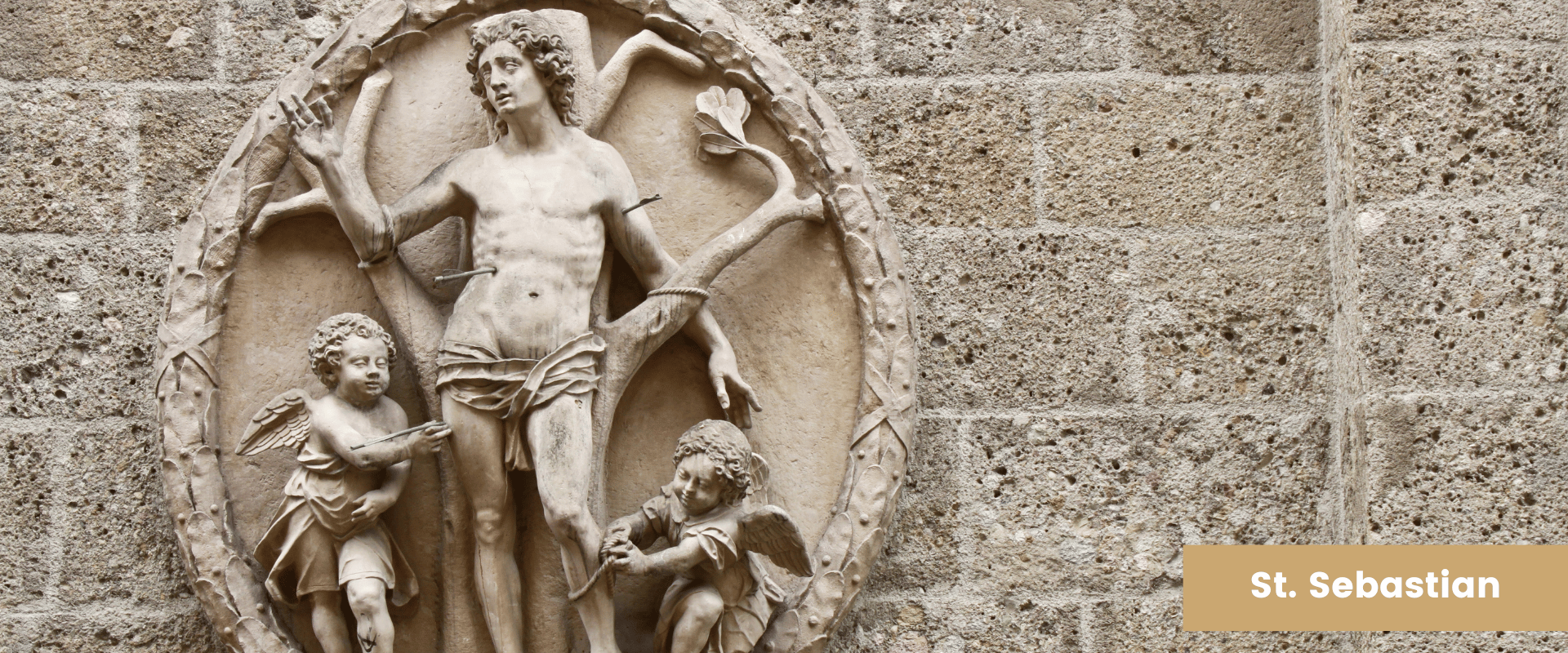
By the 4th century, especially during the Great Persecution under Diocletian and his colleagues when, among others, Saint Sebastian was killed, martyrdom had become one of Christianity’s most powerful symbols of identity.
The martyr was the believer whose loyalty to Christ endured even before judges, crowds, torture, and death. Yet once Christianity became legally tolerated and eventually favored under Constantine and his successors, the meaning of martyrdom began to change.
The age of the martyrs didn’t disappear from Christian memory. Rather, it became part of the church’s sacred past. Stories of martyrs continued to teach Christians what ultimate faithfulness looked like.
This Christian language of witness, sacrifice, and fidelity will help us see both similarities and differences when we turn next to early Islam, where martyrdom would develop within a very different historical and theological setting.
Martyrdom in Early Islam
Islam emerged in western Arabia in the early 7th century C.E. Its prophet, Muhammad, began preaching in Mecca around 610 C.E., calling his hearers to abandon polytheism and worship the one God, Allah.
This message challenged the religious and social order of Mecca, where local identity, pilgrimage, trade, and traditional cults were deeply intertwined.
The earliest Muslims were a small and vulnerable community, and some of them (especially slaves, clients, and those without strong tribal protection) experienced hostility, abuse, and social pressure because of their new faith.
In 622 C.E., Muhammad and his followers migrated to Medina, an event known as the Hijra, which marked a decisive turning point. Islam was no longer simply a persecuted minority movement; it became the basis of a new religious and political community.
This shift is crucial for understanding martyrdom in early Islam. David Cook, in his book Martyrdom in Islam, explains that Muslim martyrdom “defies easy categorization.”
In its earliest form, it could resemble Jewish and Christian martyrdom: a believer suffers because of loyalty to God and refuses to abandon the faith.
One famous example is Bilal, an enslaved early convert who was tortured for his belief in Islam but survived. Another is Sumayya bint Khayyat, traditionally remembered as one of the first Muslims actually killed for her faith.
These stories preserve the memory of Muslims who suffered not because they were military heroes, but because they belonged to a vulnerable religious minority in Mecca.
After the Hijra, however, the dominant shape of Islamic Martyrdom began to differ from the typical early Christian pattern.
In Medina, Muhammad became not only a prophet, but also the leader of a political community that fought battles, made alliances, and defended itself against enemies.
As a result, death “in the path of God” became central to Islamic martyrdom. The Arabic word shahīd, like the Greek martys, means “witness,” but in Islamic usage, it came to include those who died in battle for God’s cause.
Additionally, the Qur’an itself contains important passages that helped shape this view, especially the promise that those “killed in the way of Allah” are not truly dead, but alive with their Lord.
In this context, martyrdom wasn’t only about refusing to renounce faith under interrogation; it was also a synonym for dying courageously in defense of the Muslim community.
The early Islamic tradition therefore preserves several kinds of martyrs. There are passive sufferers such as Bilal and Sumayya, whose stories resemble older patterns of religious endurance under pressure.
There are captives such as Khubayb b. Adi, remembered as dying faithfully while helpless in the hands of enemies. And there are fighting martyrs such as Hamza, Muhammad’s uncle, who was killed at the Battle of Uhud and later honored as a great martyr of Islam.
These examples show that martyrdom in Islam developed in a broader range of settings than in early Christianity. It could be linked to persecution, but also to battle, communal defense, military conquest, and the struggle to uphold God’s cause.
This does not mean that Islamic martyrdom was always tied to warfare, or that Christian martyrdom was merely passive: the Crusades alone show how complicated that picture can become. So, the historical realities are far more complex.
But the different origins of the traditions matter. Judaism’s martyr stories often centered on fidelity to divine law under foreign domination. Christianity’s martyr stories focused especially on witness to Christ, imitation of Jesus, and refusal to sacrifice to other gods.
Early Islam included both suffering for faith and death in battle because the Muslim community very quickly became a political and military as well as religious movement. The following table summarizes the broad similarities and differences.
Tradition | Martyrdom: Central Meaning | Typical Ancient/Early Setting | Key Emphasis | Representative Examples |
|---|---|---|---|---|
Judaism | Faithfulness to God and Torah, even under threat of death | Foreign domination, forced apostasy, pressure to violate divine law | Covenant loyalty, law, resurrection, divine vindication | Eleazar; the seven brothers and their mother in 2 Maccabees |
Christianity | Witness to Christ through suffering and death | Roman trials, refusal to deny Christ or sacrifice to the gods | Imitation of Jesus, public testimony, faithful endurance | Stephen, Ignatius, Polycarp, Perpetua and Felicitas |
Islam | Witness to God through suffering, loyalty, and death in God’s path | Meccan hostility, later battles, military conquests, and communal defense | Fidelity to Islam, courage, pure intention, reward with God | Bilal, Sumayya, Khubayb, Hamza, Jaʿfar |
Appendix: Did the Apostles Really Die as Martyrs for Their Faith?
Before we conclude our journey through the martyrdom traditions of the three monotheistic religions, I would like to address an idea I often hear both from Christian apologists and from students who, I suspect, have absorbed it from apologetic literature.
The claim, defended for instance by Sean McDowell in The Fate of the Apostles, is that Jesus’ closest disciples (the inner circle of the Twelve who followed him during his public ministry) eventually died as martyrs.
In its strongest popular form, the argument is often put like this: “The apostles must have known whether the resurrection was true, and they would not have died for something they knew to be false.” It’s rhetorically powerful.
Historically, however, it’s much more complicated. McDowell’s book does examine the traditions about the deaths of the apostles, but the leap from “there are later traditions” to “we know historically that all or nearly all of them died as martyrs” is precisely where the problem begins.
To be clear, we do have early evidence for the violent deaths of some major apostolic figures. Acts, for instance, records the execution of James the son of Zebedee by Herod Agrippa I.
There is also an early and strong tradition that Peter died violently. As Bart D. Ehrman explains:
In any event, by the end of the first century and into the second it was widely known among Christians that Peter had suffered a martyr’s death. The tradition is alluded to in the book of 1 Clement: ‘Because of unjust jealousy Peter bore up under hardships not just once or twice, but many times; and having thus borne his witness [or “having been martyred”] he went to the place of glory that he deserved’ (5:4). And a hundred years later Tertullian speaks of Peter enduring ‘a passion like the Lord’s’ – possibly referring to the tradition that Peter was crucified.
Tertullian does indeed speak of Peter enduring “a passion like his Lord’s,” which later Christians understood as crucifixion.
But that, in a nutshell and excluding apostle Paul, is about as far as the firm evidence takes us. For the majority of Jesus’ apostles, we simply do not know how they died.
Later Christian tradition supplies martyrdom stories for many of them, but these accounts often come from centuries after the apostles themselves and belong to the world of apocryphal acts, legendary expansions, and devotional storytelling.
Take Thomas as one example. The idea that Thomas traveled east and died as a martyr is most famously associated with the Acts of Thomas, an apocryphal text usually dated to the early 3rd century.
It’s an enormously important text for the history of Christian imagination and tradition, but it’s not a straightforward historical report.
The same work includes, for instance, episodes involving demonic serpents, miraculous resurrections, royal conversions, and highly stylized speeches.
One may study such material seriously as literature, theology, and reception history. But no critical historian would simply treat it as stenographic reporting on the career and death of the historical apostle Thomas.
So the responsible answer is not, “None of the apostles were martyred.” Some almost certainly were; others may have been. The responsible answer is: we do not have reliable evidence that all, or even most, of the Twelve died as martyrs.
The popular apologetic claim outruns the evidence. What often happens is a kind of selective historical generosity: sources treated skeptically when they are theologically inconvenient, but suddenly “good enough” when they support a desired conclusion.
That may be useful for apologetics, but it’s not how the historical method works. For historians, late legendary traditions can tell us a great deal about how later Christians imagined the apostles. They tell us practically nothing about how the apostles actually died.
Conclusion
Kierkegaard was right, then, to see that the martyr’s death can become the beginning of a new kind of power.
But historically, that power doesn’t arise automatically from death itself. It comes from interpretation.
Across Judaism, Christianity, and Islam, martyrdom became a way of transforming suffering, defeat, persecution, or battlefield death into testimony. Yet the testimony wasn’t identical in every tradition.
Jewish martyrdom often centered on fidelity to Torah and covenant; Christian martyrdom on witness to Christ and imitation of his suffering; Islamic martyrdom on loyalty to God, endurance for the faith, and, especially after the Hijra, death in the path of God.
In each case, communities remembered certain deaths as more than tragic endings. They became stories through which later generations learned what ultimate faithfulness looked like.
That is why martyrdom has remained so powerful and so contested. The martyr dies once, but the meaning of that death continues to live, argue, inspire, disturb, and shape communities long after the moment of death has passed.
NOW AVAILABLE:
The Genius of Mark: Jesus the Secret Messiah
Mark is the most brilliant AND most underrated Gospel of the New Testament. But, did Mark have first-hand knowledge of Jesus’ life or was he just makin’ stuff up? Explore the answer in this course.