
Baal in the Bible: The Rival God of Ancient Israel

Written by Joshua Schachterle, Ph.D
Author | Professor | Scholar
Author | Professor | BE Contributor
Verified! See our editorial guidelines
Verified! See our guidelines
Date written: October 10th, 2025
Disclaimer: The views and opinions expressed in this article belong to the author and do not necessarily match my own. - Dr. Bart D. Ehrman
Baal is just one name among the many in the Hebrew Bible. Yet it reappears with striking regularity, often as a symbol of the sins of Israel. For many modern readers of the Bible, the narrative seems simple: the Israelites were strict monotheists, loyal to one true God, and the worship of Baal in the Bible was a blatant act of rebellion. But the historical and textual reality is far more complex.
In this article, I’ll explore who Baal was—both in the broader ancient Near Eastern context and within the polemics of the Bible. Baal’s story is not just about a rival god. It’s about identity, loyalty, and the struggle to define what it meant to worship the God of Israel in a land full of competing deities.
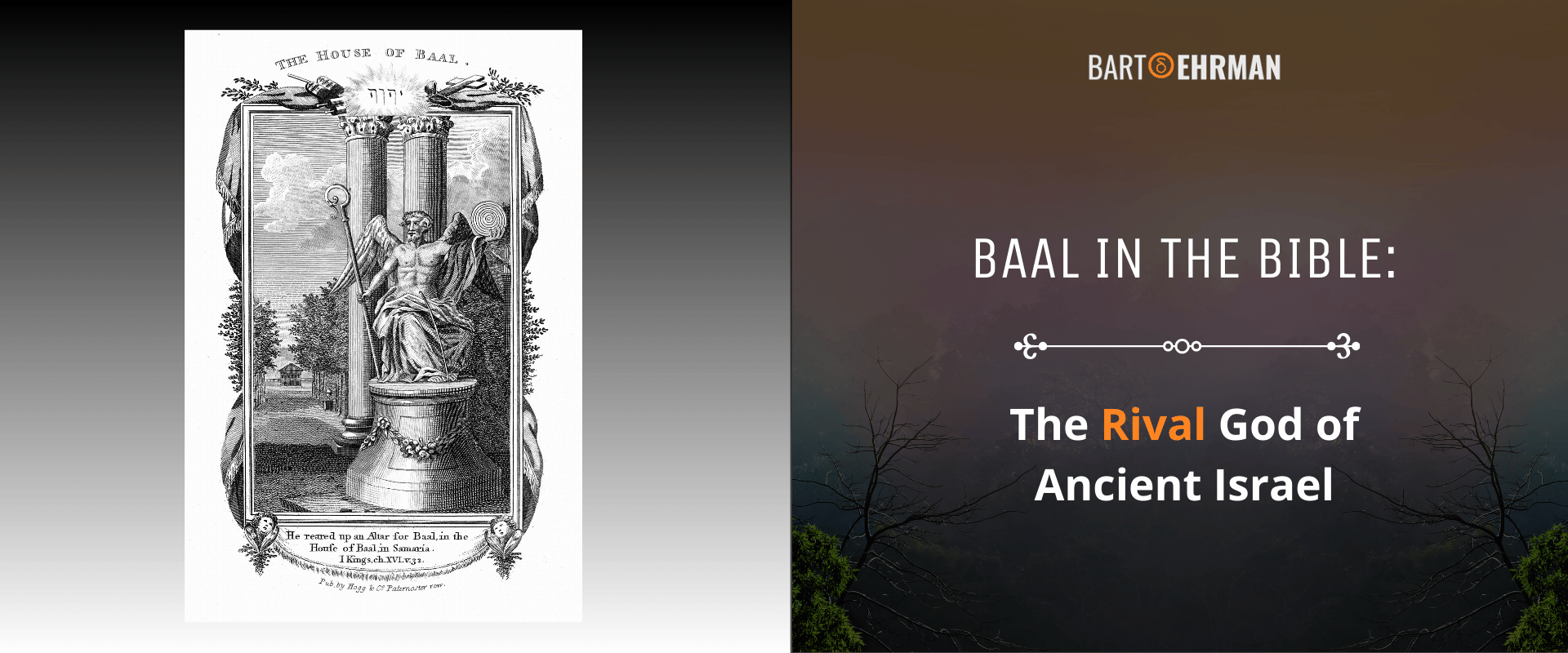
Who Was Baal in the Bible?
While we are accustomed to thinking of the ancient Israelites as monotheists—those who believe only one God exists— scholars know that this isn’t entirely accurate. Instead we should call them either henotheists—those who believe there are multiple gods but that one God is supreme—or monolatrists, as the scholar K.L. Noll puts it in his book Canaan and Israel in Antiquity: A Textbook on History and Religion, saying
(Affiliate Disclaimer: We may earn commissions on products you purchase through this page at no additional cost to you. Thank you for supporting our site!)
Although the Bible contains a few late additions designed to transform its religion into monotheism, the overwhelming majority of its texts are henotheistic. To be more precise, the Bible usually expresses monolatry, which is a more extreme form of henotheism. Whereas henotheism believes in many gods, but with one supremely powerful god, monolatry believes in many gods, but with only one god that is worthy of worship.


Either way, it’s clear from many texts in the Hebrew Bible that the ancient Israelites believed in the existence of many gods. One of the gods mentioned the most is named Baal (pronunciation: BAHL), sometimes written as Ba’al (pronounced as 2 syllables: bah-AHL). In order to understand this god, let’s start with the origin of his name.
The word Baal is a word from the now-extinct Ugaritic language, a Semitic language closely related to Hebrew and spoken from the 14th to the 12th centuries BCE by ancient people living on the Mediterranean coast of what is now Syria. Baal originally meant “owner” or “lord,” and was applied to human beings. However, like other words for “lord” (Hebrew: Adon, Greek: Kyrios), it came to be used to refer to divine beings as well. Just as ancient Israelites would sometimes call Yahweh Adonai, “My Lord,” people from other Levantine cultures might call their god or gods Baal.
Baal/Ba’al Worship
Baal in the Bible usually refers to a specific god. Much of what we know of Baal outside of the Hebrew Bible comes from an ancient Ugaritic text known as the Baal Cycle, written sometime between 1300-1100 BCE, showing that worship of this Baal god predated this period. The Baal Cycle appears on six clay tablets and tells the story of Baal, a Canaanite storm god, battling with Yam, a sea god, as well as with Mot, the god of death. Other divine beings are portrayed as well, including Anat, Baal’s sister, El, king of the gods and eventually another name for Yahweh in the Hebrew Bible, and Shapshu, a sun god.
The Dictionary of Deities and Demons in the Bible notes that since Baal defeats Mot, the god of death, in the Baal Cycle, he was often conceived of as a protector deity. He was also referred to as the patron god of sailors since he also defeated Yam, the god of the sea, in the Baal Cycle. In addition, Baal worship sometimes involved child sacrifices. This is mentioned in multiple Hebrew Bible verses (Leviticus 18:21, 20:3 and Deuteronomy 12:30-31, 18:10) as something strictly forbidden. The author of Psalm 106:37 speaks of child sacrifice among the followers of Baal and clearly finds the practice morally repugnant.
It's likely, as well, that worship of Baal as a Canaanite storm god who was also called “rider of the clouds” predated the worship of Yahweh. Among other attributes, Baal was also believed to be the god who sent rain necessary for growing crops, which might explain the popularity of Baal worship in Israel. Offering sacrifices to Baal was thought to ensure that the right amount of rain would fall. But why would Israelites worship a Canaanite god?
Principally, modern scholars know that the Israelites actually were a subgroup of Canaanites who gradually developed their own identity and culture. In fact, it’s possible that early on, the Israelites sometimes referred to Yahweh as Baal (in its meaning as “Lord”). We can see this in some names in the Hebrew Bible: Gideon in the Bible is also called Jerubaʿal, meaning "The Lord Strives" (Judges 6:32), King Saul names one of his sons Eshbaʿal, meaning "The Lord is Great" (1 Chron. 8:33), and one of David’s followers in 1 Chronicles 12:5 is named Bealiah, meaning “Baal is God.”
The authors of the Baal Cycle believed Baal lived on Mount Zaphon, today called Mount Kılıç, on the Turkey/Syria border.
Stories of Baal in the Bible
Now that we have a bit of background on Baal, let’s look at references to him in the Hebrew Bible. He is often set up as a divine rival of the God of Israel, although the God of Israel generally always wins their battles. However, Michael J. Stahl notes that archeological evidence makes clear that for a time, Yahweh and Baal competed for status as the most important deity in Israel.
The biblical texts also make clear that Yahweh came to be associated with the language, imagery, and traditions of Baal worship, perhaps as part of a deliberate attempt to elevate Yahweh’s profile and status as the patron deity of the Northern Kingdom. Judges 5:2-11, which twice calls Yahweh the “God of Israel,” depicts Yahweh marching from his mountain home in the deep south (called Seir and Edom) as a warrior storm god much like Baal.
One of the earliest biblical references to Baal, Deuteronomy 4:3-4, speaks of a god called Baal Peor (or sometimes the Baal of Peor), a local Moabite god to whom some Israelites defected from Yahweh. This prompts Moses to say
You have seen for yourselves what the Lord did with regard to the Baal of Peor, how the Lord your God destroyed from among you everyone who followed the Baal of Peor, while those of you who held fast to the Lord your God are all alive today.
Numbers 25:3 notes that when the Israelites started worshiping Baal Peor, “the Lord’s anger was kindled against Israel.” There are also numerous references to place names that include the name Baal, such as Baalath Beer and Baal Gad.
The conflict between Yahweh and Baal ramps up, however, beginning in the book of Samuel. In the ancient world, conflicts between gods often signified conflicts between peoples. This is the case in 1 Samuel 7:3-4 when, before a battle with their enemies the Philistines, the prophetic priest Samuel tells the Israelites they have to maintain absolute loyalty to Yahweh if they want to prevail:
“If you are returning to the Lord with all your heart, then put away the foreign gods and the Astartes from among you. Direct your heart to the Lord and serve him only, and he will deliver you out of the hand of the Philistines.” So Israel put away the Baals and the Astartes, and they served the Lord only.
The reference to “Baals” indicates the many forms of Baal that were worshiped, but may also demonstrate disdain for the multiple gods of other nations. However, this is far from the end of Yahweh’s conflicts with Baal, as we see in the book of 1 Kings.
Elijah and Baal in the Bible
In 1 Kings 16, we see Israel’s King Ahab marry a Phoenician princess named Jezebel. As a result, Ahab sets up an altar to Baal, the Phoenician storm god, and worships him. Because of this, 1 Kings 16:33 says that “Ahab did more to provoke the anger of the Lord, the God of Israel, than had all the kings of Israel who were before him.” In the HarperCollins Study Bible, Robert R. Wilson points out that the frequent polemic in the Hebrew Bible against Israelites marrying non-Israelites is highlighted in this story: it’s because Ahab sinned by marrying a Phoenician that the worship of the false god Baal was brought to Israel.
At this point, Israel’s God Yahweh calls Elijah the Tishbite to be his prophet. God initially sends him to tell King Ahab that there will be a terrible drought, presumably as punishment for the worship of another god, although that is never explicitly stated in the passage. After then visiting and helping a widow and her son, Elijah returns to the land of Israel.
Meanwhile, Queen Jezebel, a devotee of Baal, has begun killing off the prophets of Yahweh. Indeed, Elijah finds out she is searching for him in order to execute him, too. Rather than run and hide, however, Elijah sets up a meeting with Ahab where he issues a challenge, saying
“Now therefore have all Israel assemble for me at Mount Carmel, with the four hundred fifty prophets of Baal and the four hundred prophets of Asherah who eat at Jezebel’s table.” (1 Kings 18:19)
In 1 Kings 18:20-40, after the people assemble as instructed, Elijah orders two altars built, one for Baal and the other for Yahweh. He orders a bull cut up and placed on each one but does not set either sacrifice alight as was usually done for burnt offerings. Instead, he proposes that the 450 prophets of Baal call on the god to send fire upon their altar while he asks Yahweh to do the same. Whichever god sends fire, says Elijah, is the true God.
The prophets of the Baal god begin their rituals to invoke his favor, including shouting and cutting themselves with knives and lances. Even after several hours of this, however, there is no response from Baal, and the altar remains unlit. Now it’s Elijah’s turn.
To make the test even more difficult, Elijah orders water poured three times on the altar, soaking the wood, and the offering to Yahweh. He then prays in 18:36-37:
“O Lord, God of Abraham, Isaac, and Israel, let it be known this day that you are God in Israel, that I am your servant, and that I have done all these things at your bidding. Answer me, O Lord, answer me, so that this people may know that you, O Lord, are God and that you have turned their hearts back.”
Instantly, fire comes from heaven, consuming not only the offering and the wood but even the altar’s foundational stones. Baal has been defeated and Elijah orders the people to slaughter the prophets of Baal.
Baal in the Prophetic Writings
There are 17 prophetic books in the Hebrew Bible. Each is unique but there are some unifying themes in all of them. Among these is the commandment to only worship Yahweh, the God of Israel, and the notion that if Israel breaks this or other commandments, there will be a divine judgment upon them (with the caveat that repentance will bring God’s mercy).
It's in this type of prophetic context that we again see the name of Baal in the Bible. In Jeremiah 2:8, Jeremiah the prophet delivers God’s message to Israel about their faithlessness:
The priests did not say, “Where is the Lord?”
Those who handle the law did not know me;
the rulers transgressed against me;
the prophets prophesied by Baal
and went after things that do not profit.
By this point, the name Baal almost seems to serve as a cipher for any false gods worshiped by the Israelites. In Jeremiah 7:9-10, God categorizes worship of Baal as a terrible sin equal to lying and violence:
Will you steal, murder, commit adultery, swear falsely, make offerings to Baal, and go after other gods that you have not known and then come and stand before me in this house, which is called by my name, and say, “We are safe!”—only to go on doing all these abominations?
God then says in 7:33-34 that if the people do not turn back to him, there will be terrible consequences:
The corpses of this people will be food for the birds of the air and for the animals of the earth, and no one will frighten them away. And I will bring to an end the sound of mirth and gladness, the voice of the bride and bridegroom in the cities of Judah and in the streets of Jerusalem, for the land shall become a waste.
The prophet Hosea has a similar message for Israel, reiterating God’s message that if the people don’t turn away from worshiping Baal, they will be conquered by the Assyrian empire, the most powerful kingdom at the time of Hosea’s writing in the 8th century BCE. In Hosea 9:10, we see God’s condemnation of those who worship Baal:
Like grapes in the wilderness,
I found Israel.
Like the first fruit on the fig tree,
in its first season,
I saw your ancestors.
But they came to Baal-peor
and consecrated themselves to a thing of shame
and became detestable like the thing they loved.
In Hosea 8:7-9, God foretells the fate of the faithless Israelite Baal-worshipers, their land destroyed and the survivors taken as captives to Assyria:
For they sow the wind,
and they shall reap the whirlwind.
The standing grain has no heads;
it shall yield no meal;
if it were to yield,
foreigners would devour it.
Israel is swallowed up;
now they are among the nations
as a useless vessel.
For they have gone up to Assyria,
a wild ass wandering alone;
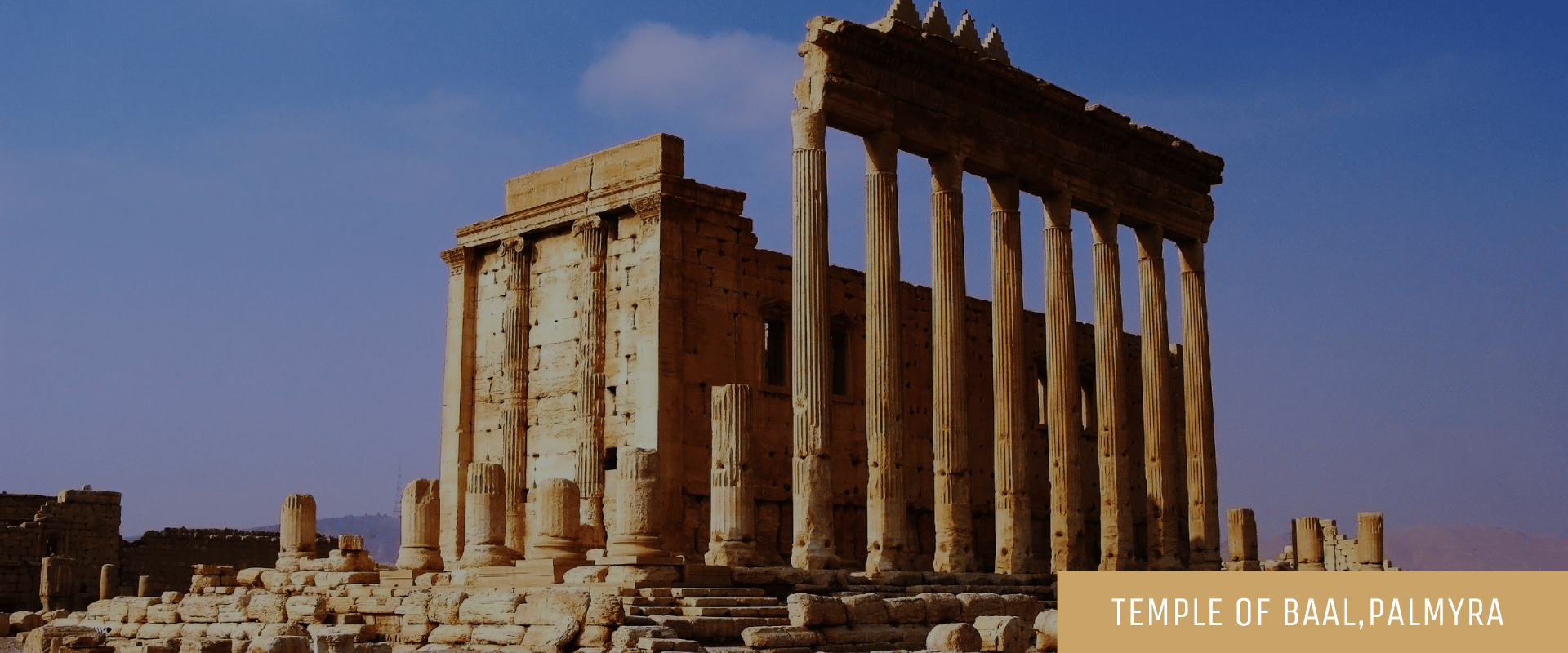
Baal in the New Testament
While the vast majority of references to Baal in the Bible are found in the Hebrew text, there is one Baal allusion in the New Testament, although its author’s use of it is allegorical. In Romans 11, Paul is discussing the fact that unlike him, most Jews have rejected the notion of Jesus as the Messiah. Paul then asks “has God rejected his people? By no means!” Instead, in 11:2-5, Paul refers to the story of Elijah after the Israelites had embraced worship of Baal under Ahab and Jezebel.
Do you not know what the scripture says of Elijah, how he pleads with God against Israel? “Lord, they have killed your prophets, they have demolished your altars; I alone am left, and they are seeking my life.” But what is the divine reply to him? “I have kept for myself seven thousand who have not bowed the knee to Baal.” So, too, at the present time there is a remnant chosen by grace.
Paul uses the example of the Israelites who had not bowed to Baal to refer to those Jews who have accepted or will accept the gospel of Christ. Unfortunately, that also means that Paul views all the Jews who reject Jesus as Messiah as comparable to the faithless worshipers of Baal, those who turn away from God. It’s a harsh judgment indeed, but anyone who knows the Hebrew Bible story would pick up Paul’s meaning right away.
By the way, much later, a 17th-century mystical text known as The Lesser Key of Solomon described Baal as the king of a horde of demons. Although this doesn’t fit with the early Hebrew conception of Baal, it probably resulted from a shift in Christian thinking. Instead of merely noting the presence of other gods, the Church came to think of them as demons working for Satan. Again, other divine beings did exist, but if they weren’t Yahweh, they were considered evil.
Conclusion
Baal was an Ugaritic word which simply meant “lord” or “owner” when used for human beings. It was a term applied to those who were wealthy and had a high status in society. But, like similar terms in Hebrew and Greek, it also became a term for divine beings. It may even have been one of the terms used for the God of Israel long before the Bible was written.
We can first see extensive references to Baal in the Baal Cycle, a series of texts telling the story of a storm god called Baal who defeats other gods and is crowned a divine king. Among the Ugaritic people who wrote these texts, Baal was the most powerful of gods.
It only makes sense then, that Baal in the Bible becomes viewed as an adversary of Yahweh, although unlike the Baal of the Ugaritic text, Baal never becomes an active agent in the Hebrew Bible. Instead, Yahweh defeats the priests of Baal through his prophet Elijah, proving both that Yahweh is the most powerful god and that Baal is unworthy of worship, although this didn’t stop many Israelites from swearing allegiance to Baal.
In the prophetic writings, God promises to destroy Israel if the people don’t turn away from Baal worship and back to Israel’s own God. It’s not entirely clear in these books if Baal is a specific god, as in the story of Elijah, or if the word Baal simply stands for any false gods the people worship.
Either way, by the time Paul is writing his letters centuries later, he conceives of those Jews—most of them, in fact— who reject his gospel of Christ as similar to the faithless Baal-worshipers, people deluded by false ideas and turning away from the God of their forefathers.
join bart ehrman's new conference!
New Insights into the Hebrew Bible
March 20-22 | 13 Bible Scholars | Early-Bird Pricing
Inaugural conference will focus on the book of Genesis