
Essenes: Beliefs, Significance, Links to Dead Sea Scrolls

Written by Marko Marina, Ph.D.
Author | Historian
Author | Historian | BE Contributor
Verified! See our guidelines
Verified! See our editorial guidelines
Date written: December 4th, 2025
Disclaimer: The views and opinions expressed in this article belong to the author and do not necessarily match my own. - Dr. Bart D. Ehrman
There are many paradoxes embedded in the world of the Bible and the origins of Christianity, but few are as striking as this: one group that has become central to modern scholarship on both Judaism and early Christianity is never mentioned in the Bible at all. Not even once.
Yet their ideas, writings, and communal life have profoundly shaped the way historians reconstruct the religious landscape of the late Second Temple period. I am referring, of course, to the Essenes, a group many readers first encounter not in Scripture, but through modern discoveries.
In my own case, I first learned more about them years ago while watching a documentary on the Dead Sea Scrolls.
I remember being captivated by the painstaking work of scholars carefully piecing together hundreds, sometimes thousands, of tiny fragments into coherent manuscripts, an effort that revealed an entire library belonging to a previously enigmatic Jewish sect.
The Essenes exert a fascination not only because of what we now know about them, but also because of what remains uncertain.
The fact that there are no Essenes in the Bible contrasts sharply with the wealth of information preserved in ancient historians such as Josephus and Philo, and (most dramatically) in the scrolls discovered near Qumran beginning in 1947.
These sources collectively opened a window onto a world of rigorous purity laws, communal discipline, apocalyptic expectation, and distinctive scriptural interpretation. But they also raise important questions: How reliable are these sources? How do they fit together? And how do the Essenes relate to the broader spectrum of Jewish groups living in the time of Jesus?
In what follows, we’ll explore several key aspects of Essene history and significance. First, we’ll examine the ancient sources that allow us to reconstruct who the Essenes were and how they lived, with particular attention to the relationship between classical descriptions and the Dead Sea Scrolls.
We’ll then turn to their beliefs and practices! What defined them, what set them apart, and how they fit within the rich diversity of Second Temple Judaism?
Finally, we’ll consider what eventually happened to the Essenes and why this group, despite vanishing from the historical stage nearly two millennia ago, remains indispensable for understanding the world of early Judaism and emerging Christianity.
If you’re interested in how scholars reconstruct ancient Israelite history more broadly, you may also enjoy Dr. Bart D. Ehrman’s online course Finding Moses: What Scholars Know About the Exodus and the Jewish Law.
Over eight lectures, he explores what historians can (and cannot) say about Moses, the Exodus traditions, and the origins of biblical law. It’s an ideal companion for readers eager to see how rigorous scholarship sheds light on some of the Bible’s most enduring stories.
Essenes: A Look at the Historical Sources
As with any other group from the ancient world, it’s best to start with the available sources. We have already noted that the Essenes aren’t in the Bible, a striking omission, given their importance for modern scholarship.
Nevertheless, they appear in several non-biblical sources from the late Second Temple period, and these texts (written by contemporaries or near-contemporaries) form the foundation for what we know about their existence, their organization, and their place within Judaism of the time.
Among these, the most substantial descriptions come from Flavius Josephus, who refers to the Essenes in both The Jewish War and Antiquities of the Jews.
Josephus presents them as one of the three major “philosophical schools” within Judaism, alongside the Pharisees and Sadducees.
He emphasizes their communal lifestyle, strict discipline, and pursuit of piety, noting their reputation for moral rigor and mutual support. These characterizations were written for a Greco-Roman audience, and Josephus occasionally frames the Essenes in terms that would resonate with philosophical ideals familiar to his readers.
Furthermore, Josephus’ accounts aren’t uniform in every detail, and they reveal something of the diversity within Essene life. In one passage, he describes Essenes who lived communally and rejected marriage; elsewhere he mentions another order of Essenes who did marry but under strict rules.
Yet across his writings, Josephus consistently portrays them as a recognizable, organized group spread throughout Judea, committed to purity and communal discipline, and distinct from other Jewish movements.
A second classical witness is Pliny the Elder, whose brief but important notice appears in Natural History. Writing around the time of the First Jewish Revolt, Pliny situates the Essenes “on the west of Asphaltites, and sufficiently distant to escape its noxious exhalations.”
He also describes them as a people “that live apart from the world, and marvellous beyond all others throughout the whole earth, for they have no women among them; to sexual desire they are strangers; money they have none; the palm-trees are their only companions.”
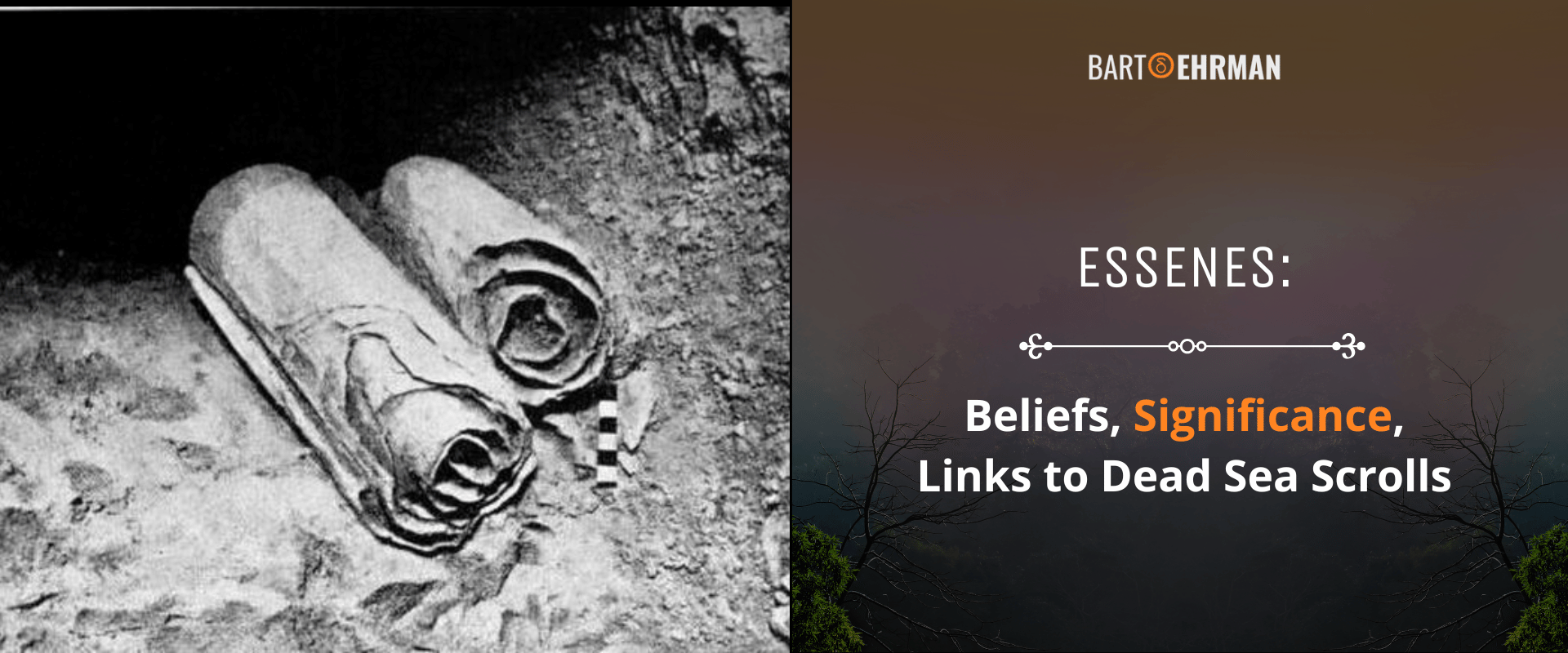
The most significant source for reconstructing Essene history, however, comes from a very different kind of evidence: the Dead Sea Scrolls. As Shaye J. D. Cohen succinctly summarizes:
(Affiliate Disclaimer: We may earn commissions on products you purchase through this page at no additional cost to you. Thank you for supporting our site!)
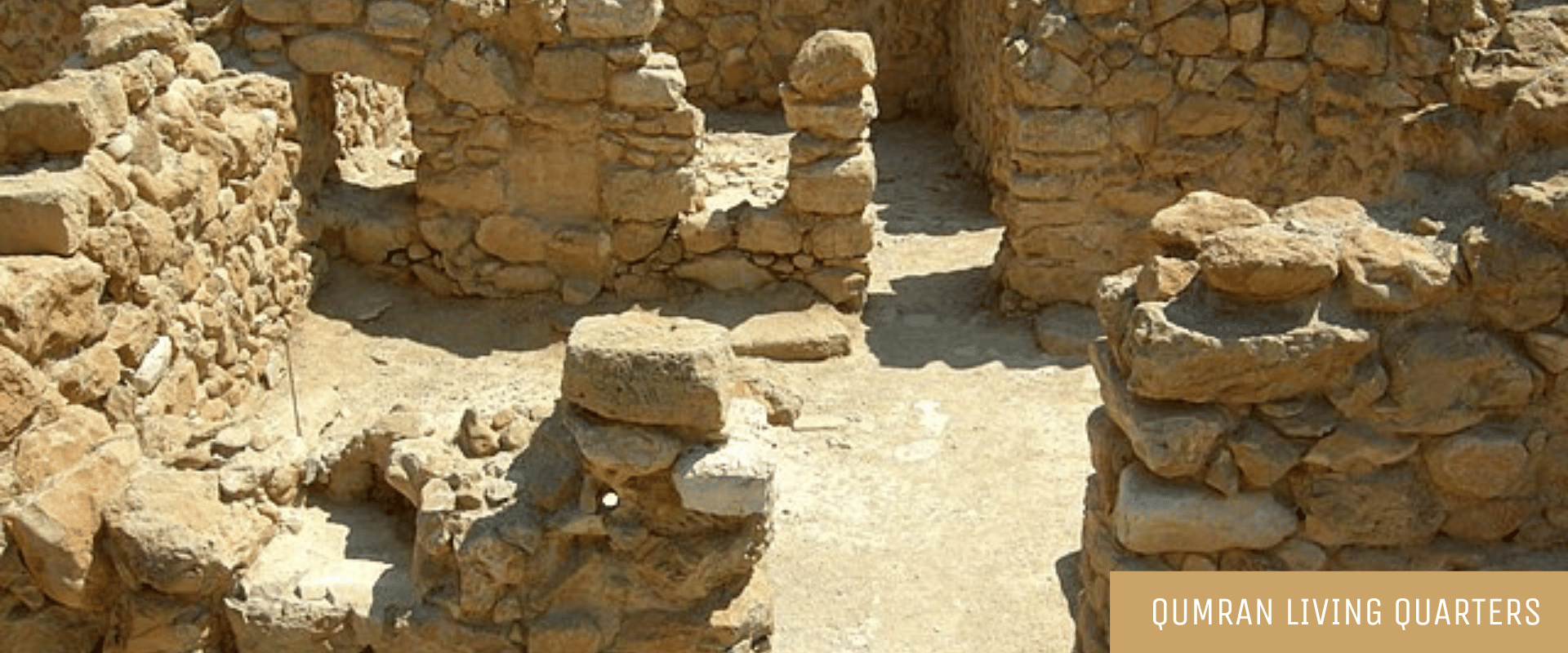
The scrolls discovered in the Judean desert (also known as the Dead Sea Scrolls) are at once the richest and the most puzzling sources for ancient Jewish sectarianism. The scrolls were discovered in caves adjacent to a settlement at Khirbet Qumran… Pottery fragments link the scrolls found in the caves to the settlement, so that the vast majority of scholars agree that the scrolls constitute the library of the group that lived in the settlement, and that some of the scrolls were actually written at Qumran.


The scrolls, collectively dating from the 3rd century B.C.E. to the 1st century C.E., include biblical writings, previously unknown Jewish compositions, and texts that reflect the rules, organization, and worldview of a tightly knit community.
Their archaeological context matters greatly. Excavations show that the caves were used in different ways: some as deliberate long-term repositories for scrolls, others as part of the built environment of the settlement.
Material culture across the caves is strikingly consistent, with distinctive cylindrical scroll jars, linen wrappers, and scroll ties linking the deposits to the nearby settlement. Manuscript evidence (including scribal exercises, palimpsests, and reused fragments) indicates the presence of ongoing textual activity.
Altogether, the caves and their contents form a single, coherent library tradition, not a random wartime assortment.
Still, the crucial question is whether this community should be identified with the Essenes described by Josephus and Pliny. Here, the majority of scholars, as John J. Collins notes, accept what is commonly called the Qumran–Essene Hypothesis.
The convergence of multiple lines of evidence is persuasive: Pliny’s location accords closely with Qumran; the Community Rule and related texts exhibit organizational features similar to Josephus’ Essenes; and the sectarian library displays the same separatist posture, communal discipline, and internal structure that classical writers attribute to them.
The match isn’t perfect (Josephus and Philo omit certain traits found in the scrolls, and some scrolls display no sectarian features at all), but the cumulative weight of evidence strongly supports a connection.
While alternative theories exist, the dominant scholarly view remains that the group behind the Dead Sea Scrolls is best understood as an Essene movement, or at least as a movement closely aligned with what ancient authors called “Essenes.”
Now that we have scanned through the surviving sources, we can move to the most important question: what were the major Essene beliefs and practices?
Essenes: Beliefs and Practices
Any discussion of beliefs and practices must begin with the difficulty of even determining an Essenes definition.
The etymology of the term “Essene” remains uncertain, and scholars continue to debate its origin. A common proposal relates it to the Aramaic ḥasā or Hebrew ḥasid, meaning “pious” or “faithful,” possibly suggesting communities gathered around a spiritual master or teacher.
Yet, as has often been noted, such terminology is equally characteristic of Pharisaic networks, and none of the Essene sources explicitly identifies the group with this root. The term appears only in Greek and Latin authors, such as Josephus, Philo, and Pliny, while the Dead Sea Scrolls themselves never use the word “Essene.”
The origins of the Essenes have likewise been the subject of considerable scholarly discussion.
Most scholars, as Mireille Hadas-Label notes in Rome, la Judée et les Juifs (Rome, Judea, and the Jews) place their emergence in the mid-2nd century B.C.E., during the turbulent decades following the Maccabean revolt.
As it turns out, several sectarian texts from Qumran allude to conflicts involving the Hasmonean high priesthood, and some manuscripts refer cryptically to a “Wicked Priest” and a “Teacher of Righteousness,” figures many interpret as rooted in historical disputes over the legitimacy of the Jerusalem priesthood.
This has led to the prevailing theory that the Essenes originated as a priestly dissident movement, withdrawing from the temple establishment after disagreeing with the Hasmonean consolidation of both political and priestly authority.
Scholarly Insights
Was Jesus an Essene? Let’s Not Get Ahead of Ourselves.
Few questions spark more speculative energy (and more raised scholarly eyebrows) than the idea that Jesus might have been an Essene. After all, he lived in the same region, preached repentance in an apocalyptic key, used Scripture creatively, and gathered disciples into a kind of alternative community. Add to that the undeniable fact that the Dead Sea Scrolls preserve ideas that sound surprisingly “Jesus-like,” and one can see why the theory has had a long afterlife.
On the one hand, Jesus operated in a religious landscape buzzing with sectarian activity, and Essene-style traditions were very much part of that background. Various features of early Christian practice (certain liturgical patterns, calendar echoes, and communal ideals) bear a family resemblance to themes found among Essene groups. Even the Gospel depiction of the Last Supper has structural features that resonate with Essene ritual meals.
So yes, Jesus and the Essenes likely swam (or walked!) in the same theological waters, and it would be odd if they had nothing in common.
But the real Jesus we meet in the Gospels stubbornly resists being fitted for an Essene uniform. He drank wine (a problem for the Essenes), touched the impure (a bigger problem), healed on demand (a logistical nightmare for Essene purity), and debated in public rather than withdrawing to the desert with a carefully vetted membership.
Most telling of all, Jesus’ open, itinerant, and frequently boundary-crossing ministry simply doesn’t match the structured, rule-bound, and communal life of Essene groups. If the Essenes had a membership committee, one suspects Jesus wouldn’t have made it past the first interview.
So, was Jesus an Essene? Probably not. But did he live in a world where Essene ideas circulated, influenced neighboring movements, and occasionally brushed up against the early Jesus tradition? Absolutely!
What about their distinctive beliefs? Well, it’s not that easy to find a suitable answer to that question. As Simon Claude Mimouni rightly cautions in Le judaïsme ancien du VIe siècle avant notre ère au IIIe siècle de notre ère (Ancient Judaism from the 6th Century BCE to the 3rd Century CE):
The doctrine of the Essenes is still imperfectly known, despite the discovery of the Dead Sea Scrolls – this vast documentary corpus is not yet completely published and remains unevenly exploited.
This warning captures both the richness and the complexity of the evidence. Even so, several broad features of Essene thought and practice can be sketched with relative confidence.
The Community Rule, for instance, portrays a community of rigorously disciplined members who shared their goods, pursued ritual purity, and placed great emphasis on the study and interpretation of Scripture.
Some members lived in celibacy, while others married, but all were expected to submit to a lengthy process of probation and initiation. Their ritual life included regular purity immersions, communal meals conducted with strict rules of purity, and a strong sense of separation from what they considered a corrupt priesthood in Jerusalem.
These communal ideals were undergirded by a distinctive theological and eschatological worldview.
Essene texts envision a universe divided between forces of light and darkness, culminating in a final apocalyptic conflict, dramatically depicted in the War Scroll. They appear to have understood themselves as living in the last days and expected divine intervention that would vindicate their community.
Moreover, their messianism was notably diverse: some texts anticipate a priestly and a royal messiah (“Messiahs of Aaron and Israel”), others speak of a coming prophetic figure, and still others suggest a single messianic leader combining multiple roles.
Additionally, their interpretation of Scripture was often pesher-like, applying prophetic texts directly to their own time and internal history. Although they were critical of the Jerusalem priesthood, they didn’t reject the temple per se and even sought to maintain sacrificial practices through surrogate, text-centered rituals.
As Sidnie W. Crawford notes in her study of the Qumran library and scribal practices, the community’s devotion to Scripture (copying, preserving, and interpreting texts) was itself a central religious activity, shaping both their identity and their worldview.
Taken together, the available sources portray the Essenes as a movement both deeply rooted in the Judaism of their time and profoundly distinct from it: priestly in origin, communal in practice, ascetic in varying degrees, and eschatological in outlook.
Their life was marked by rigorous discipline, communal cohesion, and a powerful expectation that God would soon intervene in history to vindicate the righteous. Yet their beliefs evolved over time, and their practices varied across different Essene groups scattered throughout Judea.
With this outline in place, we may now turn to the question of how this movement (so vibrant in the last centuries before the Common Era) ultimately disappeared from the historical stage in the aftermath of the Jewish War.
But before we descend into the dark tunnel of the Essenes’ eventual vanishing act, here’s a quick table to illuminate where they came from, and what made them tick.
Category | Essene Characteristics |
|---|---|
Origins | Emerged in mid-2nd century B.C.E.; likely a priestly dissident movement opposing the Hasmonean high priesthood. |
Location | Communities spread throughout Judea; one major group likely at Qumran near the Dead Sea. |
Lifestyle | Communal living, shared property, strict discipline, long probationary periods for new members. |
Purity Practices | Frequent ritual immersions, high purity standards, careful regulation of meals and communal spaces. |
Eschatology | Strong apocalyptic expectations; belief in a final battle of light vs. darkness (War Scroll). |
Messianism | Often anticipated different types of Messiah: one priestly (Aaronic) and one royal (Davidic). |
Marriage | Some Essene groups practiced celibacy; others permitted marriage under strict rules. |
Relation to Temple | Rejected the legitimacy of the Jerusalem priesthood but upheld the ideal of Temple worship. |
NOW AVAILABLE!
Finding Moses: What Scholars Know About The Exodus & The Jewish Law
Riveting and controversial, the "FINDING MOSES" lecture series takes you on a deep dive into the stories of Moses, the exodus, and a whole lot more...
The End of the Essenes and Their Historical Significance
Since history remembers many groups that did not survive into later centuries, the life of the Essene communities also came to an end in the turmoil of the 1st century C.E.
Their disappearance is generally linked to the First Jewish Revolt (66-74 C.E.), during which Roman military campaigns reshaped the entire Judean landscape.
Archaeology at Qumran indicates that the settlement was destroyed around 68 C.E., consistent with Josephus’ description of the Roman advance through Judea. Essenes themselves appear to have taken part in the war, as Josephus explicitly mentions Essene defenders (such as John the Essene) who held positions of military leadership.
Some members of the movement may also have fled to Masada, where fragments of sectarian texts have been found, suggesting that pockets of Essene groups persisted briefly after Qumran’s fall. By the late 1st century, however, the Essenes vanished from the historical record, their communities dissolved in the wider collapse of Jewish sectarian life after the revolt.
The disappearance of Essenes as a distinct group doesn’t diminish their historical importance. On the contrary, their writings (especially the Dead Sea Scrolls) offer unparalleled insight into the diversity of Judaism in the last centuries before the Common Era.
The scrolls reveal a Judaism that was textually vibrant, theologically varied, and far more fragmented than the later rabbinic tradition might suggest.
They shed light on debates about the purity of the priesthood, the legitimacy of the temple leadership, the interpretation of Scripture, and the expectation of divine intervention.
The Essenes stand out as a priestly reform movement, committed to restoring what they viewed as authentic covenantal faithfulness.
Their library also illustrates how deeply interconnected Jewish thought was, preserving biblical books, apocalyptic writings, legal texts, and commentaries that illuminate the shared intellectual world from which both rabbinic Judaism and early Christianity emerged.
Appendix: Was John the Baptist a Member of the Essene Community?
The question of whether John the Baptist belonged to the Essene movement has long intrigued and sparked debates among scholars.
At first glance, the comparison is understandable. John’s ascetic lifestyle, his call to moral renewal, and his practice of ritual immersion appear to resonate with aspects of Essene piety known from the Dead Sea Scrolls and classical authors.
Also, certain biblical texts associated with John (most notably Isaiah 40:3 [“a voice crying in the wilderness”]) also appear in Essene writings, which has encouraged the idea of some deeper connection.
These parallels, however, must be approached cautiously, for a closer look reveals significant differences that complicate any direct identification.
As Étienne Nodet and Jean-Sébastien Rey observe in La porte du ciel : Les esséniens et Qumrân – quelles convergences, quelles divergences ? (The Gate of Heaven: The Essenes and Qumran – what convergences, what divergences?) similarities between John and the Essenes remain superficial.
John’s baptism, for example, was a one-time rite, understood as a decisive act of repentance after the purification of the heart. Essene immersion practices, by contrast, were repeated daily or regularly, tied to communal purity and entrance into shared meals.
Geography matters as well! Whereas Essene groups settled within the land (often cultivating and organizing themselves in stable communities) John’s ministry kept him symbolically outside the land, preaching in marginal zones east of the Jordan.
Even when both John and the Essenes invoked the same biblical verse, their interpretations diverged: for the Community Rule, Isaiah 40:3 didn’t mandate physical withdrawal into the desert but signaled the community’s vocation to study and interpret the Torah in a state of ritual purity.
Taken together, the evidence suggests that John and the Essenes belonged to the same wider religious world. It was a world marked by apocalyptic expectation, calls for repentance, and dissatisfaction with the Jerusalem priesthood.
However, their movements, as far as we can tell, developed independently. As Nodet and Rey note:
“In fact, one could more readily associate him with the Therapeutae, who take neither wine nor meat, although it is not certain that their asceticism had an eschatological motive similar to his. In summary, John’s activity would have had two distinct phases: the first, involving a simple rite in the Jordan for a large crowd; the second, beyond the Jordan, involving true disciples in a more cautious withdrawal.” (my translation)
However, there are some serious dissident voices within contemporary scholarship who argue for a more direct link between John and the Qumran community. The most substantial and carefully developed articulation of this position appears in Joel Marcus’ John the Baptist in History and Theology.
Marcus argues that the numerous and unusual points of convergence between John and the Qumran sect (shared use of Isaiah 40:3, distinctive eschatological imagery, baptism understood as valid only when accompanied by moral purification, a rigorous critique of the Jerusalem establishment, and even overlapping geographical settings) are too specific, too numerous, and too coherent to be explained simply by a shared religious environment.
In his view, the most plausible historical reconstruction is that John spent an initial period within the Qumran community and absorbed many of its theological and ritual emphases before later embarking on an independent public ministry.
This interpretation remains a minority position among specialists, but it’s a serious and well-argued alternative that highlights the complexity of reconstructing John’s religious background.
Conclusion
The Essenes remain one of the most intriguing and illuminating groups of the late Second Temple period.
Although they vanished from the historical stage nearly two millennia ago, the sources that preserve their memory enable us to glimpse a distinctive Jewish movement marked by communal rigor, priestly ideals, and eschatological hope.
Their writings reveal a world of intense scriptural interpretation, spirited debate over the purity and legitimacy of the Jerusalem priesthood, and a determination to live out what they believed to be the true covenantal path.
In doing so, they provide a crucial counterpoint to both the more familiar Pharisees and Sadducees and to the emerging forms of Judaism and Christianity that would later take center stage.
NOW AVAILABLE!
Finding Moses: What Scholars Know About The Exodus & The Jewish Law
Riveting and controversial, the "FINDING MOSES" lecture series takes you on a deep dive into the stories of Moses, the exodus, and a whole lot more...