
Who Wrote Deuteronomy?

Written by Joshua Schachterle, Ph.D
Author | Professor | Scholar
Author | Professor | BE Contributor
Verified! See our editorial guidelines
Verified! See our guidelines
Date written: August 1st, 2026
Disclaimer: The views and opinions expressed in this article belong to the author and do not necessarily match my own. - Dr. Bart D. Ehrman
The book of Deuteronomy stands at a pivotal place in the Bible. Coming at the conclusion of the Torah/Pentateuch, the book establishes the story of the Israelites reaching the Promised Land, leading to the history of the Israelite people told in later Hebrew Bible books such as Joshua and 1 and 2 Kings. But who wrote Deuteronomy?
To answer that question in this article, I’ll look into the Deuteronomy meaning, what the book contains, why it was traditionally attributed to Moses, and why scholars doubt Moses’ authorship today. I’ll also examine when it was written, how it fits within the composition of the Pentateuch, and the lasting influence it has had on Jewish and Christian Scriptures.
Why Is It Called “Deuteronomy”?
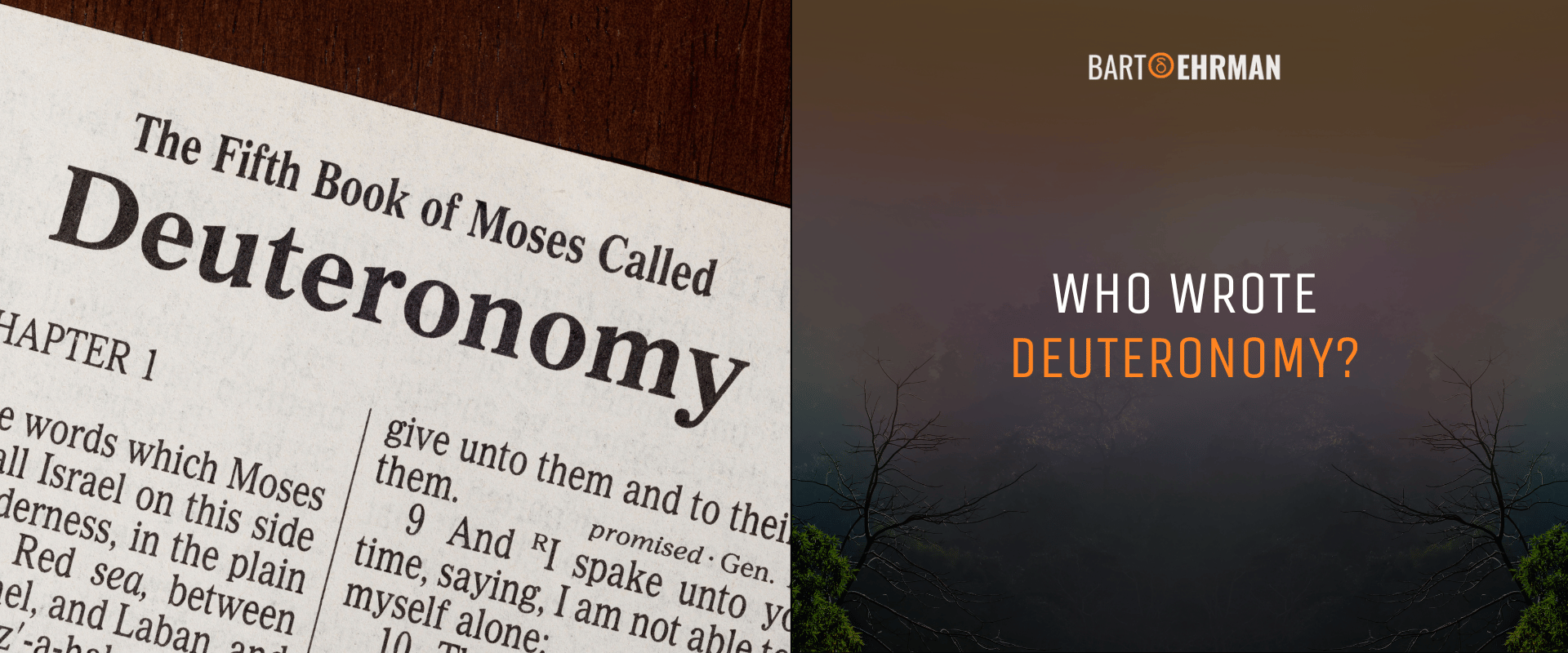
The book’s name, “Deuteronomy,” is from the Greek word deuteronómion, meaning “second law.” This reflects the book's contents, wherein the main message concerns Moses making speeches to the new generation of Israelites, restating, re-explaining, and elaborating on the laws originally given at Mount Sinai. The book’s original Hebrew name was Devarim, which simply means “the words,” specifically referring to the words of Moses. Like the other books of the Pentateuch/Torah, Deuteronomy’s authorship was traditionally attributed to Moses himself. So, what is Deuteronomy about?
Summary
The book of Deuteronomy consists mainly of four speeches given by Moses to the Israelites right before they are to enter the Promised Land. Each of the speeches begins with an introductory sentence saying “This is…” or “These are…”:
“These are the words that Moses spoke to all Israel…” (1:1)
“This is the Torah that Moses set before the Israelites” (4:44).
“These are the words of the covenant that the LORD commanded Moses...” (29:1).
“This is the blessing with which Moses, the man of God, blessed the Israelites” (33:1).


While the first three speeches all concern the law and covenant granted by God to the Israelites, the last is a series of blessings Moses gives to the individual tribes.
The following, more detailed summary of Deuteronomy is based on one written by John Van Seters within The Hebrew Bible Today: An Introduction to Critical Issues.
In chapters 1–3 Moses recalls the Israelites’ journey through the wilderness from Mount Horeb (called Mount Sinai in Exodus and Leviticus) to Kadesh and then to Moab, where the speeches are taking place.
In chapters 4–11, after a second introduction, the events at Mount Horeb are recalled further, including Moses receiving the Ten Commandments. Moses urges the heads of families to instruct those under their care about the law. He also warns them against serving any other gods and praises the land promised to Israel.
In Chapters 12–26, Moses speaks of the Deuteronomic Code, the set of laws governing Israel's worship, the appointment and regulation of religious leaders, social management, and the affirmation of Israel’s special status under God.
Chapters 27–28 are blessings and curses for those who keep and break the law. The curses are put upon those who violate God’s law. For instance, “Cursed be anyone who dishonors father or mother” (27:16) and “Cursed be anyone who misleads a blind person on the road” (27:18). The blessings are promises that God will reward those who follow his law. Examples include “Blessed shall you be in the city, and blessed shall you be in the field” (28:3) and “Blessed shall you be when you come in, and blessed shall you be when you go out” (28:6).
In chapters 29–30, there is a concluding speech on the covenant in the land of Moab, including all the laws in the Deuteronomic Code after those given at Horeb. The Israelites are again urged to be obedient to Yahweh.
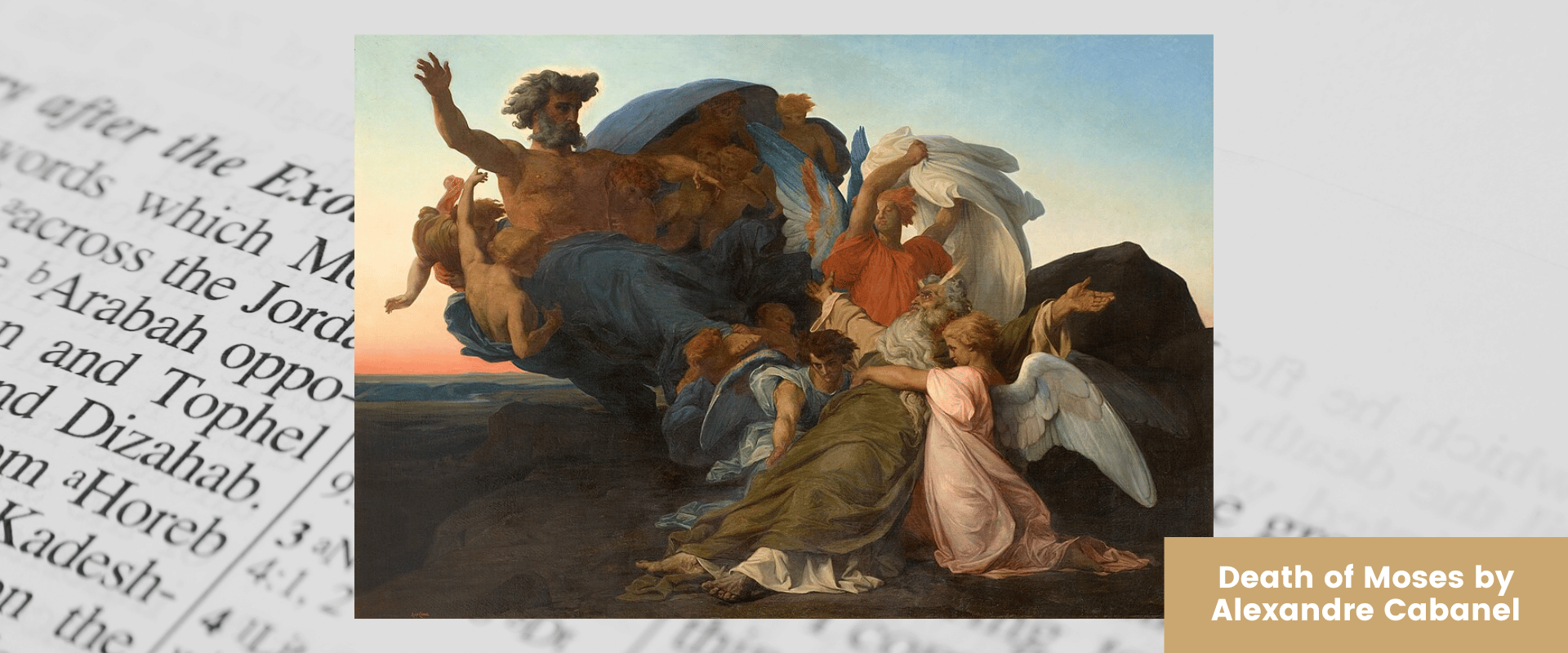
In chapters 31–34, Joshua is officially appointed as Moses' successor, Moses writes and gives the law to the Levites (the priestly caste) and ascends Mount Nebo where he dies and is buried by God. The narrative of these events is interrupted by two poems, the Song of Moses and the Blessing of Moses.
The final verses, Deuteronomy 34:10–12, say that after Moses died, no prophet as great as he had ever emerged again.
After that brief summary, let’s investigate the authorship of Deuteronomy.
(Affiliate Disclaimer: We may earn commissions on products you purchase through this page at no additional cost to you. Thank you for supporting our site!)
Why People Believe Moses Wrote Deuteronomy and the Pentateuch
While we can’t know for certain when and why Jews and Christians came to believe in Moses’ authorship of Deuteronomy and the other books of the Pentateuch, there are signs throughout the Pentateuchal books which indicate how people might have come to this conclusion.
First, and perhaps most significantly, there are places where the books of the Pentateuch say that Moses wrote down specific laws and events. For example, Exodus 24:4 says Moses wrote down “all the words of the Lord,” and Deuteronomy 31:9 mentions Moses writing the law he has received from God. This might have indicated to early readers of the texts that Moses had written all five Pentateuchal books. However, while Moses is certainly described as writing down specific things, there is no explicit mention of him writing everything found in the Pentateuch.
Next, we find later Hebrew Bible books, such as Joshua, referring to "the Law of Moses" or "the Book of Moses" as a general cipher for the entire body of divine rules. Moreover, we have New Testament references to Moses’ authorship. New Testament writers such as Paul (Rom. 10:5, 1 Cor. 9:9) and Jesus as portrayed in the Gospels (Matt 8:4, 19:7–8) cite passages and ideas from the books of the Torah/Pentateuch and attribute them to Moses.
Finally, the 1st-century Jewish historian Josephus (Against Apion), and the 1st-century Jewish philosopher Philo of Alexandria (Life of Moses) both wrote that Moses was the author of all the events and laws recorded in the Torah. This doesn’t mean that Moses wrote the material, but it does mean that belief in Moses’ authorship was widespread by the 1st century CE.
How We Know Moses Probably Didn’t Write the Pentateuch
Most modern biblical scholars today have determined that Moses did not write the Pentateuch and doubts about the traditional Mosaic authorship were written about even in the Middle Ages. However, it was in the 17th century, the beginning of the historical period known as the Enlightenment, that some began to deeply question the traditional ascription of the Torah to Moses.
The first problem in attributing the Pentateuch to Moses is that there is very little evidence for his existence. In fact, in his book Moses the Egyptian: The Memory of Egypt in Western Monotheism, Jan Assmann writes that “we cannot be sure Moses ever lived because there are no traces of his existence outside the tradition.” While not all scholars agree with this position, it is true that there is no evidence for Moses outside of the Hebrew Bible.
In addition, there are some logical contradictions with the notion of Moses’ authorship. As Michael Coogan points out in A Brief Introduction to the Old Testament, a French Catholic priest named Richard Simon wrote about this in 1678, pointing out inconsistencies in the book. Coogan summarizes Simon who wrote that
… Moses could not have written the Pentateuch because it contains historical details and refers to events about which he could not have known. Simon also pointed out geographical oddities. Moses died east of the Jordan River, never having entered the Promised Land, yet Deuteronomy begins: “These are the words that Moses spoke to all Israel across the Jordan” (Deut 1.1), words clearly written by an author situated on the west side of the Jordan River.
Later scholars would discover even more reasons to doubt Moses’ authorship. For instance, Bart Ehrman notes that “Deut. 34:5-12 describes in detail Moses’ death. How could Moses, as an author writing the Pentateuch, describe his own death as a past event?” Furthermore, in Genesis 36:31 we read that “These are the kings who reigned in the land of Edom, before any king reigned over the Israelites.” Ehrman writes “This is a verse that presupposes that the author knows of a time when kings were to rule over Israel. But that would not happen for over two centuries after the death of Moses.”
All in all, for many scholars the notion of Moses’ authorship is difficult to maintain in light of the historical evidence (or absence of evidence). As a result, differing scholarly theories about who wrote the Torah have been developed.
NOW AVAILABLE!
Finding Moses: What Scholars Know About The Exodus & The Jewish Law
Riveting and controversial, the "FINDING MOSES" lecture series takes you on a deep dive into the stories of Moses, the exodus, and a whole lot more...
If Moses Didn’t Write Deuteronomy, Who Did?
The best-known scholarly theory about the who wrote the Pentateuch is called the Documentary Hypothesis, which posited that the five books were written by a number of different authors or authorial traditions. Scholars designate those authors by the following names:
J (Yahwist): Composed around the 10th century BCE in Judah (the Southern Kingdom), the J source uses the name "Yahweh" for the God of Israel.
E (Elohist): Composed around the 8th century BCE in Israel (the Northern Kingdom), E uses the name "Elohim" for God.
D (Deuteronomist): As its name would suggest, it is found mainly in the book of Deuteronomy and was composed in the 7th century BCE. D emphasizes obedience to the law (that is, the Torah) and a centralized temple for worship and sacrificial activities.
P (Priestly): Composed during or after the Babylonian exile in the 6th century BCE, P focuses primarily on the correct performance of religious rituals, on genealogies, and on rules for the Tabernacle.
Most scholars agree that Deuteronomy’s author has a distinctive literary voice, often called the Deuteronomic or Deuteronomistic tradition or D, although they differ over whether this reflects a single author, a school of scribes, or successive generations of editors. While some believe the book to have been written independently of the other books of the Pentateuch, not all scholars agree. For instance, writing in the HarperCollins Study Bible, S. Dean McBride argues that the Deuteronomist drew on other sources, such as
Pentateuchal narrative traditions, the Decalogue, legislation in the Book of the Covenant (Exodus 20-23), [and] collections of blessings, curses, and poems.
In this sense, we can call Deuteronomy not just a book but also a compilation. Moreover, many scholars argue that the book developed in stages, with the laws known as the Deuteronomic Code from chapters 12–25 written earliest in the late 7th century BCE. Next came the historical framework, Chapters 1–11 & 27–30, which was written in the 6th century during the Babylonian Exile. The final chapters 31–34 were completed in the 5th–4th century BCE during the post-exilic Persian period. The final redactors of the book later combined D's work with a composite JE text (that is, the combination of two other sources of the Pentateuch – J or Yahwist and E or Elohist) already compiled, creating the final version sometime between the 5th and 4th centuries BCE.
Despite the different sources and time periods, the D authors have several focuses evident in the book of Deuteronomy. First and most importantly, the Deuteronomists demand total fidelity to Yahweh alone. This is summarized in the prayer known as the Shema, a prayer which remains Judaism's most essential daily prayer: “Hear, O Israel: The Lord is our God, the Lord alone” (Deut 6:4).
The Deuteronomists also eliminate local shrines and altars to Yahweh, insisting that all sacrifices and festivals must happen at one single, chosen place—traditionally understood as Jerusalem.
In addition, the D source focuses on the covenant, the bond between God and Israel which Deuteronomy established on the model ancient treaties. Obedience to God’s law brings prosperity and peace, while disobedience brings disaster and exile, a theme that will continue through much of the Hebrew Bible.
Furthermore, the Deuteronomistic authors stress that loving God includes treating other people justly. They therefore created special legal protections for the most vulnerable in society, specifically for the poor, widows, orphans, and foreigners.
Finally, unlike older Near Eastern societies where a monarch’s authority was supreme, the Deuteronomists insist that even a king is subject to the authority of the written divine law. Rulers are expected to obey God's commands like everyone else and will be punished if they don’t.
Reception History of the Pentateuch
Deuteronomy has had a deep influence on historical Judaism and Christianity, including prophetic literature, the Dead Sea Scrolls, and even the New Testament.
Scholars long ago realized, for instance, that sermons in the Book of Jeremiah are written in a literary style and perspective related to that of Deuteronomy. In his book Israel in Exile: The History and Literature of the Sixth Century B.C.E, Rainer Albertz writes that the book of Jeremiah began with prophetic oracles but was then redacted by a Deuteronomistic author around 550 BCE who added material. This shows that the Deuteronomist point of view continued to influence biblical authors long after the book of Deuteronomy itself was finished.
In fact, scholars differ over how much of the book came from Jeremiah himself and how much from these later redactors. In addition, in his book Deuteronomy and the Pentateuch, Jeffrey Stackert shows how Jer 7:22–23 and other related texts within Jeremiah draw from an independent D source. Stackert also provides other links between Jeremiah and D, generally showing how Jeremiah harmonizes D to fit within its own historical and theological purpose.
Additionally, Deuteronomy is one of the most frequently found biblical books included in the Dead Sea Scrolls. At Qumran, archeologists found 73 separate copies of Deuteronomy. These ancient scrolls date between the 3rd century BCE and the 1st century CE. Beyond proving the significance of Deuteronomy for the Qumran community, however, these copies allow us to see textual variants not otherwise available. For instance, in Deuteronomy 32:8, the standard text of Deuteronomy, based on the 10th-century Hebrew version known as the Masoretic Text, mentions “sons of Israel.” However, the Dead Sea Scrolls’ version, which is far older than the Masoretic Text, says “sons of God.” Does this hint at an older tradition of divine beings?
Also, among the Dead Sea Scrolls, tiny scrolls containing parts of Deuteronomy were found in tefillin (tiny prayer boxes) and doorpost blessings called mezuzot. This indicates how deeply important the text was for the daily life of the Qumran community.
Moving on to the New Testament, Deuteronomy is the second most cited Old Testament book in the New Testament (Psalms is the first). It is no surprise, then, that it helped form the theology of the early church, even serving as a vital foundation for Jesus' teachings in the Gospels. For example, when Jesus is tempted three times by Satan in the desert, he counters by quoting from Deuteronomy all three times, specifically from Deuteronomy 8:3, 6:16, and 6:13.
Jesus also summarizes the law by combining Deuteronomy 6:5 ("Love the Lord your God with all your heart...") with a command from Leviticus, fixing this as the central command of Christian life. The Messianic prophecy in Deuteronomy 18:15, is also explicitly applied to Jesus by the apostles Peter (Acts 3:22) and Stephen (Acts 7:37).
Finally, Paul extensively discusses Deuteronomy, including the curse of the law in Galatians 3:10 (a reference to Deut. 27:26) and Christ’s redemption in Galatians 3:13 (referencing Deut. 21:23).
Conclusion
The book of Deuteronomy is the fifth book of the Hebrew Bible, and the last of the collection of books known as the Torah or Pentateuch. The name Deuteronomy, established when the book was translated from Hebrew to Greek, means “second law,” since it expands upon the “first law” given in the Ten Commandments and elsewhere in the Torah.
The book is essentially four speeches given by Moses to the Israelites just outside the Promised Land. The first three discuss God’s law and the covenant he has made with Israel while the fourth is a series of blessings for individual tribes of Israel. The conclusion has Moses see the Promised Land but die without entering it.
Who wrote Deuteronomy, and when was it written? Like the rest of the Torah, Deuteronomy was long thought to have been written by Moses, but doubts and modern methods of historical scholarship destabilized that conclusion. Instead, modern scholars argue that the text was written by a group of priestly scribes. It was not all written at once, however. Chapters 12-25, dealing with the Law, were written first, followed by historical chapters 1–11 and 27–30. The last section to be written was chapters 31–34, which means that the book reached its final form at that time between the 5th and 4th centuries BCE.
One way to see the enormous impact of Deuteronomy is to look at its use in other Jewish and Christian writings. It’s used in many prophetic books, cited frequently in the Dead Sea Scrolls, and is the 2nd most cited book in the New Testament. It’s impossible to overstate the influence this book has had and continues to have on religious thought and practice.
NOW AVAILABLE!
Finding Moses: What Scholars Know About The Exodus & The Jewish Law
Riveting and controversial, the "FINDING MOSES" lecture series takes you on a deep dive into the stories of Moses, the exodus, and a whole lot more...