
Who Do You Say That I Am? (Verse, Context, Meaning)

Written by Joshua Schachterle, Ph.D
Author | Professor | Scholar
Author | Professor | BE Contributor
Verified! See our editorial guidelines
Verified! See our guidelines
Date written: September 9th, 2025
Disclaimer: The views and opinions expressed in this article belong to the author and do not necessarily match my own. - Dr. Bart D. Ehrman
One of the most profound questions ever posed in the Gospels is found in a conversation between Jesus and his disciples: “But who do you say that I am?” This moment represents a turning point in the narrative of Jesus’ ministry. More than just a theological statement, Peter’s response reveals the growing realization among Jesus’ closest followers that he is more than a prophet or teacher. But how did this statement of belief shape the early Christian understanding of Jesus’ identity?
In this article, I’ll analyze the biblical passages containing this question, examine the historical and literary context behind it, and unpack its deeper theological significance. From the Gospel writers' portrayal of Peter’s response to the complex question of how Jesus identified himself during his lifetime, I’ll examine what this pivotal moment meant both then and now.
If you’re interested in learning more about answers to the “Who do you say that I am” question in the context of the historical Jesus, Dr. Hugo Méndez covers the topic in a fascinating two-lesson online course.
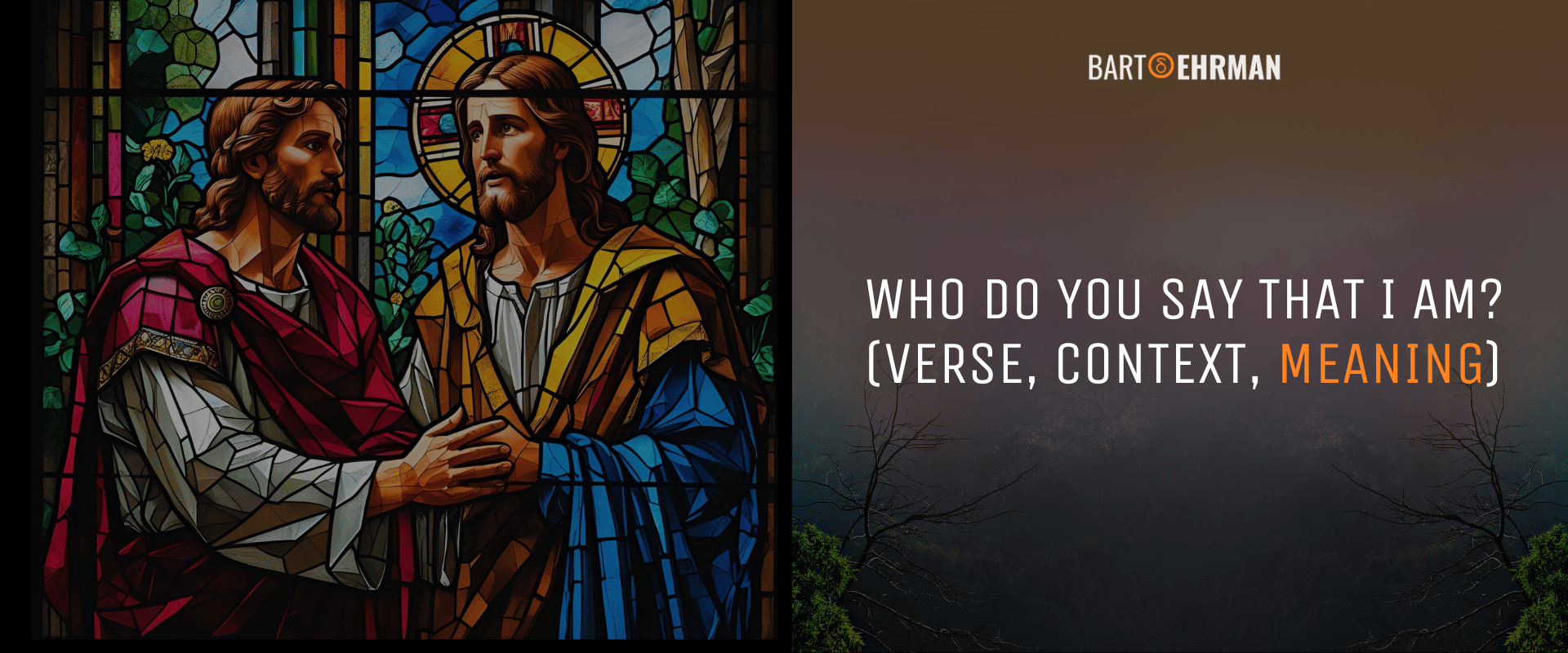
“Who Do You Say I Am”? Verse and Context
Although the oldest of the Gospel accounts of this incident appears in Mark, it’s important to compare similar descriptions of it in various Gospel accounts. Incidentally, the episode itself has long been called the Confession of Peter. In this case, “confession” doesn’t mean admitting to wrongdoing, but rather indicates a formal statement of belief, much like the Nicene Creed, for example. The Confession of Peter is in all three Synoptic Gospels so, because scholars say that Matthew and Luke used Mark as a primary source for their accounts, let’s look at the version from Mark 8:27-30:
Jesus went on with his disciples to the villages of Caesarea Philippi, and on the way he asked his disciples, “Who do people say that I am?” And they answered him, “John the Baptist; and others, Elijah; and still others, one of the prophets.” He asked them, “But who do you say that I am?” Peter answered him, “You are the Messiah.” And he sternly ordered them not to tell anyone about him.


That translation, by the way, is the NRSV. The KJV translates Peter’s response as “Thou art the Christ”, which also makes sense since Christ is the Greek word for Messiah. I want to point out a couple of details in this passage. First, Jesus’ disciples say that some believe Jesus is, not merely a prophet, but one of the former prophets who have since died. Does this mean that 1st-century Jews believed in reincarnation? In a word, no.
Instead, the passage indicates the common belief in Jesus’ time in a general resurrection of the dead. We see this earlier in Mark 6:14-16, when Jesus and his disciples have been out preaching and healing people:
King Herod heard of it, for Jesus’s name had become known. Some were saying, “John the baptizer has been raised from the dead, and for this reason these powers are at work in him.” But others said, “It is Elijah.” And others said, “It is a prophet, like one of the prophets of old.” But when Herod heard of it, he said, “John, whom I beheaded, has been raised.”
Even though John has already been killed, Herod and others believe it is entirely possible that Jesus is merely the resurrected John. The same can be said of any other prophets with whom Jesus is identified except Elijah. Since Elijah never actually died but was instead taken directly up to heaven (2 Kings 2:11), many believed he would return to earth, prompting some people to speculate that Jesus was the return of Elijah.
Second, the fact that it is Peter who recognizes that Jesus is the Messiah already indicates Peter’s future leadership role in the church in Jerusalem. While we don’t see this as explicitly in Mark or Luke — who copies Mark’s version almost verbatim — Matthew adds something to the story.
In Matthew’s version, Peter includes another title in his declaration, calling Jesus “the Messiah, the Son of the living God.” But Matthew also adds a response from Jesus in 16:17-19:
Blessed are you, Simon son of Jonah! For flesh and blood has not revealed this to you but my Father in heaven. And I tell you, you are Peter, and on this rock (Greek: petra) I will build my church, and the gates of Hades will not prevail against it. I will give you the keys of the kingdom of heaven, and whatever you bind on earth will be bound in heaven, and whatever you loose on earth will be loosed in heaven.
While the Confession of Peter is monumental in all three Synoptic Gospels, Matthew’s version makes Peter’s leadership explicit, authorized by no less than Jesus himself. First, Jesus changes his name from Simon to Peter, which literally means “rock.” We know that this church leader was actually called “rock” (Aramaic: Cephas) because Paul mentions meeting him and uses this name. Jesus then uses the metaphor of a rock to claim that Peter will be the foundation of the church, and even grants Peter a measure of divine authority. It’s on this basis, by the way, that the Catholic Church calls Peter the first Pope.
Side Note: Narrative Structure in the Gospel of Mark
In her commentary on the Gospel of Mark, Adela Yarbro Collins points out that what precedes the Confession of Peter in Mark sets up the significance of the confession. Initially, after a boat trip across the sea of Galilee with Jesus, the disciples realize they have forgotten to bring bread with them. In Mark 8:15, Jesus responds cryptically by saying “Watch out — beware of the yeast of the Pharisees and the yeast of Herod.” The disciples understandably think Jesus is reprimanding them for not bringing enough bread, but it’s clear that this is not his intended meaning. In 8:17-18, this prompts Jesus to say in frustration.
“Why are you talking about having no bread? Do you still not perceive or understand? Are your hearts hardened? Do you have eyes and fail to see? Do you have ears and fail to hear? And do you not remember?”
The metaphorical blindness of the disciples here is followed by Jesus’ healing of a literal blind man in 8:22-26. This is then followed by Peter’s confession of Jesus’ identity. Collins argues that this narrative structure — the “blindness” of the disciples followed by the healing of a blind man — is purposefully done by the author of Mark to lead up to the significance of Peter’s revelation that Jesus is the Messiah – the end of the disciples’ “blindness.”
(Affiliate Disclaimer: We may earn commissions on products you purchase through this page at no additional cost to you. Thank you for supporting our site!)
The Messianic Secret
Another interesting point about the Confession of Peter is that, in Mark 8:30, Jesus orders his disciples not to tell anyone that he is the Messiah. Matthew and Luke agree. But why wouldn’t Jesus want other people to know? In fact, even after healing people in Mark, Jesus usually tells those people not to tell anyone who he is. This is something scholars call the Messianic Secret.
The notion of the Messianic Secret was first pointed out in 1901 by a German scholar named William Wrede. In his book The Messianic Secret, Wrede theorized that Jesus had not really tried to hide his identity but that the author of Mark added that motif to the story to answer an important question: why was Jesus not known as the Messiah while he was alive? Mark’s answer was that Jesus didn’t want people to know while he was alive.
Bart Ehrman notes that this likely indicates the author of Mark believed that Jesus only became the Son of God after his resurrection. Acts 2:36 seems to agree with this view, when Peter says
Therefore let the entire house of Israel know with certainty that God has made him both Lord and Messiah, this Jesus whom you crucified.
Ehrman delves into this further in his book How Jesus Became God. In sum, he argues that Mark’s author and his community believed that while Jesus had been the Messiah, he had only become a divine being after the resurrection. This is why, for example, after his Transfiguration, Mark’s Jesus “ordered [his disciples] to tell no one about what they had seen until after the Son of Man had risen from the dead (Mark 9:9).”
join bart ehrman's new conference!
New Insights into the Hebrew Bible
March 20-22 | 13 Bible Scholars | Early-Bird Pricing
Inaugural conference will focus on the book of Genesis
Did Jesus Call Himself the Messiah?
Research about the historical Jesus is a constant debate. The scarcity of sources we have about Jesus — none from his actual lifetime, by the way — makes such research largely a product of reasoned speculation. However, if there’s one thing the vast majority of scholars agree on, it’s that his principal message centered on the coming Kingdom of God. This is true in all three Synoptic Gospels (Jesus’ message in John is quite different). If this was indeed the case, we have to ask what Jesus thought his role would be in the Kingdom.
In her book The Historical Jesus: A Guide for the Perplexed, Helen Bond notes that while it’s likely some of Jesus’ followers may have seen him as the Messiah during his lifetime, whether he would have accepted such a title is a difficult question to answer.
Bond points out that Jesus “never refers to himself in this way and appears to distance himself from the term, particularly when its royal, victorious connotations were to the fore.” Bond, therefore, thinks that Jesus probably had a sense that God had chosen him for a mission. Whenever he mentioned this mission, he referred to himself as the Son of Man. Bond notes that
While this may show a link in Jesus’ mind between his own actions and the Danielic Son of Man [see Daniel 7:13-14] ushering in God’s golden age, it simultaneously served to emphasize his ordinariness and humanity.
Bart Ehrman points out, by the way, that we don’t have a single Jewish source prior to Jesus’ life which views the Messiah as a figure who would suffer for the sins of the world:
There were various expectations of what the messiah would be like among Jews of Jesus’ day — a political ruler over Israel, a great priest who ruled God’s people through God’s law, a cosmic judge of the earth who would destroy God’s enemies in a cataclysmic act of judgment. All these views had one thing in common: the future messiah would be a figure of grandeur and might who would come with the authority and power of God.
During his lifetime, Jesus appeared to be none of these things. If he indeed believed himself to be the Messiah, he must have had a very different notion of what a Messiah was.
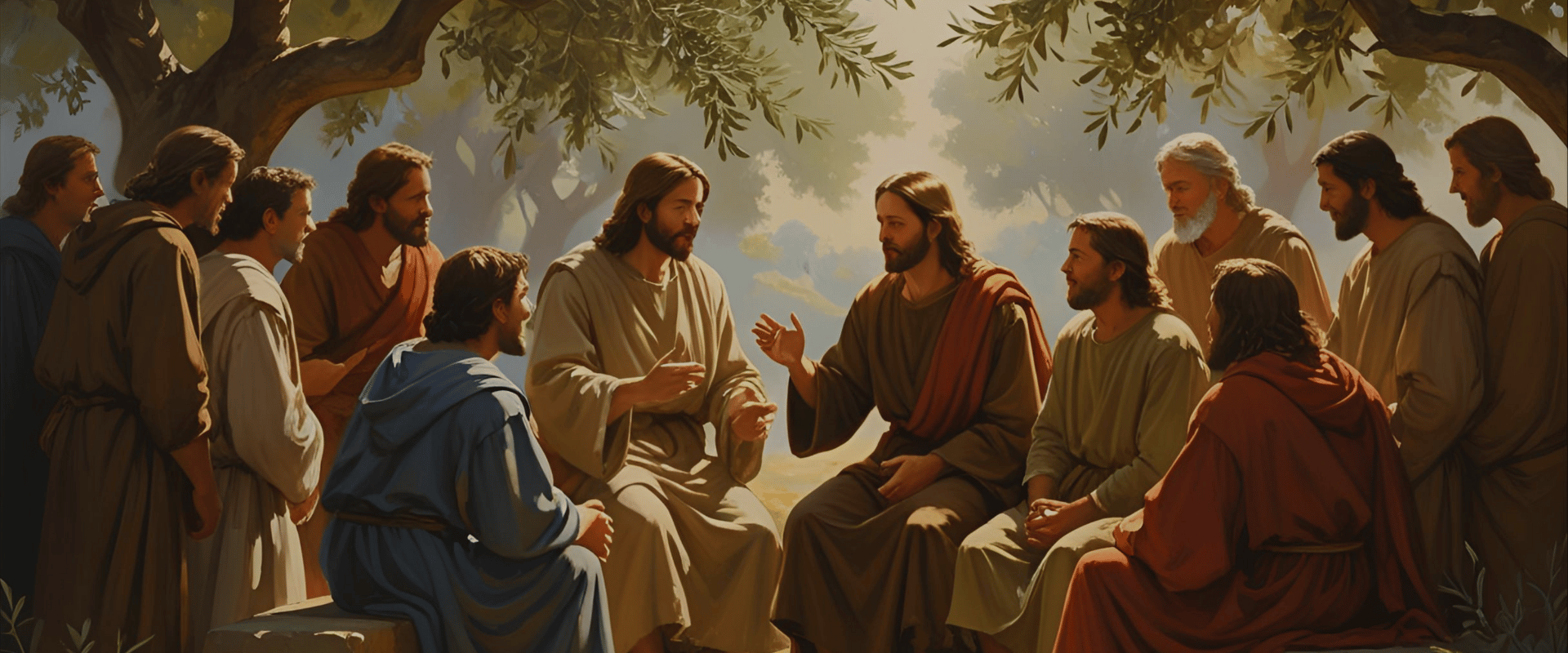
Conclusion
The Confession of Peter in Matthew 16:13-20, Mark 8:27–30 and Luke 9:18-21 is a significant episode in the Gospel narratives of Jesus’ life. It tells of a conversation between Jesus and his disciples in which Jesus asks about what people are saying about his identity. The “Who do you say that I am?” question, then, is not as straightforward as some might think.
The disciples answer that he is sometimes identified with the deceased John the Baptist, not because of the idea of reincarnation but rather because of the widespread belief in the general resurrection of the dead. Some, therefore, including King Herod, apparently thought that Jesus was merely the resurrected John. Some also thought he might be some other resurrected prophet.
Others apparently said that Jesus was Elijah, a prophetic figure who had not died in the biblical texts but had rather been spirited away to heaven. There was much speculation about his return, therefore, and some evidently wondered if Jesus was the returning Elijah.
However, the pivotal moment in this conversation comes when Peter steps up and answers that Jesus is the Messiah. Jesus does not explicitly affirm this in Mark, but certainly seems to accept it. In Matthew’s version, however, this is when Jesus designates Peter as the leader and foundation of the early Church.
While we can’t know for certain whether Jesus himself claimed to be the Messiah, it’s certain that his followers, especially after seeing him resurrected, believed that he was.
join bart ehrman's new conference!
New Insights into the Hebrew Bible
March 20-22 | 13 Bible Scholars | Early-Bird Pricing
Inaugural conference will focus on the book of Genesis