
Pseudepigrapha: Forged Writings in Early Christian Literature

Written by Joshua Schachterle, Ph.D
Author | Professor | Scholar
Author | Professor | BE Contributor
Verified! See our editorial guidelines
Verified! See our guidelines
Date written: March 18th, 2026
Disclaimer: The views and opinions expressed in this article belong to the author and do not necessarily match my own. - Dr. Bart D. Ehrman
Who wrote most of the books of the Bible? For many readers, the answer seems straightforward: the titles of biblical books combined with the authors’ claims tell us who wrote them. Modern biblical scholarship, however, has shown that the reality is often far more complicated.
In this article, I’ll investigate these complications by defining a subgenre of ancient literature known as pseudepigrapha. Understanding pseudepigrapha can help us better grasp how religious texts were produced, transmitted, and interpreted in the ancient world. It also raises important questions about authorship, authority, and authenticity—questions that are far more complex than they might initially appear.

What Is the Meaning of Pseudepigrapha?
Exploring the pseudepigrapha meaning requires taking a closer look at two Greek words. The first is pseudḗs, which means “lying” or “false.” The second is epigraphḗ, which can mean “title” or “the attribution of a deed or literary work to its author.” Therefore, pseudepigrapha means a literary work that is falsely attributed to an author. If I claim that George Washington wrote this article, the article itself becomes pseudepigrapha, since Mr. Washington was not actually involved in the article’s composition. So what does this have to do with the Bible?
Well, scholars have known since at least the 19th century that several books of the New Testament were falsely attributed to important early Christian figures (although doubts about the authorship of some biblical books occurred even in some ancient writings). Although scholars tend not to use the pseudepigrapha label for these works, that’s exactly what they are.
In addition, there are a number of Jewish books written between about 300 BCE and 300 CE, that fit this pattern. Most of these claim to be authored by well-known Jewish religious figures long after their deaths. However, before looking at specific pseudepigraphic books, we need to understand why the notion of the genuineness of authorial attributions is not as simple as it might seem.
Authority and Authenticity
In his book Introducing the New Testament: A Historical, Literary, and Theological Survey, Mark Powell identifies seven levels of authenticity that can be attributed to ancient texts:
(Affiliate Disclaimer: We may earn commissions on products you purchase through this page at no additional cost to you. Thank you for supporting our site!)
- 1Literal authorship: An author writes a letter in his own hand. This is the highest level of authenticity and also, unfortunately, the rarest.
- 2Dictation: An author dictates a letter to a scribe. This was the most common method in the ancient world since only about 10% of people were literate.
- 3Delegated authorship: An author explains the gist of a planned letter to a scribe. The scribe then uses his own words to communicate the idea the author wants to convey.
- 4Posthumous authorship: After an author dies, his followers complete a letter the author had begun to write, attributing the whole letter to the original author.
- 5Apprentice authorship: After an author dies, followers who were authorized to speak for him during his lifetime continue to “speak” for him by writing letters in his name, sometimes years or decades after his death.
- 6Honorable pseudepigraphy: After an author dies, followers write letters in his name as a tribute to him, believing the letters to genuinely represent the author’s teachings.
- 7Forgery: An author is so well-known and admired that, either before or after he dies, people forge letters in his name in order to validate their own ideas.
Here’s where it gets complicated. In the case of dictation, an extremely common method of letter-writing in the ancient world, what if the scribe uses slightly different words from those dictated by the author? Does that make the scribe a co-author? If so, can that letter be accurately attributed to the author alone, or is it in some sense pseudepigrapha since the unnamed scribe’s own words are involved?
What about delegated authorship? If an author says to a scribe “Write a letter in my name and explain my ideas,” does that make it a genuine letter attributable to that person alone? How do we know how much input the scribe had in the text (spoiler alert: we usually don’t.)?
I hope you can see the difficulties inherent in deciding the true author of any ancient text. There are, of course, cases of clear forgery where the ideas in the letter have nothing to do with—or even directly contradict—the author’s ideas as expressed elsewhere. But determining authorship, at least in the way we modern people tend to think about it, is always complicated.
Having discussed the meaning of pseudepigrapha and some of its challenges, let’s now look at some actual examples of these texts and see what scholars think about them.
now available!
New Insights into the Hebrew Bible
13 renowned Bible scholars share their most recent, intriguing work on the book of Genesis.
Special pricing for inaugural conference
Non-Canonical Pseudepigrapha
As I said before, there is a group of Jewish pseudepigraphic texts written between 300 BCE and 300 CE. While these books are not part of the current Jewish canon, it’s certain that some of them were considered authoritative for Jews before the Hebrew Bible canon was closed. For example, fragments of the non-canonical Book of Enoch were found among the Dead Sea Scrolls, indicating that, by that community, the book was highly respected.
At this point, we need to define the difference between apocrypha and pseudepigrapha. The Apocrypha is a group of books left out of the Hebrew Bible canon and written between 400 and 200 BCE. Some apocryphal books are also pseudepigrapha: The book of Enoch claims to be written by Enoch, for example, so there is some overlap between the two categories.
For now, though, let’s look at one well-known example of pseudepigrapha called the The Apocalypse of Abraham. The book’s author claims to be Abraham, the patriarch of the Jewish nation and others, according to Genesis 17:5. The entire book, in fact, is written in the first person in Abraham’s name. In his book The Formation of the Biblical Canon, Lee Martin McDonald writes that The Apocalypse of Abraham was likely written between 70 and 150 CE and is not considered a canonical work for either Jews or Christians. It opens with Abraham telling the story of how he stopped worshipping idols in favor of the one true God:
On the day when I planed the gods of my father Terah and the gods of Nahor his brother, when I was searching as to who the Mighty God in truth is—I, Abraham, at the time when it fell to my lot, when I fulfilled the services of my father Terah to his gods of wood and stone, gold and silver, brass and iron; having entered into their temple for service, I found the god whose name was Merumath (which was) hewn out of stone, fallen forward at the feet of the iron god Nahon.


However, since scholars date the book’s composition between 70 and 150 CE, we know that it was written long after the death of Abraham, who, if he was indeed a historical person, would have lived at around 2000-2200 BCE. Nevertheless, it presents an interesting apocalyptic vision experienced by Abraham, as well as several legends about his life. While scholars agree that it was originally written in Hebrew, the only surviving manuscripts are in Old Church Slavonic, an early precursor to Russian and other Slavic languages.
Another example is 2 Esdras, otherwise known as the 4th book of Ezra. While the original book of Ezra is part of the Hebrew Bible canon, scholars have known for a long time that 2 Esdras was written in a different era. Although the author claims to be the prophet Ezra, who lived in the 5th century BCE, most scholars agree that it was written sometime after the destruction of the Second Temple in 70 CE, probably between 95 and 100 CE. In terms of content, 2 Esdras uses a series of apocalyptic visions to deal with the trauma of the destruction of the Temple and all the theological problems caused by it. It is considered extracanonical in the Jewish tradition and in most Christian traditions, with the exception of the Ethiopian Orthodox Church, in which it is considered a canonical work.
Finally, there is at least one universally canonical book in the Hebrew Bible that most scholars consider to be pseudepigrapha: the Book of Daniel. While its author claims to be the prophet Daniel, who would have lived in the 6th century BCE, scholars such as John J. Collins in Daniel: Introduction to Apocalyptic Literature, write that it was actually written in the 2nd century BCE by an anonymous author.
New Testament Pseudepigrapha
There are far more pseudepigrapha Bible examples in the canonical New Testament than in the Old. However, in many cases we must make a distinction between books that are pseudepigraphic and others which were merely written anonymously. Case in point: the four canonical Gospels, Matthew, Mark, Luke, and John.
As Bart Ehrman notes in his book Misquoting Jesus: The Story Behind Who Changed the Bible and Why, the oldest and best manuscripts of each of the four Gospels don’t identify their authors, nor do they contain the titles by which we know them now. The titles of these books were added to them, probably in the 2nd century, according to most scholars. The same is true of the authorship of Hebrews, and 1, 2, and 3 John. The author of these books does not name himself in the oldest manuscripts. However, later traditions would ascribe authorship of Hebrews, for example, to the Apostle Paul, and 1, 2, and 3 John to John the Apostle who was also supposed to have written the Gospel bearing his name. In other words, these are not classified as pseudepigrapha because the authors don’t name themselves.
The Pauline Epistles, on the other hand, are more complicated. Virtually all scholars believe that Paul wrote 1 Thessalonians, Galatians, Philippians, 1 and 2 Corinthians, Romans, and Philemon. Meanwhile, the letters to the Ephesians, Colossians, 2 Thessalonians, 1 Timothy, 2 Timothy, and Titus, whose authors claim to be Paul, are probably pseudepigraphic, according to most scholars (although some of these are still debated).
Since we’ve looked at Pauline letters in other articles, let’s look at some other pseudepigraphic books in the New Testament. For instance, the letters of 1 and 2 Peter claim to be written by the Apostle Peter. In Lost Christianities: The Battles for Scripture and the Faiths We Never Knew, Bart Ehrman notes that while most scholars doubt that Peter wrote 2 Peter, the authorship of 1 Peter is still debated. However, Ehrman himself believes it unlikely that even 1 Peter could have been written by the Apostle Peter. Why? The letter was written in Greek, a language which a Galilean fisherman would probably not have known how to speak (since the language of Galilee was almost exclusively Aramaic). In addition, Ehrman writes that
Virtually the only things that we can say for certain about the disciple Peter is that he was a lower-class fisherman from Galilee (Mark 1:16) who was known to have been illiterate (Acts 4:13). His native tongue was Aramaic. This letter, on the other hand, is written by a highly literate Greek-speaking Christian who is intimately familiar with the Old Testament in its Greek translation and with a range of Greek rhetorical constructions.
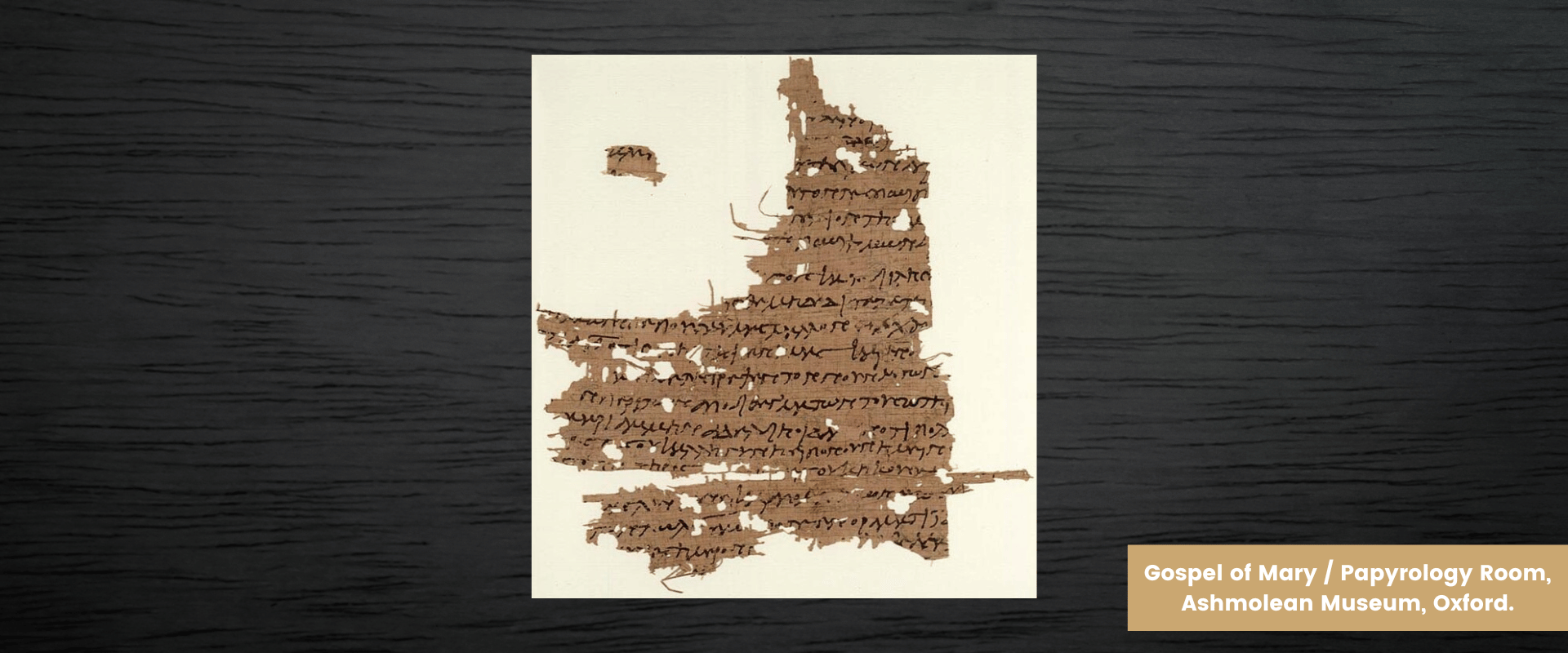
In terms of non-canonical NT books, though, we can look at the Gospel of Thomas, a book purporting to be a collection of Jesus’ sayings and found in the Nag Hammadi Codex. The book begins by noting who supposedly wrote these sayings down:
These are the secret sayings which the living Jesus spoke and which Didymos Judas Thomas wrote down.
This author is apparently the Doubting Thomas found among lists of Jesus’ disciples in all four Gospels. However, the scholarly consensus puts authorship of this book in the early 2nd century, probably by an adherent of a Gnostic sect. Other examples of noncanonical Gospels which are also pseudepigrapha include the Gospel of Peter. It is a 2nd-century work probably written by a member of the heretical group known as the Docetists.
Conclusion
Pseudepigrapha are texts whose authors falsely claim to be a person of authority in a religious tradition. In the realm of Scripture, there are both canonical and non-canonical examples of this genre of literature.
In determining authentic authorship of ancient texts, it’s commonly understood that the majority of texts were dictated by the author, either word for word or simply by giving the gist, and then physically written by a scribe. This is certainly the case with Paul’s letters, and it brings up some issues. For instance, if a scribe gets only the main idea of a letter from the author but then uses his own words to write the letter, is it an authentic letter from that author?
Questions such as these abound in the study of ancient literature. Nevertheless, there are some ancient texts we know to be pseudepigrapha simply because the texts were written long after the death of the supposed authors. This is the case with Jewish works such as 2 Esdras and The Apocalypse of Abraham.
In other cases, such as the letter of 1 Timothy, the style and content of the letter contradict that of letters we know to be authentic. In cases like these, while authorship can still be debated, the most likely conclusion is that the letter is a fake written in the author’s name. This only highlights an unfortunate truth: we don’t know who wrote most of the books of the Bible.
now available!
New Insights into the Hebrew Bible
13 renowned Bible scholars share their most recent, intriguing work on the book of Genesis.
Special pricing for inaugural conference