
Akedah: Making Sense of Isaac's Disturbing Sacrifice (Gen. 22)

Written by Marko Marina, Ph.D.
Author | Historian
Author | Historian | BE Contributor
Verified! See our guidelines
Verified! See our editorial guidelines
Date written: December 24th, 2025
Disclaimer: The views and opinions expressed in this article belong to the author and do not necessarily match my own. - Dr. Bart D. Ehrman
Have you ever heard about Akedah? Or let’s put it this way: have you ever tried to imagine what it would feel like to receive a divine command to sacrifice your own child? Try, for a moment, to place yourself in the position of a father who has waited years for a promised son, watched him grow, and invested in him not only love, but hope for the future.
How would you react to such an order? Would you obey, resist, question, or despair? And perhaps even more unsettling: what would you think if this happened not to you, but to someone else, especially if the command were said to come from God himself?
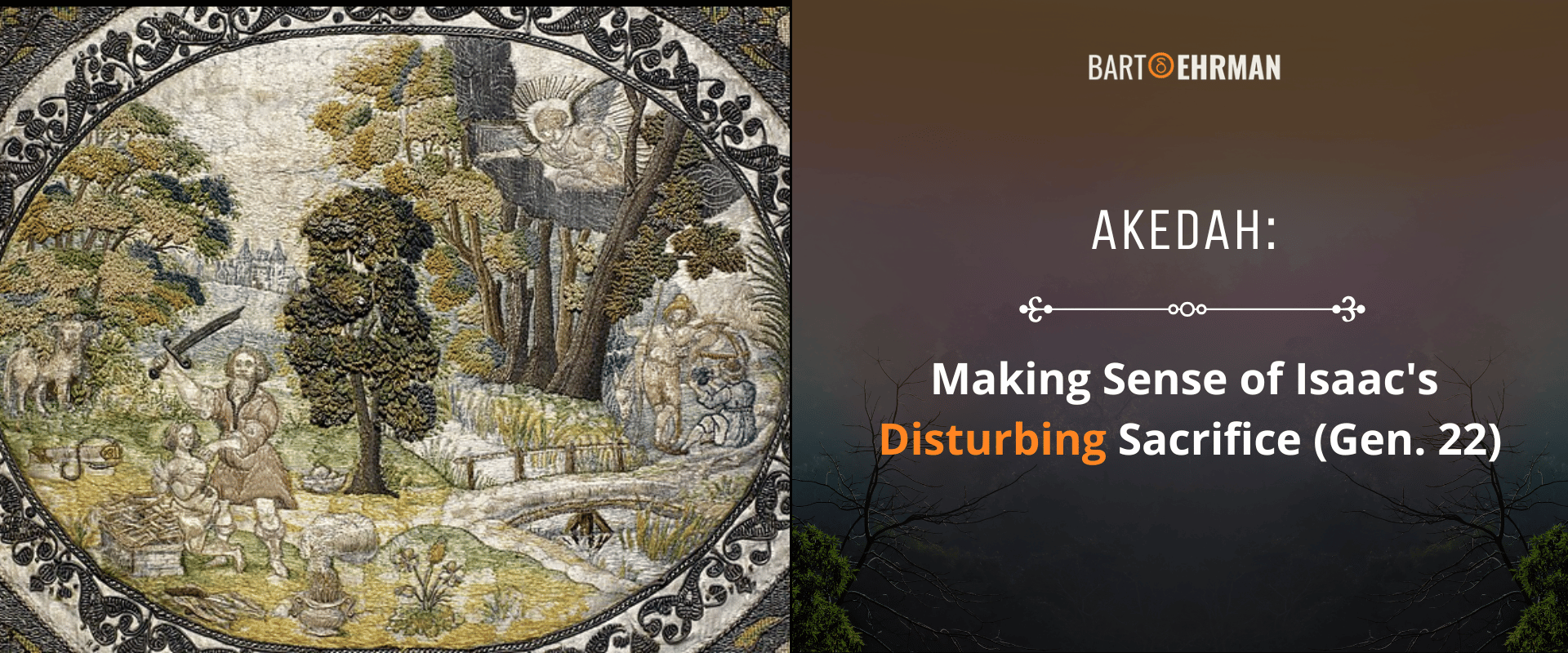
This disturbing scenario lies at the heart of one of the most famous and troubling narratives in the Hebrew Bible, traditionally known as the “Akedah” or the “binding” of Isaac (Genesis 22). In this story, Abraham is commanded by God to offer his beloved son Isaac as a burnt offering, only for the sacrifice to be halted at the last possible moment.
Few biblical passages have provoked as much reflection, admiration, discomfort, and outright criticism as the Akedah. For many believers, it stands as a profound testimony to faith and obedience; for others, it raises deeply troubling questions about divine morality, human responsibility, and the limits of religious authority.
It’s precisely this tension that has kept the Akedah at the center of theological, philosophical, and ethical debate for centuries.
In what follows, we’ll approach this narrative from a scholarly and historical perspective, beginning with a careful description of the story itself and the meaning of the term Akedah.
We’ll then explore major interpretive themes that scholars have identified in Genesis 22 before turning to the story’s reception in Jewish and Muslim traditions, where it plays a particularly important role.
Finally, we’ll consider some of the serious criticisms that modern thinkers have raised against such a disturbing portrayal of God. The aim isn’t to resolve the tensions of the Akedah, but to better understand why they have proven so enduring and so unsettling.
What Is Akedah? Term, Text, and Narrative Context
Before describing the story of Abraham and Isaac itself, it’s important to clarify the terminology commonly used for this narrative. The word Akedah derives from the Hebrew root ʿ-q-d, meaning “to bind,” and refers specifically to the binding of Isaac prior to the attempted sacrifice.
Notably, the term doesn’t appear anywhere in Genesis 22 or elsewhere in the Hebrew Bible. Rather, it emerged in later Jewish tradition as a technical designation for this episode, especially within rabbinic literature and liturgical contexts.
The retrospective naming of the event as the Akedah highlights what later interpreters came to see as its defining moment (the binding of the son) rather than the act of sacrifice itself. In that sense, the term already reflects a reception history layered onto the biblical text.
The narrative commonly associated with the Akedah appears in Genesis 22, within the larger book of Genesis.
Traditionally, Genesis (along with the rest of the Pentateuch) was attributed to Moses as its author. However, for well over a century now, critical biblical scholarship has recognized that these texts are the result of a long and complex process of composition and redaction, drawing on multiple sources written by different authors and editors over several centuries.
Readers interested in exploring how modern scholars analyze the composition of Genesis and the Pentateuch more broadly may find an accessible and detailed treatment in Bart D. Ehrman’s courses In the Beginning: History, Legend, or Myth in Genesis!
In any case, within this composite work, the story traditionally known as the Akedah in the Bible is located in Genesis 22, near the end of the larger Abraham cycle (Genesis 12-25).
Genesis 22 opens with a brief narrative introduction stating that God “tested” Abraham and then commands him to take his son Isaac (described emphatically as his “only son,” whom he loves) to the land of Moriah and offer him there as a burnt offering.
Abraham responds without recorded protest, rising early the next morning to prepare for the journey.
After traveling for three days, Abraham leaves his servants behind and proceeds alone with Isaac toward the designated place. As they walk together, Isaac asks his father where the lamb for the offering is, to which Abraham replies that God will provide it.
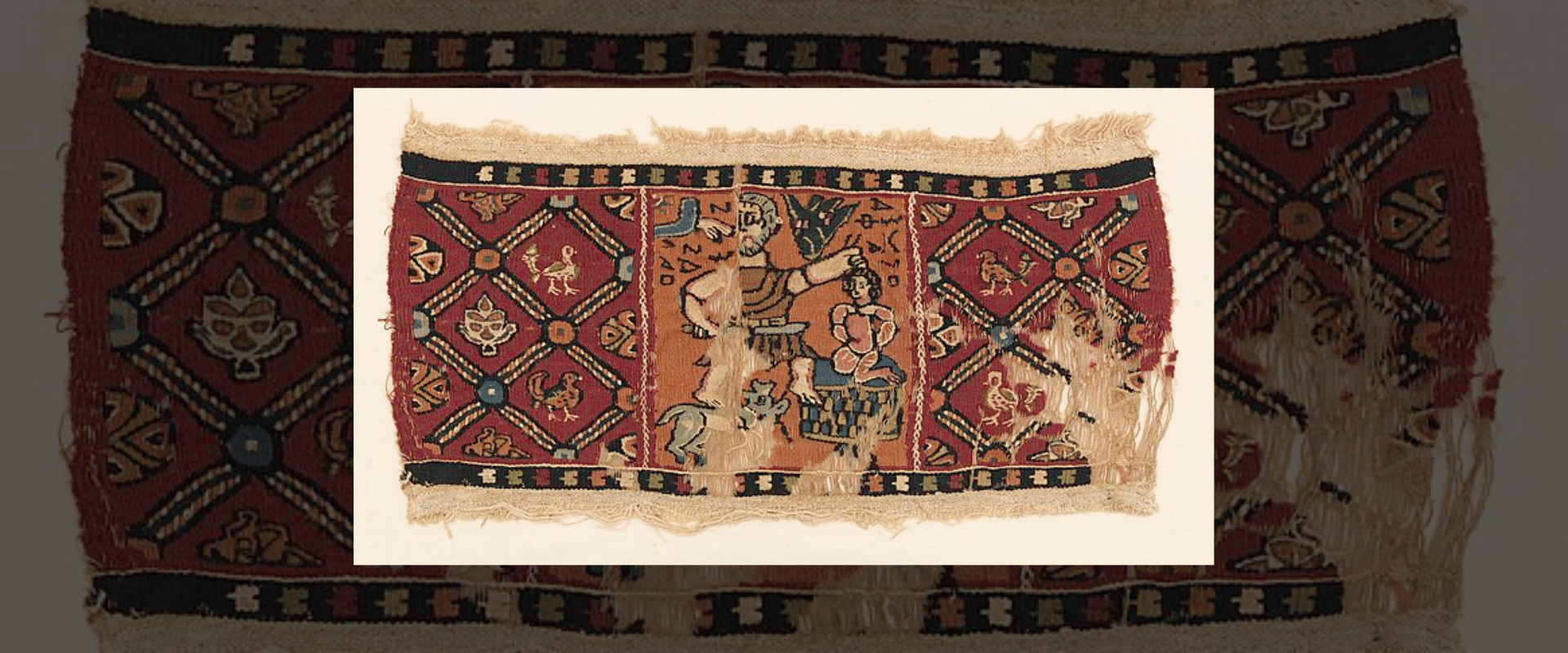
Upon reaching the site, Abraham builds an altar, arranges the wood, binds Isaac, and places him upon it. At the moment Abraham raises the knife, an angel of the Lord intervenes, commanding him not to harm the boy.
Abraham then sees a ram caught in a thicket, which he offers in Isaac’s place. The episode concludes with a reaffirmation of divine blessing upon Abraham, emphasizing the multiplication of his descendants.
Having established the terminology, textual location, and narrative outline of Genesis 22, we are now in a position to move beyond description to interpretation. The spare and dramatic nature of the story has invited extensive reflection on its meaning, purpose, and theological implications.
In the next section, we’ll turn to contemporary biblical scholarship to examine how scholars have interpreted the Akedah, paying particular attention to themes such as testing, obedience, faith, and the portrayal of God within this challenging narrative.
Akedah: Scholarly Interpretation and Theological Themes
The narrative of Genesis 22 signals its own intention from the very first line: “After these things God tested Abraham.” The story is explicitly framed not as a normal divine command but as an ordeal whose true purpose is to put Abraham to the test.
As E. A. Speiser notes in his Commentary, the way the Hebrew is constructed (together with the statement that this is a “test”) assures the audience from the outset that the grisly mandate to sacrifice Isaac isn’t meant to be carried out in reality, but to be revoked at the crucial moment.
(Affiliate Disclaimer: We may earn commissions on products you purchase through this page at no additional cost to you. Thank you for supporting our site!)
The suspense in the story therefore lies in the way Abraham responds and what this response reveals about his relationship with God and the divine promise.
Within the wider Abraham cycle, the Akedah functions as a kind of theological and literary summit. As Gordon J. Wenham points out, Genesis 22 deliberately echoes earlier key moments in Abraham’s story: the original call to leave his homeland, the previous promises of descendants, the expulsion of Ishmael, and the rescue of Hagar and her child.
The language of blessing and multiplication in 22:15-18 picks up and intensifies the promises first given in Genesis 12, 15, 17, and 18, while the phrasing “your son, your only son” presupposes the earlier narrative in which Ishmael has already been sent away.
Furthermore, the story mirrors Abraham’s first call (“Go… to the land that I will show you”) with God’s command to go “to the land of Moriah… on one of the mountains that I shall show you.” The result is that the Akedah is a carefully placed climax that gathers up and reconfigures the themes of call, promise, risk, and trust that have been developing throughout Abraham’s life.
At the heart of the narrative is Abraham’s spiritual and psychological ordeal. Isaac isn’t just a beloved child of old age. Rather, he is the concrete embodiment of God’s promise that Abraham will become a great nation and a blessing to others.
To sacrifice Isaac would appear to extinguish the very future God had promised. Speiser therefore argues that the story shouldn’t be understood as a general protest against child sacrifice, nor merely as a generic celebration of obedience. After all, Abraham has already shown that kind of obedience when he left Mesopotamia in Genesis 12. Instead, the test probes the firmness of Abraham’s faith in God’s long-range purpose, precisely when that purpose seems most endangered.
In other words, Abraham’s readiness to proceed, even when the command appears to contradict the promise, is presented as a radical act of trust in a God whose purposes extend beyond what is immediately visible.
The way the story is told underscores this ordeal without ever spelling it out. Much of the emotional weight lies in what the text leaves unsaid. Details such as Abraham rising early, saddling the donkey, splitting the wood, and undertaking a three-day journey unfold slowly, creating a rhythm of quiet, heavy steps toward the crisis.
The dialogues are brief and loaded with ambiguity: Abraham’s statement to the servants that “we will worship and then we will come back to you,” and his reply to Isaac (“God will provide himself the sheep for a burnt offering”) can be heard as evasions, hopeful expressions of faith, prophetic statements, or even prayers.
Wenham also notes that the repeated exchange “My father… Here I am” and the haunting line “the two of them walked on together” deepen the sense of poignant silence between father and son.
Abraham’s binding of Isaac, the raising of the knife, and the sudden interruption by the angel of the Lord are narrated with stark simplicity, allowing the tension and horror to register in the reader’s imagination rather than through explicit commentary.
Did You Know?
When Christians Read Genesis Backwards.
Did you know that many Christians have read the story of Abraham and Isaac as a kind of preview (or “foreshadowing”) of Jesus’ crucifixion? Long before Easter sermons and stained-glass windows made the connection familiar, early Christian readers noticed some striking parallels: a beloved “only son,” a journey up a hill, wood carried on the back, and a willingness to submit to God's will.
Add to that Abraham’s famous line, “God will provide,” and you can see why later Christians couldn’t resist reading the Akedah with the cross in mind. For them, the story wasn’t just about Abraham’s faith but about God preparing the script for what was still to come.
That said, scholars (especially the president of my PhD committee!) are quick to point out that this way of reading Genesis 22 is strictly a Christian interpretation, one that looks backward from Jesus rather than forward from Abraham.
The author behind this story in Genesis wasn’t secretly dropping messianic hints, and Jewish tradition never read the Akedah as a prediction of Christ.
In fact, Christian writers themselves often emphasized the key difference: Isaac is spared at the last moment, while Jesus is not. Still, the story proved irresistible to Christian imagination, turning the binding of Isaac into a theological dress rehearsal for the passion.
Love it or question it, it’s a fascinating example of how the same ancient story can take on entirely new meanings depending on who’s reading and when.
Theologically, several themes converge in the resolution of the story. The angel’s intervention halts the sacrifice and confirms that Abraham “fears God.” It’s a biblical way of speaking about deep reverence and total dedication rather than mere terror.
A ram caught in a thicket is offered “instead of his son,” introducing a clear element of substitution: the animal stands in the place of the human life that was demanded. The place is then named “The Lord will provide” (or “The Lord will see”), capturing the idea that God both sees the situation and provides what is needed at the crucial moment.
Finally, the divine speech that follows (introduced with a rare divine oath) reaffirms and intensifies the promises given earlier: Abraham will be greatly blessed, his descendants will be as numerous as the stars and the sand, and they will “possess the gate of their enemies.”
In other words, the test isn’t an arbitrary ordeal. Instead, it leads into the climactic confirmation of the covenant relationship and its future.
Taken together, a scholarly reading of Genesis 22 sees the Akedah as a carefully crafted story in which narrative form, psychological depth, and theological themes are tightly interwoven.
The account explores what it means for Abraham (and by extension, for later readers) to trust a God who can demand everything and yet still be trusted to provide. To put it more bluntly, the sacrifice of Isaac probes the relationship between obedience and promise, fear and faith, demand and deliverance.
While this represents a scholarly look at Genesis 22, the story of the Akedah in the Bible goes far beyond both the text itself and modern scholarship. Because of its profound significance and its openness to multiple layers of meaning, the Akedah became a major point of reflection in both Jewish and Muslim traditions, to which we now turn.
NOW AVAILABLE!
Finding Moses: What Scholars Know About The Exodus & The Jewish Law
Riveting and controversial, the "FINDING MOSES" lecture series takes you on a deep dive into the stories of Moses, the exodus, and a whole lot more...
The Afterlife of Akedah: A Brief Look at Reception History
The significance of Genesis 22 extends far beyond its original biblical setting. As later religious communities engaged with the Akedah, the story was reread, expanded, and reimagined in ways that reflected evolving theological priorities and lived realities, most notably within Jewish and Muslim traditions.
So let’s take a look at how this story came to life beyond the pages of the Bible. It’s a fascinating example of how some stories are so powerful that time can’t even touch them!
The Binding of Isaac in the Later Jewish Tradition
While the biblical narrative of Genesis 22 is brief and restrained, its afterlife within Jewish tradition is remarkably rich and expansive.
Over time, the Akedah became far more than a troubling episode from Israel’s ancestral past! It was transformed into a foundational symbol through which Jewish communities articulated faith, devotion, suffering, and hope.
Rather than focusing primarily on philosophical puzzles or moral objections, most premodern Jewish interpretations approached the Akedah as a lived reality, something to be remembered, invoked, and even reenacted through prayer, ritual, and storytelling.
One of the most enduring ideas to emerge from Jewish interpretation is that the Akedah generated lasting merit for Abraham’s descendants.
Rabbinic literature and liturgy repeatedly portray Abraham’s willingness (and sometimes Isaac’s own readiness) as creating a reservoir of righteousness that God can draw upon in times of crisis.
This notion is especially prominent in Jewish prayer, where the Akedah is invoked to remind God of Israel’s ancestral devotion. Most famously, the story plays a central role in the liturgy of Rosh Hashanah, where the blowing of the ram’s horn is explicitly linked to the ram offered in Isaac’s place.
In this framework, the Akedah functions not simply as a test passed long ago, but as a recurring source of divine compassion and forgiveness in the present.
Closely related to this emphasis on merit is the transformation of Isaac into a paradigmatic figure of martyrdom.
In many rabbinic and medieval retellings, Isaac is understood as a conscious participant who willingly submits to being bound. This reinterpretation allowed later generations to view their own suffering through the lens of the Akedah, especially in times of persecution. So, during the Crusades, Jewish chronicles and liturgical poems explicitly portrayed parents and children who died for their faith as reenacting Isaac’s binding, sometimes even surpassing it.
The Akedah thus became a template for understanding martyrdom: an act of sanctifying God’s name through ultimate sacrifice, whether that sacrifice was potential, as in Genesis 22, or tragically actual, as in later historical circumstances.
This interpretive trajectory is especially visible in medieval Spain, where periods of violence, forced conversion, and martyrdom prompted renewed reflection on the Akedah. In the aftermath of the pogroms of 1391, the philosopher and theologian Ḥasdai Crescas (who had lost his only son) described him in starkly sacrificial terms: “my son, my only one, a bridegroom, a perfect sheep whom I offered as a burnt offering.”
The language deliberately echoes Genesis 22 and shows how deeply the Akedah had become embedded in Jewish ways of making sense of personal and communal catastrophe. Here, the biblical story serves as a framework for interpreting contemporary loss, grief, and fidelity under unbearable pressure.
At the same time, Jewish tradition never reduced the Akedah to a single, unambiguous message. As Aaron Koller, in his book Unbinding Isaac, notes:
For as long as there have been retellings, there have been comments on the cruelty and heartlessness of a father who would do such a thing to his son. These criticisms were couched within texts of piety, however, and so they did not rise to the level of modern critiques unfettered from devotion to the text or its characters. Fascinatingly, modern Jewish culture, too – ostensibly free from any such fetters – continued to grapple with the Akedah. A cultural artifact of great power, if not an authoritative divine text, the Akedah provided lenses through which intergenerational life could be understood.


In other words, alongside affirmations of merit, love, and martyrdom, there are also voices of unease, ambivalence, and even critique. Some liturgical poems and midrashim acknowledge the cruelty and horror implicit in the story, asking why Abraham did not protest or plead for mercy.
Others (e.g., Bereshit Rabbah) give voice (often indirectly, through figures like Satan) to the very moral doubts that the narrative provokes. These tensions didn’t weaken the power of the Akedah; they, as Koller emphasizes, intensified it.
Precisely because the story could sustain both devotion and discomfort, it remained a vital reference point across centuries of Jewish thought and experience, long after the biblical text itself had ended.
Akedah in the Islamic Tradition
Even though Islam originated many centuries after the Hebrew Bible was composed, it retained deep religious ties to both Judaism and Christianity, particularly through its reverence for Abraham (Ibrāhīm) as a foundational monotheist.
In the Quran, Abraham is portrayed, first and foremost, as a paradigmatic believer who embodies pure devotion to the one true God. Within this framework, the story commonly associated with the Akedah reappears in a distinct form, shaped by Islamic theology and ethics, and serves as a powerful illustration of submission (islām) to the divine will.
The Quranic version of the story is found primarily in Sūrat al-Ṣāffāt (37:99-113), where it unfolds in the context of Abraham’s Hijra: his departure from his homeland in obedience to God and his subsequent prayer for a righteous son.
After Abraham receives the long-awaited child, he relates a dream in which God commands him to sacrifice his son. In the Quran, Abraham consults the boy, who willingly agrees to submit to God’s command alongside his father. As they prepare to carry out the act, God intervenes, declaring that Abraham has fulfilled the vision and providing a substitute sacrifice.
Although the Quran doesn’t explicitly name the son, later Islamic tradition almost universally identifies him as Ishmael rather than Isaac.
Within Islamic thought, this episode is understood less as an isolated moral trial and more as a paradigmatic expression of what Islam itself means. Submission to God’s will isn’t reserved for a particular people or covenant but is presented as the universal calling of humanity.
As Darrell J. Fasching, Dell Dechant, and David M. Lantigua observe in their study Comparative Religious Ethics:
In a parallel fashion, for Islam, all humanity receives the same command; it was the command given by God first to Adam but then to Abraham and his two sons. This command was not just for Abraham, Ishmael, Isaac, and their descendants, it was for all the world — it was the message of Islam (surrender to the will of God) and all the world is called to be Muslim.” Seen this way, the Qurʾānic version of the story affirms a universal ethic of obedience that transcends ethnic or genealogical boundaries.
This universalizing interpretation also helps explain the central role the story plays in Islamic ritual life. The willingness of Abraham and his son to submit to God is ritually commemorated in the festival of Eid al-Adha, during which Muslims worldwide perform animal sacrifice in remembrance of God’s provision and mercy.
The narrative thus becomes a recurring act of communal worship, reinforcing Islam’s understanding of obedience as an all-encompassing posture toward God.
So, while sharing clear points of contact with Jewish and Christian traditions, the Islamic reception of the story reshapes its meaning around the core concept of islām itself, which means a total, universal surrender to the will of God.
Appendix: Modern Philosophical and Ethical Critiques
It was the ancient Greek philosopher Epicurus who famously formulated a dilemma that has continued to shape discussions about God and suffering ever since.
If God is willing to prevent evil but unable to do so, then God isn’t omnipotent; if God is able to prevent evil but unwilling, then God isn’t benevolent; if God is both willing and able, then why does evil exist at all?
Although Epicurus wasn’t addressing the Bible, his formulation became a foundational problem for later philosophical critiques of theistic belief.
At its core lies a tension between divine power, divine goodness, and the reality of suffering, a tension that resurfaces whenever sacred texts portray God as directly causing, commanding, or permitting harm to the innocent.
In modern biblical criticism, this tension has often been brought sharply into focus through the story of the Akedah.
One influential articulation of the problem appears in Bart D. Ehrman’s book God’s Problem, where Genesis 22 is treated alongside the book of Job as an especially stark example of suffering imposed as a test of faith.
Ehrman draws attention to the moral contradictions raised by the narrative: a God who promises Abraham a son and then commands him to kill that very child; a God who forbids murder, yet demands an act that would normally be condemned as unspeakable violence.
From this perspective, the Akedah exemplifies a view of divine authority that places obedience above moral reasoning and treats innocent suffering (at least in principle) as an acceptable means to demonstrate loyalty to God. Ehrman presents this not as a peripheral difficulty but as a central ethical challenge posed by certain biblical portrayals of God.
Similar concerns appear in the writings of other modern critics of religion, including the journalist and polemicist Christopher Hitchens.
In God Is Not Great, Hitchens repeatedly targets the story of Abraham and Isaac as emblematic of what he sees as the moral dangers of unquestioning obedience to divine command. For him, the willingness of Abraham to kill his son at God’s instruction illustrates how religious ethics can invert ordinary moral intuitions, transforming acts that would otherwise be regarded as monstrous into proofs of virtue.
He treats the narrative not as a cautionary tale about the psychological and ethical consequences of subordinating human compassion and responsibility to absolute theological authority.
Taken together, these philosophical and modern critiques do not attempt to offer an alternative interpretation of Genesis 22 so much as to expose the ethical cost of certain traditional readings.
Whether one ultimately finds these objections persuasive or not, they underscore why the Akedah continues to provoke such intense reflection, not only within religious traditions, but also in broader conversations about the nature of God, morality, and human responsibility.
Conclusion
So, what would you do if you found yourself in Abraham’s shoes? As we have seen, the story of the Akedah refuses to provide an easy or comfortable answer.
In its biblical form, it confronts readers with stark questions about obedience, faith, trust, and the nature of God’s demands.
Scholarly analysis helps clarify how Genesis 22 functions as a carefully crafted narrative within the Abraham cycle, while reception history shows just how powerfully the story resonated far beyond its original context, shaping Jewish prayer, martyrdom narratives, Islamic ritual life, and modern ethical debate alike.
It seems that the Akedah endures precisely because it exposes fault lines between devotion and morality, divine command and human intuition.
Perhaps the most striking feature of the Akedah is its refusal to resolve those tensions once and for all.
Across centuries, readers have embraced the story as a paradigm of faith, wrestled with it as a source of anguish, or rejected its implications as morally troubling. Whether approached through scholarship, religious tradition, or philosophical critique, the binding of Isaac continues to demand a response. A response that those assessing it must find for themselves!
NOW AVAILABLE!
Finding Moses: What Scholars Know About The Exodus & The Jewish Law
Riveting and controversial, the "FINDING MOSES" lecture series takes you on a deep dive into the stories of Moses, the exodus, and a whole lot more...