

Sodom and Gomorrah: The Story, the Sin, and What Archaeology Has Found

Written by Marko Marina, Ph.D.
Author | Historian
Author | Historian | BE Contributor
Verified! See our guidelines
Verified! See our editorial guidelines
Date written: November 18th, 2026
Disclaimer: The views and opinions expressed in this article belong to the author and do not necessarily match my own. - Dr. Bart D. Ehrman
I remember listening to my father recount some of his difficult experiences during the Croatian Homeland War. In one particular story, he described being so overwhelmed by what was happening around him that he simply “stood there like a pillar of salt.”
I have often wondered whether he knew where that expression originally came from. I certainly did not at the time.
As it turns out, the phrase has deep biblical roots, originating in one of the most fascinating and unsettling stories in the Hebrew Bible: the destruction of Sodom and Gomorrah.
What is Sodom and Gomorrah? It is a story that has, over the centuries, left a lasting mark on religious traditions, literature, and everyday language. Even today, Sodom and Gomorrah are frequently invoked in debates about morality, divine punishment, and, perhaps most controversially, homosexuality.
But what does the biblical story actually say? Were Sodom and Gomorrah destroyed because of sexual immorality, as many people today assume, or does the narrative suggest something more complicated? And what about the cities themselves?
What happened to Sodom and Gomorrah? Were they real places whose destruction left traces that archaeologists might still uncover, or do they belong primarily to the world of biblical storytelling?
To answer these questions, we need to look beyond the familiar associations and examine the ancient text in its own literary and historical context.
Along the way, we will explore how other biblical authors understood the fate of these cities and what modern archaeological investigations can (and cannot) tell us about their possible existence.
If you're interested in learning more about the first five books of the Hebrew Bible and how they came to be written, don't miss Joel Baden's 10-lecture course, The Bible by Committee: How the Pentateuch Was Really Written?
For centuries, these books were attributed to Moses, but modern scholarship reveals a far more complicated story. From the two creation accounts in Genesis to the puzzling repetitions and contradictions throughout the Pentateuch, Baden, a leading biblical scholar at Yale University, guides you through the evidence for multiple authors and literary traditions.
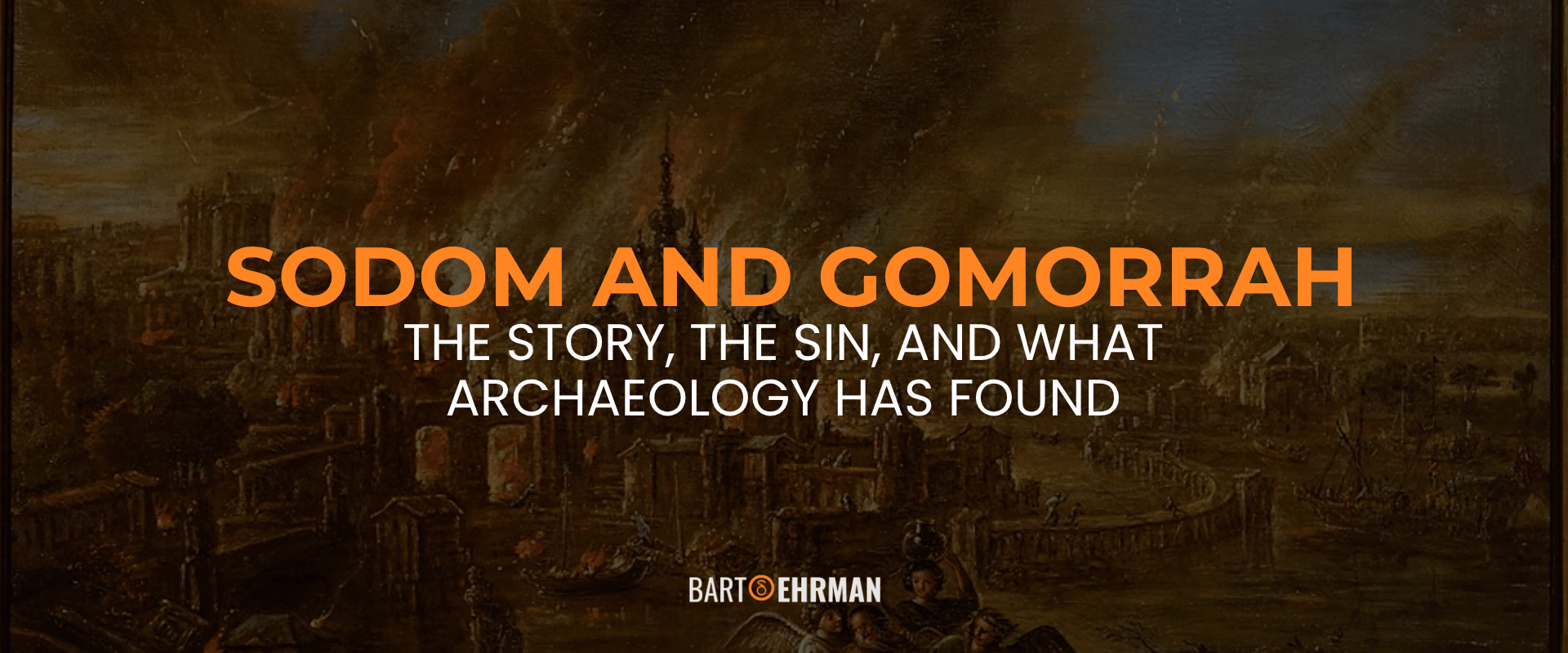
Where Is the Story of Sodom and Gomorrah in the Bible?
In his book The Hebrew Bible: A Contemporary Introduction to the Christian Old Testament and Jewish Tanakh, David M. Carr writes:
(Affiliate Disclaimer: We may earn commissions on products you purchase through this page at no additional cost to you. Thank you for supporting our site!)
None of the texts in the Bible, including Genesis, are transcripts of early oral traditions. Rather, these are later literary texts where earlier oral traditions have been radically reshaped to fit into a broader narrative. This means that we must distinguish between the present written level of the biblical text and faint outlines of oral traditions standing behind the text.


Carr’s observation reminds us of the complex processes of composition, transmission, and editing that stand behind the collection of ancient writings we now call the Hebrew Bible. These texts didn’t emerge all at once, nor were they composed by a single author.
Rather, they took shape over centuries, incorporating and reshaping older traditions within larger literary frameworks.
Keeping this distinction between the biblical texts as we have them and the traditions that may lie behind them is particularly important as we turn to the story of Sodom and Gomorrah.
The story appears in the Book of Genesis, the first book of the Hebrew Bible, though not necessarily the first to have been composed.
Genesis also opens the Torah (known in Greek as the Pentateuch), the collection of five books that stands at the beginning of both the Jewish Tanakh and the Christian Old Testament.
Traditionally associated with Moses, Genesis is understood by most contemporary scholars as a composite work that developed through a lengthy process of literary formation.
Its narratives range from accounts of the creation of the world and the earliest generations of humanity (Genesis 1–11) to stories concerning Israel’s ancestors, particularly Abraham, Isaac, Jacob, and Joseph (Genesis 12–50).
It’s within this second major narrative cycle, specifically the traditions surrounding Abraham, that we encounter Sodom and Gomorrah. However, there is more than a single Sodom and Gomorrah bible verse. The principal account is found in Genesis 18–19, although references to the cities appear elsewhere in the Bible, where later authors invoke their fate for different literary and theological purposes.
Sodom and Gomorrah Story: Summary
In his book The Invention of Sodomy in Christian Theology, Mark D. Jordan writes:
The term ‘Sodomy’ makes possible a number of theological descriptions in which the realities of human lives are lied about, and are deliberately misrepresented, for allegedly moral purposes. We have seen this differently in the dissembling of the confessor’s manuals and the silence of Albert the Great. The dissembling and the silence both occur at another moment full of consequences for Christian moral theology in the Western churches. It is the moment of wanting to give a comprehensive and literal description of how Christians ought to act. The description is to be comprehensive. It will describe not just some virtues or vices, but all virtues and vices, arranged systematically according to cause or seriousness or some other principle. The description will also be literal. It will have neither the multiplicity of a parable or an allegory, nor the rhetorical specificity of a sermon or a prayer. The project is to give, for the first time, a comprehensive and literal moral doctrine.
Throughout his study, Jordan demonstrates that “sodomy” (Latin sodomia) wasn’t an ancient, unchanging moral category handed down through the centuries.
Rather, he traces its emergence as a distinct theological category to the 11th-century monk and theologian Peter Damian, who employed it to classify and condemn various forms of sexual behavior.
As Jordan argues, the development of this category reflected the concerns and priorities of medieval Christian moral theology rather than a straightforward description of human sexuality.
Yet the very name of this category points us toward a much older biblical narrative: the story of Sodom and Gomorrah. To understand how these cities came to occupy such a prominent place in later religious and moral discussions, we must first examine what the Book of Genesis actually tells us about their destruction.
The story begins in Genesis 18, when God announces to Abraham that the outcry against Sodom and Gomorrah is great and that their sin is exceedingly grave (18:20–21).
Concerned that innocent people might perish alongside the guilty, Abraham challenges the justice of destroying the righteous together with the wicked. He asks whether God would spare the city if 50 righteous people could be found there.
God agrees, and Abraham gradually reduces the number until God promises not to destroy the city if even ten righteous inhabitants can be found (18:22–33).
The narrative then shifts to Sodom, where two angels, appearing as men, arrive in the evening and are welcomed into the home of Lot, Abraham's nephew.
Before they can retire for the night, however, the men of Sodom surround Lot's house and demand that he bring out his visitors so that they may “know” them (19:4–5). Lot refuses and, in a disturbing turn, offers his two virgin daughters instead.
The crowd rejects his offer and threatens Lot himself, prompting the visitors to intervene, pull him inside, and strike the men outside with blindness (19:6–11).
The visitors then reveal that God has sent them to destroy the city and instruct Lot to gather his family and flee.
Lot attempts to warn his prospective sons-in-law, but they dismiss his warning as a joke. As morning approaches, the angels urge Lot, his wife, and their two daughters to leave immediately.
When Lot hesitates, they take the family by the hand and lead them out of the city, warning them not to look back (19:12–17). Lot is permitted to seek refuge in the nearby town of Zoar.
Shortly afterward, God rains sulfur and fire upon Sodom and Gomorrah, destroying the cities and their inhabitants.
During the escape, Lot's wife looks back and is transformed into a pillar of salt (Genesis 19:23–26). The following morning, Abraham looks toward the devastated region and sees smoke rising from the land.
Genesis 19 concludes with another troubling episode: after leaving Zoar and settling in a cave, Lot becomes intoxicated on successive nights, and his two daughters have intercourse with him while he is unaware of what is happening.
Their resulting sons are identified as the ancestors of the Moabites and Ammonites (19:30–38).
With the narrative now before us, we can turn to the question that has generated centuries of debate: What was the sin of Sodom that led to the destruction of Sodom and Gomorrah?
NOW AVAILABLE!
Finding Moses: What Scholars Know About The Exodus & The Jewish Law
Riveting and controversial, the "FINDING MOSES" lecture series takes you on a deep dive into the stories of Moses, the exodus, and a whole lot more...
Why Did God Destroy Sodom and Gomorrah?
Recently, I was discussing with a group of graduate students some of the challenges historians face when working with sources, particularly those from late antiquity.
We covered a range of methodological questions that might strike anyone outside the profession as rather tedious. Yet one point kept resurfacing throughout our discussion: the importance of understanding a source within its literary, historical, and social context.
Ancient texts weren’t written in a vacuum, and their authors didn’t share our assumptions, values, or ways of understanding the world.
This might seem obvious, but it’s remarkably easy to forget, especially when dealing with biblical passages that have acquired powerful meanings over centuries of religious interpretation.
Did You Know?
The Bible Never Heard of Homosexuality!
Almost every conversation I've had about Sodom and Gomorrah has somehow led to the broader subject of homosexuality. Yet what many people don't realize is that speaking of “homosexuality” in the Bible raises a serious historical problem: we're projecting a modern concept onto an ancient world that didn’t understand human sexuality in quite the same way.
In fact, the term homosexuality was coined only in 1869 by the Austro-Hungarian writer Karl Maria Kertbeny. It subsequently gained currency in late 19th-century medicine, psychiatry, and the emerging discipline of sexology, where same-sex attraction increasingly came to be understood as a distinct characteristic of individuals rather than simply a category of prohibited behavior.
Earlier religious and legal traditions generally condemned particular sexual acts, often grouped under categories such as “sodomy,” without employing our modern understanding of sexual orientation. By the late 19th century, however, medical classifications increasingly treated homosexuality as a condition to be diagnosed, explained, and sometimes supposedly cured.
So, when a student asks me, “What does the Bible say about homosexuality?” my initial answer is simple: “Strictly speaking, nothing – at least not if by ‘homosexuality,’ we mean the modern concept of sexual orientation.”
So, why did God destroy Sodom and Gomorrah? To approach this question historically, we need to examine what Genesis actually says, how its narrative unfolds, and what later biblical writers made of the story.
An important starting point is Genesis 18:20–21, where God declares that the outcry against Sodom and Gomorrah is great and their sin exceedingly grave. Notice, however, that the precise nature of this sin is not identified.
As Bill T. Arnold explains in his Commentary on Genesis, the Hebrew expression describing the “outcry” is best understood as the cry of those suffering under the wickedness of the cities. In other words, the narrative already suggests serious wrongdoing before the events at Lot's house take place.
Moreover, Genesis 18:19 establishes an important thematic framework: Abraham and his descendants are expected to practice righteousness and justice. It’s therefore significant that Abraham's subsequent conversation with God revolves around the justice of punishing an entire community when innocent individuals might live among its inhabitants.
The narrative is concerned not simply with particular violations of moral conduct, but also with broader questions about wickedness, justice, and collective responsibility.
The picture becomes clearer in Genesis 19, when the men of Sodom surround Lot's house and demand that he bring out his two visitors so that they may “know” them.
The Hebrew verb used here, yada,ʿ can simply mean “to know,” but it can also refer to sexual intercourse. Context is crucial. Just a few verses later, Lot offers his daughters to the crowd, describing them as women who have never “known” a man (19:8).
The sexual meaning in this second instance is unmistakable, making it highly probable that the earlier demand likewise carries a sexual meaning. As E. A. Speiser observes in his Anchor Bible Commentary, the same Hebrew expression is employed in both verses to refer to sexual relations.
But the context also tells us something essential about the nature of the proposed act: the visitors are being threatened by an aggressive crowd attempting to force its way into Lot's house.
What the narrative depicts, therefore, isn’t a consensual relationship between two men, much less homosexuality as a modern sexual identity, but an attempted act of collective sexual violence against vulnerable outsiders.
The sexual character of the threat is difficult to deny, but interpreting the episode exclusively as a condemnation of homosexuality would overlook the coercion, aggression, and violation of hospitality that give the scene its disturbing character.
The broader literary setting reinforces this point. Genesis 18–19 deliberately contrasts the treatment of strangers by Abraham and Lot with the hostility of Sodom's inhabitants. Both Abraham and Lot welcome unfamiliar visitors into their homes, while the men of Sodom respond with intimidation and violence.
This contrast makes hospitality an important element of the narrative, although describing the city's offense merely as a failure to welcome strangers would seriously understate what happens.
Nor should we assume that all biblical authors understood Sodom's wickedness in precisely the same way. Isaiah invokes Sodom in a condemnation of injustice and corrupt religious behavior (Isaiah 1:10–17), while Ezekiel explicitly identifies arrogance, prosperity, and neglect of the poor and needy among its offenses (Ezekiel 16:49–50).
The New Testament letter of Jude, by contrast, associates Sodom and Gomorrah with sexual immorality and the pursuit of “other flesh” (Jude 7).
These passages reveal that the story became a powerful symbol through which different biblical authors articulated their own moral and theological concerns.
From a historical-critical perspective, then, it’s misleading to reduce the destruction of Sodom and Gomorrah to a single offense detached from its literary setting or subsequent interpretive history.
Genesis portrays a deeply corrupt community whose wickedness becomes especially visible through threatened sexual violence, collective aggression, and hostility toward strangers.
Yet another question remains: were Sodom and Gomorrah actual ancient cities, and has modern archaeology uncovered any evidence that might illuminate the historical background of their destruction?
Where Is Sodom and Gomorrah Today?
If I had 10 bucks for every time someone asked me, “What does archaeology tell us about this or that story from the Bible?” I would probably be a very wealthy man by now.
For some reason, people often turn to archaeology hoping to find concrete evidence that either confirms or disproves a biblical account. While archaeology can certainly illuminate the ancient world in which biblical traditions emerged, things are rarely that simple.
The story of Sodom and Gomorrah is a perfect example.
According to Genesis, the cities were located somewhere in the region of the Jordan Valley and the Dead Sea, an area once described as fertile and well-watered (13:10–12). Many scholars have traditionally looked toward the southern end of the Dead Sea, in what is now Jordan, although northern locations have also been proposed.
The precise locations of the two cities, assuming they existed, remain unknown.
Archaeological investigations have nevertheless uncovered several ancient settlements in the region that have attracted considerable attention.
One frequently discussed candidate is Bab edh-Dhra, a fortified settlement southeast of the Dead Sea dating to the Early Bronze Age.
Along with the nearby settlement of Numeira, it provides evidence of significant changes in settlement patterns and episodes of destruction during the 3rd millennium B.C.E.
The wider region experienced substantial urban decline toward the end of the Early Bronze Age, although the causes and chronology of this transformation remain debated. Both sites have yielded evidence of destruction by fire, while their subsequent occupational histories differed.
Numeira was abandoned, whereas Bab edh-Dhra saw continued or renewed occupation after an earlier phase of destruction. Such discoveries have encouraged attempts to connect these settlements with the biblical account, but neither has been securely identified as Sodom or Gomorrah.
One particularly interesting explanation was proposed by geologists David Neev and K.O. Emery in their book The Destruction of Sodom, Gomorrah, and Jericho: Geological, Climatological, and Archaeological Background.
Examining the archaeological and geological evidence from the Dead Sea region, they considered the possibility that powerful earthquakes contributed to the destruction of ancient settlements.
Referring to the proposed earthquakes and the subsequent abandonment of Numeira, they concluded: “This second earthquake probably was the one by which Sodom and Gomorrah were totally destroyed.”
Their hypothesis drew attention to the region's geological instability and the possibility that earthquakes, perhaps accompanied by the ignition of naturally occurring hydrocarbons, could have inspired traditions of catastrophic destruction.
Yet this remains a proposed explanation rather than an established historical event. Even if an earthquake destroyed a particular settlement, identifying it with a city mentioned in Genesis requires additional evidence that archaeology has yet to provide.
Another candidate attracted considerable attention more recently: Tall el-Hammam, a large Middle Bronze Age settlement northeast of the Dead Sea.
Some researchers proposed that a catastrophic event around 1650 B.C.E. destroyed the city. In a widely publicized study published in Scientific Reports in 2021, a team of researchers argued that the destruction resulted from a massive cosmic airburst (an explosion of an extraterrestrial object in the atmosphere) potentially comparable to or even greater than the famous Tunguska event of 1908.
They further suggested that the catastrophe might have contributed to the biblical tradition of Sodom's destruction.
However, the study faced serious criticism concerning its methods and interpretation of the archaeological and geological evidence. In April 2025, the journal formally retracted the article, concluding that its claims about an airburst were insufficiently supported by the available data.
Where does all this leave us? Where was Sodom and Gomorrah?
Archaeology has uncovered ancient settlements near the Dead Sea, documented destruction and abandonment, and provided valuable information about the environmental and geological conditions of the region. What it has not done is conclusively identify Sodom and Gomorrah or demonstrate that a particular catastrophe lies behind the biblical narrative.
That distinction is crucial. The discovery of a destroyed ancient city does not automatically establish its biblical identity, much less verify the theological explanation of its destruction.
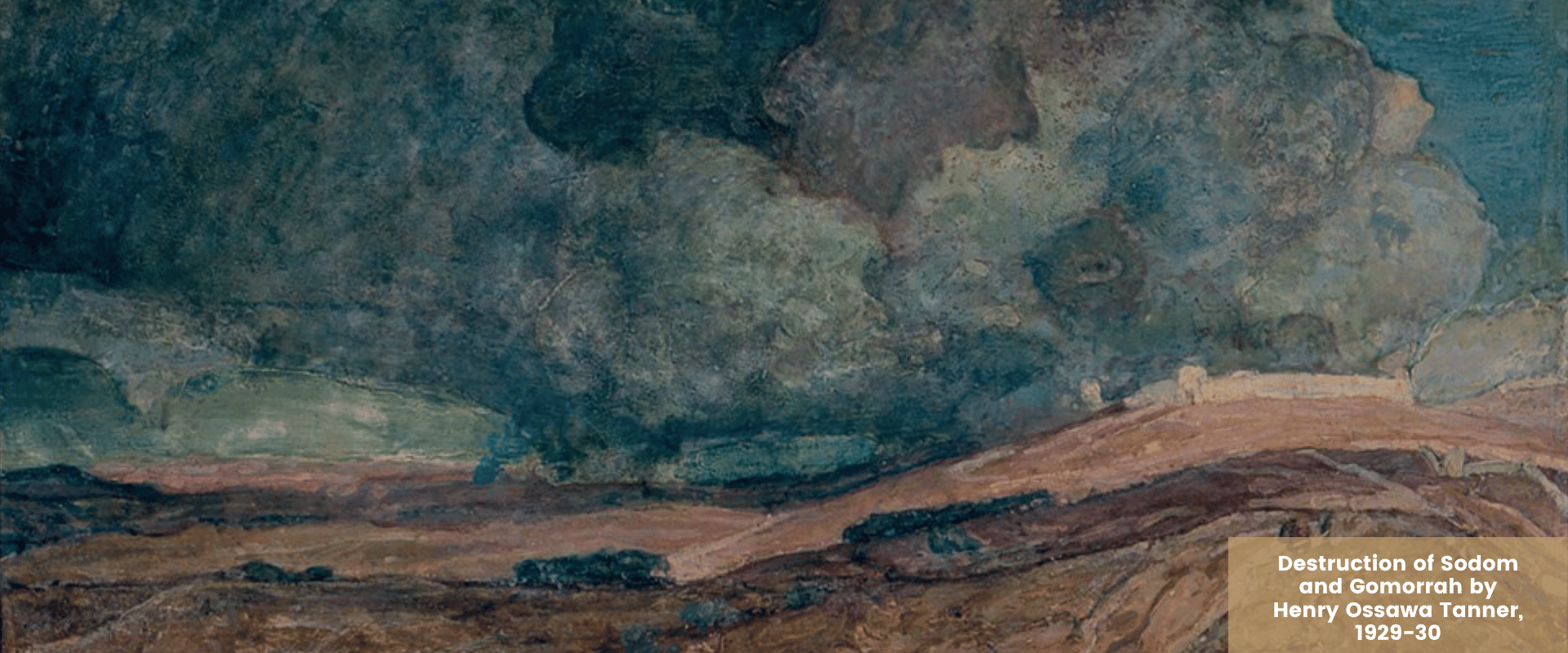
Conclusion
If you've been standing like a pillar of salt, waiting for archaeologists to tell you exactly where Sodom and Gomorrah once stood, I'm afraid this article may have left you disappointed. But that hardly makes the story any less fascinating.
Whether or not these cities existed as described in Genesis, their destruction became one of the most enduring narratives in biblical literature, inspiring centuries of debate about morality, justice, and divine punishment.
As we have seen, even biblical authors interpreted the wickedness of Sodom in different ways, reminding us that ancient texts rarely fit neatly into the categories we impose upon them today.
And while archaeology has yet to provide definitive answers about the cities' historical existence, careful historical investigation can still tell us a great deal about the ancient societies that produced these traditions and the generations that continued to reinterpret them.
NOW AVAILABLE!
Finding Moses: What Scholars Know About The Exodus & The Jewish Law
Riveting and controversial, the "FINDING MOSES" lecture series takes you on a deep dive into the stories of Moses, the exodus, and a whole lot more...