
Who Really Chose the Books of the New Testament? (vIDEO)
Welcome to the home of Episode 194 of the Misquoting Jesus Podcast with Bart Ehrman. Below, you can watch the entire episode, read its description, and see links to related resources.
links mentioned in this episode:
episode description
Disclaimer: We use an AI generation tool for episode summaries.
Why do the 27 books of the New Testament belong in the Bible while countless other early Christian writings do not? This episode explores how the New Testament canon developed, separating historical reality from popular myths about how the Bible came together.
The discussion begins by examining whether the destruction of the Jerusalem Temple in 70 CE shaped early Christianity and influenced the formation of the New Testament. Bart Ehrman explains that while the event dramatically transformed Judaism and likely affected some New Testament authors, it probably had little direct impact on which books were eventually recognized as Scripture.
From there, the conversation traces Christianity's gradual separation from Judaism and asks why Christians retained the Hebrew Bible despite becoming an overwhelmingly Gentile movement. Ehrman explains the competing views of the second century, focusing on Marcion, who rejected the Old Testament entirely, and the opposing belief that the Hebrew Scriptures were essential because they revealed God's long-term plan culminating in Jesus.

Misquoting Jesus
Never Miss an Episode of Misquoting Jesus
Get key insights, episode summaries, and exclusive content you won't hear on the podcast.
By signing up, you agree to receive marketing emails. Unsubscribe anytime.

PLUS: Get our free course:
Did Matthew, Mark, Luke, and John Actually Write the Gospels?
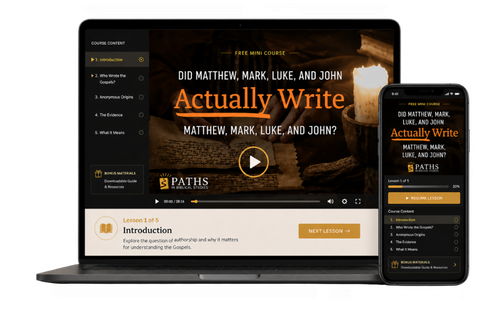
PLUS: Get our free course:
Did Matthew, Mark, Luke, and John Actually Write the Gospels?
The episode then turns to the development of the New Testament canon itself. Ehrman discusses Marcion's influential canon, why some books were accepted while others were rejected, and explains that there was never a church council that officially voted on the 27 books of the New Testament. Instead, the canon emerged gradually through centuries of debate, widespread church usage, scribal copying, and growing consensus about which writings were genuinely connected to the apostles.
Finally, the conversation explores why books such as Revelation remained controversial, whether scholarship identifying forged letters could ever change the canon, and why popular non-canonical works like the Shepherd of Hermas were ultimately left out. Throughout the episode, Ehrman emphasizes that the New Testament was shaped by historical debate and evolving tradition rather than a single decisive moment, leaving listeners with a clearer picture of how Christianity's Scriptures came to take their present form.
ready to dive deeper?
Related Courses offered by Bart Ehrman and/or Paths in Biblical Studies:
Related Articles (Free Resources):
ways to watch or listen to the misquoting jesus podcast:
And many more! Just search for the show title in your favorite podcast app!