
Protoevangelium of James: Why It Was Banned from the Bible

Written by Joshua Schachterle, Ph.D
Author | Professor | Scholar
Author | Professor | BE Contributor
Verified! See our editorial guidelines
Verified! See our guidelines
Date written: July 23rd, 2025
Disclaimer: The views and opinions expressed in this article belong to the author and do not necessarily match my own. - Dr. Bart D. Ehrman
The Protoevangelium—also known as the Protoevangelium of James—is one of the most fascinating and controversial writings from early Christianity. Though it never made it into the official canon of the Bible, this second-century text has profoundly shaped Christian beliefs about Mary, the mother of Jesus.
Why did such a widely read and theologically rich work end up on the margins of Scripture? In this article, I’ll investigate the content, origins, and significance of the Protoevangelium—and why, in the end, it was excluded from the biblical canon.
Analyzing the Protoevangelium Meaning
The word Protoevangelium is made up of two Greek words. The prefix proto is a Greek word meaning “first, earliest form, or source.” The second word, evangelium, is the Greek for “Gospel” or “good news.” Taken together, the word Protoevangelium indicates a pre-Gospel. This is an apt title because the book is basically a late prequel to the birth stories of Jesus from the Gospels of Matthew and Luke.
The Protoevangelium is also called the Protoevangelium of James or even the Gospel of James because the author claims to be Jesus’ brother James. However, scholars have long known that the book was not written until after 150 CE, far too late to have been written by James who lived and died in the 1st century CE according to Bart Ehrman’s book Lost Scriptures: Books that Did Not Make It Into the New Testament.
(Affiliate Disclaimer: We may earn commissions on products you purchase through this page at no additional cost to you. Thank you for supporting our site!)
In his article “Helvidius, Jovinian, and the Virginity of Mary in Late Fourth-Century Rome,” David Hunter notes that the book focuses on Mary, the mother of Jesus, emphasizing her purity and virginity. Because this was a fairly early emphasis of eastern Christianity, David Hunter writes that the book was probably written in Syria and surmises that it might have emerged from a Christian sect there called the Encratites. This sect, and its founder Tatian, believed sex was one of the results of Adam and Eve’s original sin.
In her book Gender and Purity in the Protoevangelium of James, Lily Vuong notes that the graphic physical descriptions of Mary’s pregnancy in the Protoevangelium may indicate it was written to contradict a Christian theological movement called Docetism (from the Greek word dokeĩn meaning “to appear”). Docetists believed the physical form of Jesus was merely an illusion, that he only seemed to be a physical being but was actually merely a spiritual presence. This was deemed a heresy, and Vuong believes that the Protoevangelium of James was an argument against Docetism’s beliefs.

Contents of the Protoevangelium
In The Apocryphal Gospels: Texts and Translations, Bart Ehrman and Zlatko Plese note that the Protoevangelium of James has three sections, although the connection between them is a bit tenuous. The first section, chapters 1-17, is a biography of Mary from her birth to the conception of Jesus. The second section, chapters 18-21, tells the story of the birth of Jesus and argues that Mary remained a virgin even during and after it. The third and final section, chapters 22-24, tells of the death of John the Baptist’s father, Zechariah.
The book begins with Mary’s parents Anna and Joachim, a godly couple who have never been able to have children. Joachim goes into the desert by himself to pray to God for a child while Anna is left alone. However, God hears their prayers, and angels announce to Anna that she will have a child. Mary is then born during the seventh month of Anna’s pregnancy and the narrator calls this event miraculous. As this child is a gift from God, Anna and Joachim dedicate Mary to God, sending her to live in the Temple in Jerusalem at the age of three. To further indicate Mary’s holiness, an angel comes every day to feed her.
In Mary and the Fathers of the Church: The Blessed Virgin Mary in Patristic Thought, Luigi Gambero notes that this story is taken almost verbatim from the story of the prophet Samuel in 1 Samuel 1. This indicates that Mary was not only holy but was also embedded within Jewish religious tradition, indicating a likely Jewish Christian origin for the book.
As Mary approaches puberty, the priests of the Temple tell her she can no longer live there, as her menstruation will make the Temple impure. They therefore find her an elder widower with grown sons to be her guardian. The man is named Joseph. As he is much older than Mary, we are told he has no desire to sleep with her.
At one point, Mary is called to the Temple to help weave a curtain. While engaging in this, the angel Gabriel appears to her, telling her she will conceive and bear Jesus. When Joseph returns, having been away a long time for business, Mary is already visibly pregnant. He accuses her of immoral behavior and worries the priests will believe he is the father.
However, after the priests accuse him, Mary proves her sexual purity with the test of bitter waters. This was an ordeal outlined in Numbers 5:11-31 which was performed on women accused of adultery. In this test, priests made the woman drink a potion. If she could do so without being harmed, she was deemed innocent of adultery.
At this point, the Protoevangelium begins to draw on the story in the Gospel of Luke, saying that there is a Roman census which requires Joseph and the pregnant Mary to travel to Bethlehem. However, Mary goes into labor before they reach the city. Joseph puts Mary in a cave and rushes to find a midwife. When they return, Joseph and the midwife cannot enter the cave, as a cloud covers it and then an intense light shines within it. When everything clears, the two see Mary with the infant Jesus at her breast.
A second midwife comes and insists on examining Mary for signs that she, indeed, gave birth and that, as Joseph has insisted, she was a virgin. However, while this midwife, Salome, is examining Mary and finding her hymen intact, her hand withers as a punishment for her disbelief. She prays for forgiveness and an angel appears, telling her to touch the infant Jesus, upon which her hand is healed.
The Protoevangelium of James continues with details from Matthew and Luke including the Massacre of the Innocents and the visit of the Three Wise Men. It also tells of the death of Zechariah, the priest and father of John the Baptist.
What Is the Significance of the Protoevangelium of James?
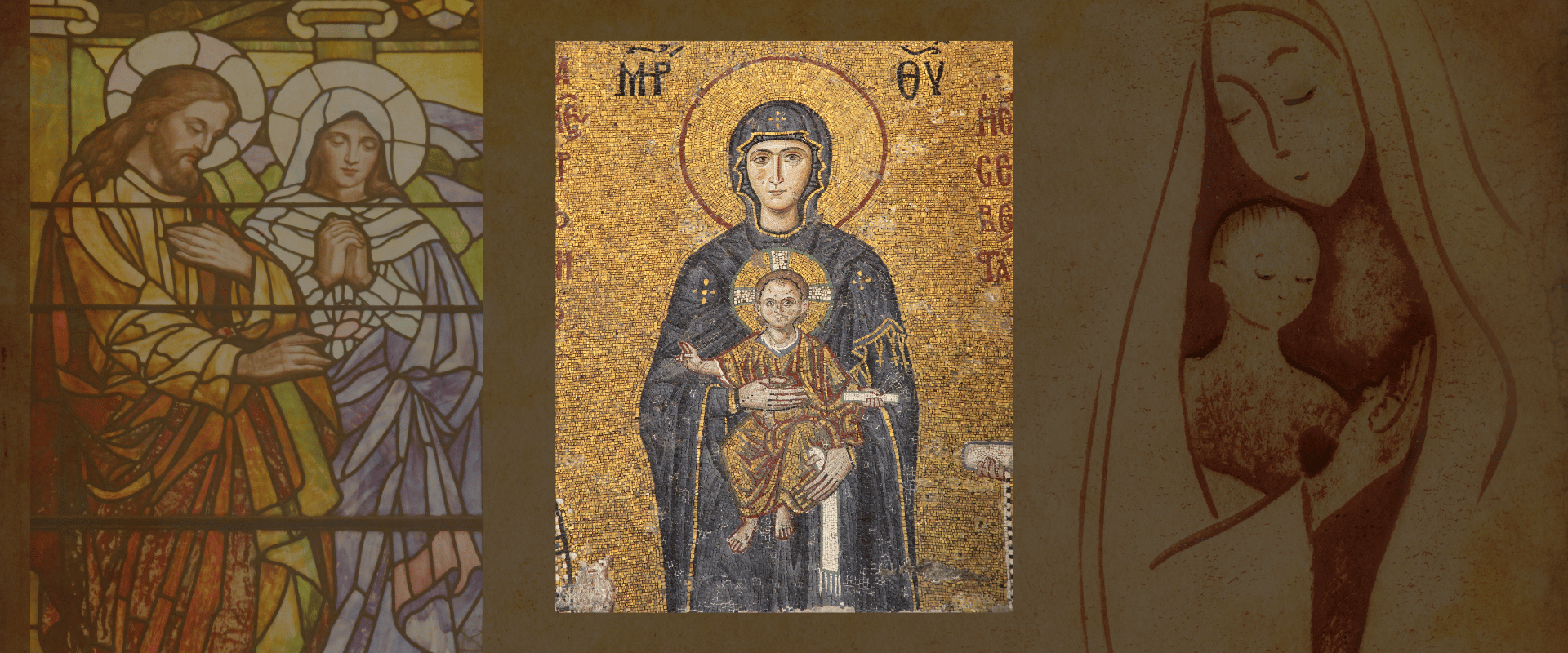
While this book did not make it into the official biblical canon, it introduced some very influential doctrines, some of which continue to this day in some churches. One of these specific to the Roman Catholic Church is called the Perpetual Virginity, and argues that Mary was a virgin before, during, and after the conception and birth of Jesus.
This doctrine was officially ratified by the Second Council of Constantinople in 533 CE. In an official document from 1964 called the Lumen Gentium (“Light of the Gentiles”), Pope Paul VI wrote that Jesus’ birth “did not diminish his mother’s virginal integrity but sanctified it.” The Eastern Orthodox Church agrees, calling Mary the Ever Virgin.
The explanation of Mary’s other children as being from Joseph’s previous marriage is also generally accepted by modern Catholics and Orthodox Christians as an explanation for how the Gospels can say that Jesus had siblings. That is, he had half-siblings, but no full siblings since Mary never had sexual relations with Joseph. Fourth and Fifth-century Christian author Jerome, on the other hand, argued that the siblings listed in the Gospels were actually only Jesus’ cousins.
The Catholic Church also believes in the dogma of the Immaculate Conception of Mary. This has nothing to do with the virginal conception of Jesus, but rather with the conception of the infant Mary. It claims that unlike every other human conception since the original sin of Adam and Eve, Mary’s conception did not entail her inheritance of original sin. In other words, Mary was the only human being since Adam and Eve who was born absolutely pure and stayed entirely free from sin, making her the only one worthy of giving birth to Jesus.
Not all Christians accept this doctrine, however. The Eastern Orthodox church does not believe in the Immaculate Conception since the Bible says Jesus was the only one without sin. While they venerate her highly, members believe Mary was born into sin just like everyone else. Protestants largely believe the same.
Despite the fact that these ideas remain influential, the Protoevangelium was never officially accepted as canon. According to Sharon Betsworth’s book Children in Early Christian Narratives, the above-mentioned Jerome vehemently rejected it as Scripture, and it was then condemned by Pope Innocent I in 405 CE and later by the Gelasian Decree, a pronouncement likely written by Pope Gelasius in 500 CE. In addition, Ehrman and Plese write that the Protoevangelium of James was largely an Eastern Christian document, less popular in Western Christianity and thus more easily rejected as Scripture.
Conclusion
The Protoevangelium, also known as the Protoevangelium of James or the Gospel of James, was a second-century prequel to the birth narratives of Matthew and Luke. It told the story of the conception, birth, and life of Mary leading to the miraculous conception and birth of Jesus.
The story concerns Mary’s parents who are able to miraculously conceive, despite her mother’s barrenness, after praying fervently to God. In imitation of the story of Samuel in the Hebrew Bible, their child Mary is then given to the Temple where she is raised in purity. Rather than marry a man named Joseph, however, Mary is given to him so that he can be her guardian. Since they never marry or have sexual relations, Mary’s conception of Jesus is reinforced as a miracle and Jesus is born under incredible circumstances.
Although the book never became part of the official canon of Scripture, it was highly influential, introducing long-standing church doctrines such as the Perpetual Virginity of Mary and the Immaculate Conception. While these ideas were certainly controversial, they remain as part of Roman Catholic doctrine and the Perpetual Virginity is part of Orthodox doctrine as well. It was also part of the inspiration behind later Marian devotion in the church, which continues to be significant today.