
A New 20-Lecture Online Course
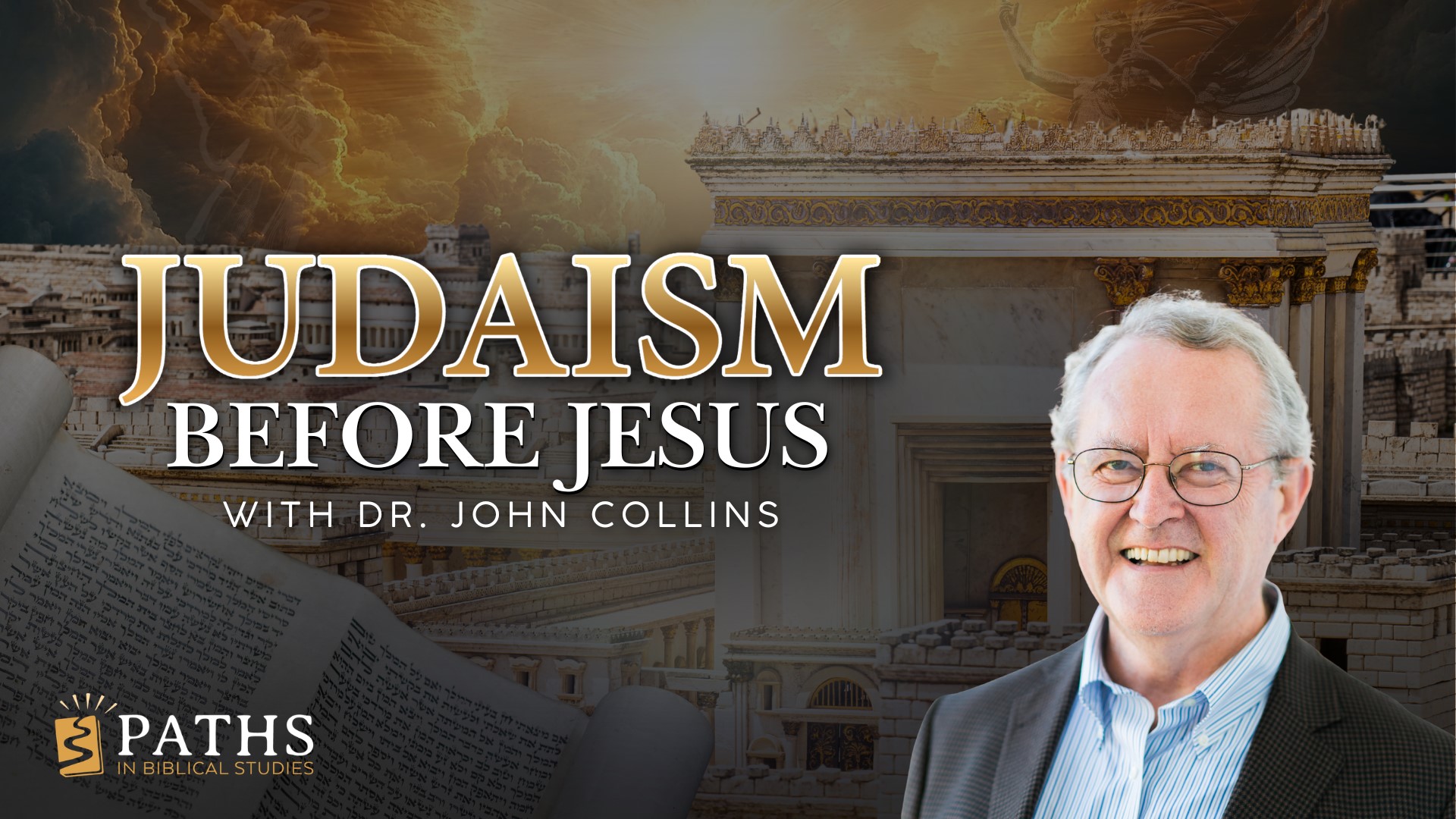
Judaism Before Jesus
The Foundation Stone of Later Judaism and Christianity.
About the Course
Judaism Before Jesus
Five centuries that shaped the world Jesus was born into
A Religion in the Making
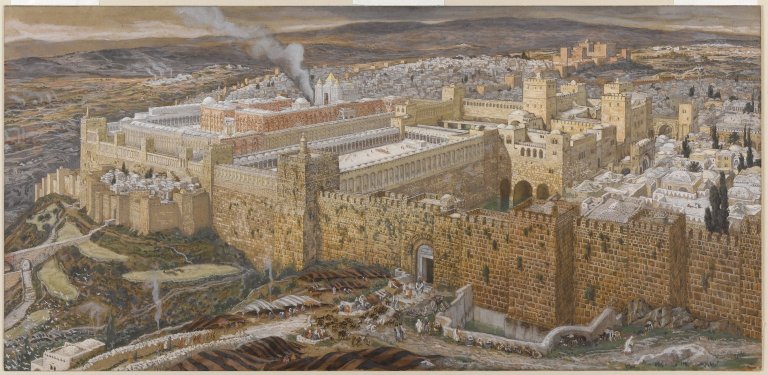
Jews typically trace their origin to ancient Israel and the Exodus from Egypt, yet the name "Judaism" only comes into common usage after the Babylonian Exile in the sixth century BCE. Before the Exile, Judah was an independent kingdom. After it, Judeans lived under a succession of empires: Persian, Greek, and Roman, with a brief interlude of native rule.
This course traces those five centuries of transformation: When the Torah Became Law, the Maccabean revolt, the rise of apocalypticism, the Dead Sea Scrolls, and the messianic expectations that would shape Judaism and Christianity alike.

Your Instructor
John J. Collins
Holmes Professor Emeritus of Old Testament Criticism and Interpretation · Yale University
John J. Collins is Holmes Professor of Old Testament Criticism and Interpretation Emeritus at Yale University, and honorary professor at the University of Pretoria. He received his Ph.D. from Harvard (1972). His most recent books are The Invention of Judaism: Torah and Jewish Identity from Deuteronomy to Paul (University of California, 2017), What Are Biblical Values? (Yale, 2019) and The Rule of the Association and Related Texts (with James Nati; Oxford, 2024).
He served as general editor of the Anchor Yale Bible and Anchor Yale Bible Reference Library (2008–2025). He has been president of the Catholic Biblical Association and of the Society of Biblical Literature, and is a Fellow of the American Academy of Arts and Sciences. He holds honorary degrees from University College Dublin and the University of Zurich, and has received the Burkitt medal for biblical scholarship from the British Academy.
Course Themes
Six Turning Points That Shaped Western History
The five centuries between the Babylonian Exile and the destruction of Jerusalem were anything but static. These are the forces that defined them.
Turning Point I
When the Torah Became Law
Ezra established the Torah of Moses as the official ancestral law of the Jewish people, though widespread observance came considerably later than most people assume.
5th century BCETurning Point II
The Maccabean Revolt
When Antiochus IV tried to suppress the ancestral cult, the Maccabees rose in defense of the law, resisting not Hellenism broadly but its forced and violent imposition.
2nd century BCETurning Point III
The Birth of Apocalyptic Thinking
A new worldview emerged: a higher revelation beyond the Torah, angelic forces operating in history, and the promise of reward or punishment after death. All of it is visible in Enoch, Daniel, and the Scrolls.
2nd century BCE onwardTurning Point IV
The Battle Over the Law
The Maccabean crisis intensified observance of legal detail, leading to bitter disputes about interpretation and the rise of the Pharisees, Essenes, and other sects.
Late 2nd century BCETurning Point V
The Hope for a Messiah
Dormant for centuries, messianic hope revived when the non-Davidic Hasmoneans claimed the kingship. The expectation was a warrior king who would restore the Davidic line, not a suffering servant.
1st century BCETurning Point VI
Jews in a Greek World
Many Jews embraced Greek culture and adapted it creatively. In Alexandria, this culminated in Philo’s synthesis of biblical revelation and Greek philosophy.
3rd century BCE – 1st century CE20
Lectures
10
Weeks
500+
Years of History
What This Course Offers
Why This Course Is Unlike Any Other
Prof. Collins has spent a career mastering this material. Here’s what that means for you.
Learn from the Ancient Sources
Every lecture is grounded in the actual ancient sources: the Torah, the Dead Sea Scrolls, Enoch, Daniel, Philo. No middlemen.
University-Level Scholarship
Prof. John J. Collins is one of the world’s foremost authorities on Second Temple Judaism. Expect the depth of a graduate seminar, delivered in a way anyone can follow.
A Full Unit on the Dead Sea Scrolls
Five full lectures on the Scrolls, covering their discovery, contents, sectarian community, messianic texts, and apocalyptic worldview. No comparable course goes this deep.
Watch at Your Own Pace
Two lectures per week over 10 weeks, a natural rhythm that gives you time to absorb, reflect, and revisit before moving on.
Experience the course on your own schedule. All twenty lectures are available on demand, giving you the flexibility to absorb, reflect, and revisit the material anytime.
The Bridge Between Testaments
Understand the 500 years of Jewish history that explain why early Christians interpreted Jesus the way they did, and why most Jews did not.
Judaism in Its Wider World
From Babylon to Alexandria to Rome, Jewish life was always shaped by empire. This course follows it everywhere it went.
Course At a Glance
Judaism Before Jesus
Dates
May 14 – July 23, 2026Watch Anytime
Lectures
20 Sessions
Duration
10 WeeksSelf-Paced
Instructor
Prof. John J. Collins
Full Schedule
Twenty Lectures, Ten WeeksTwenty Lectures
Two lectures per week, May 14 through July 23, 2026. Click any lecture to read its description.Twenty lectures available on demand. Click any lecture to read its description.
1 Out of the Ashes May 14
What was changed by the Exile? Who had been taken to Babylon and who returned? How important was it to rebuild the Temple, and who should control it? Texts: Ezra 1–6; Haggai.
2 Prophecy after the Exile May 21
Most biblical prophecy criticized kings and rulers. Now the prophets try to shore up institutions, yet radical hopes for lasting change persist before prophecy ultimately loses its authority. Texts: Zechariah 1–6; Isa 24–27; 65–66.
3 Ezra and the Law May 26
Did the Torah derive its authority from a Persian king? Did Ezra have the Torah as we now have it? To what degree did he succeed in making people observe it? Texts: Ezra 7; 9–10; Nehemiah 8; 9; 13.
4 Jews in Diaspora May 28
Life in the Diaspora as reflected in the fictional stories of Esther and Daniel 1–6. How important was the Law? What was the attitude of Jews toward their political overlords and Gentile neighbors? Texts: Esther; Daniel 1–6.
5 Wisdom Literature Jun 2
The wisdom books (Proverbs, Job, Qoheleth) preserve a form of instruction with no explicit reference to Moses or the history of Israel, and yet they too belong to the Jewish tradition. Texts: Prov 3; 6; 8; Job 28; Qoh 1; 12.
6 Ben Sira Jun 4
By the early Hellenistic period, the Torah had iconic importance even in wisdom literature. Ben Sira (c. 180 BCE) is a bridge figure: a sage who identifies Wisdom with the Torah of Moses. Texts: Sirach Preface; 24; 38; 41; 50.
7 The Maccabean Revolt Jun 9
Was the Maccabean revolt a rejection of Hellenistic culture, a reaction to excessive taxation, or a defense of the ancestral laws? The evidence from 1 and 2 Maccabees points in a specific direction. Texts: 1 Macc 1–2; 2 Macc 4–6.
8 The Visions of Daniel Jun 11
While the Maccabees took a pragmatic approach to the crisis, Daniel looks to the heavenly host and anticipates judgment after death. Daniel is the only example of apocalyptic literature in the Hebrew Bible. Texts: Daniel 7–12.
9 The Books of Enoch Jun 16
The books of Enoch, found in Aramaic in the Dead Sea Scrolls, show human life subject to angelic and demonic forces and humans destined for reward or punishment after death. Texts: 1 Enoch 1–36.
10 Apocalypticism as a Worldview Jun 18
A mid-course pause to examine the new worldview that appears in Judaism in the early second century BCE. Apocalypticism is not only about the end of history but also about a world beyond this one and the destiny of people after death.
11 The Hasmoneans Jun 23
Though not noted for their piety, the Hasmonean reign was marked by stricter observance of Jewish distinctives (especially purity laws) and the emergence of the Pharisees, Essenes, and other sectarian movements.
12 The Dead Sea Scrolls Jun 25
The discovery at Qumran provided a trove of primary evidence about Judaism in the last centuries before the destruction of the Temple, shedding new light on the formation of Scripture and the disputes that led to sectarianism.
13 The Sectarian Association Jun 30
The Scrolls provide detailed evidence for a sectarian community with its own admission rituals and rules, almost certainly the Essenes. It existed in two forms: one that accepted marriage, and one that aspired to a higher holiness. Texts: CD 1–3; 7–8; 1QS 5–8.
14 Messianic Expectation Jul 2
Dormant since the Persian period, messianic hope revived when the non-Davidic Hasmoneans assumed the kingship. The Dead Sea Scrolls attest both a royal Davidic messiah and a priestly messiah, and to a lesser degree a prophetic one.
15 Apocalypticism in the Scrolls Jul 7
The Dead Sea Scrolls exhibit a distinctive apocalypticism rooted in Persian dualism: the cosmic conflict of light and darkness. They also reflect a striking belief that sectarian members already mingled with the heavenly host in this life. Texts: 1QS 3–4; The War Scroll.
16 The Egyptian Diaspora Jul 9
An extensive Jewish community flourished in Egypt in the Hellenistic period. It produced a Greek translation of the Hebrew Scriptures (the Septuagint) and an allegorical reading of Scripture culminating in Philo of Alexandria.
17 The Destruction of Alexandrian Judaism Jul 14
The Jewish community in Alexandria, which prospered under the Ptolemies, came under attack and was virtually destroyed after Rome took control of Egypt. Was this ancient antisemitism, or something more complex rooted in the ambiguous position of Jews between Romans, Greeks, and Egyptians?
18 Roman Judea Jul 16
Rome took control of Judea when Pompey entered Jerusalem in 63 BCE. Client kings (most notably Herod the Great) gave way to direct Roman governance. Bitterly resented by some, the historian Josephus described the resistance movement as a “fourth philosophy.”
19 The Revolt against Rome Jul 21
The years leading up to the revolt saw a series of prophetic and quasi-messianic figures emerge in Judea. These figures offer intriguing parallels to the career of Jesus of Nazareth, and help explain why Rome was so alarmed.
20 After the Fall Jul 23
Several apocalyptic texts are dated to the years after the destruction of Jerusalem in 70 CE. We focus on 4 Ezra and 2 Baruch as profound reflections on the fate of Second Temple Judaism, and on what might lie beyond the catastrophe. Texts: 4 Ezra (2 Esdras 3–14); 2 Baruch.
Prepare to Rethink
Common Assumptions This Course Will Challenge
Common Assumption
“Judaism has always been based on Torah observance”
In fact, the Torah played no role in the initial restoration after the Exile. It was established as the official ancestral law by Ezra only in the mid-fifth century BCE, and widespread observance came even later, following the Maccabean revolt.
Common Assumption
“Jews in this period hoped for a coming messiah”
There is little evidence of messianic expectation for several centuries after the Exile. Messianic hope revived largely in opposition to the Hasmoneans, who claimed the kingship without Davidic lineage. For much of the period, Jews hoped for a benign Gentile ruler, not independence.
Common Assumption
“Jewish hope was always about the promised land”
A significant strand of the apocalyptic literature looks beyond this world entirely, to eternal life with the angels in heaven. This otherworldly hope first appears clearly in Daniel and the books of Enoch, and would prove foundational to Christianity.
Common Assumption
“Jews saw Hellenistic culture as a threat”
Many Jews embraced Greek culture enthusiastically and adapted it creatively. The Maccabees themselves resisted not Hellenism broadly, but the specific forced suppression of the temple cult by Antiochus IV. In Alexandria, Judaism and Greek philosophy produced remarkable syntheses.
What You’ll Walk Away With
- Judaism in the Second Temple period was far more diverse than the later rabbinic tradition suggests
- The Dead Sea Scrolls provide our best window into a Judaism that was both deeply law-observant and apocalyptic
- The belief in a world beyond and reward after death was not a fringe idea; it was mainstream in many Jewish circles
- Understanding why most Jews did not accept Jesus as messiah illuminates the origins of Christianity itself
- Some of the most important Jewish texts of this period were preserved not by rabbis, but by Christians
Exclusive Bonuses
Included with Your Course
WITH
COURSE
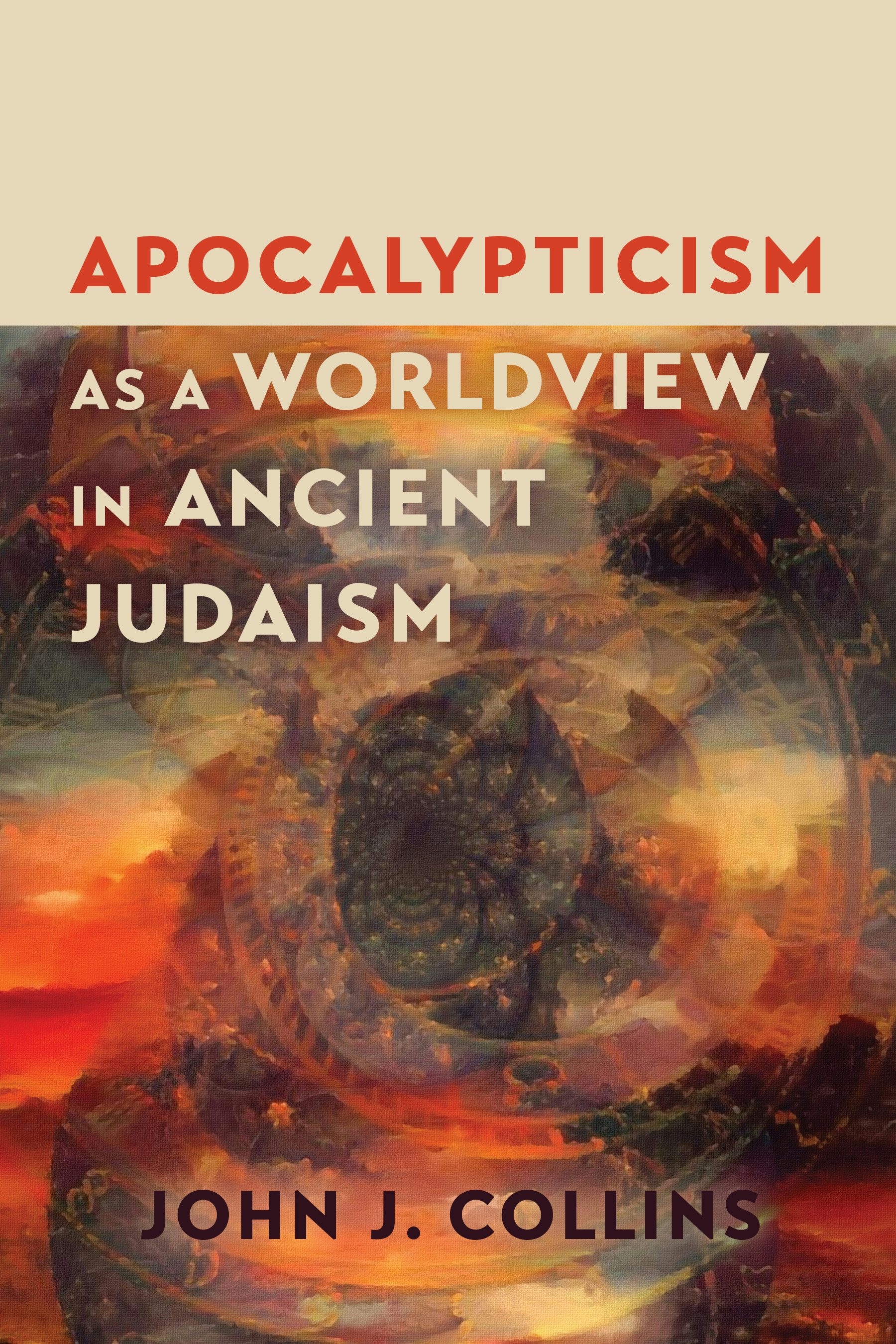
Apocalypticism as a Worldview in Ancient Judaism
Your enrollment includes a free copy of Prof. Collins’ brand-new book, published by Eerdmans in June 2026. Written as a companion to this very course, it explores how apocalyptic thought shaped ancient Jewish communities during the Hellenistic period.
Collins examines the defining features of this worldview: the impulse to grasp history in its entirety, the expectation that history as we know it will end, and the conviction that questions of mortality and transcendence reach beyond any single earthly crisis. 192 pages · Paperback.
Offer valid in U.S. only. To be shipped in June 2026.*
Lecture Slides
Download Prof. Collins’ full slide decks for all twenty lectures, ideal for review, note-taking, or sharing with a study group.
Full Transcripts
Searchable transcripts of every lecture, perfect for quoting, deeper study, or following along if English is not your first language.
Audio Downloads
MP3 downloads of every lecture. Listen on your commute, during a walk, or whenever you’re away from a screen.
4 Comprehension Quizzes
Four quizzes spread across the course to help you consolidate what you’ve learned and test your grasp of the key texts, figures, and arguments.
Bonus Lecture: Lesson 1 of The Hebrew Bible
The first lesson of Dr. Joel Baden’s companion course, The Hebrew Bible, offered as an exclusive preview for Judaism Before Jesus students.
Q&A Recording With Each Lesson
Gain deeper insights with dedicated Q&A recordings where Prof. Collins addresses common questions and complex topics alongside every lesson.
Certificate of Completion
Upon finishing the course, you’ll receive a digital certificate of completion to commemorate your study and accomplishment.
*Purchasers outside the US will get to choose any course in our catalog valued at $24.95 or less in lieu of the book.
$1 from every registration is donated to charity: water, bringing clean water to people in need.
2 ways to purchase this course
Stand-Alone Purchase
Enjoy University-level learning at a fraction of the cost
$499 Value
$295
Included in Your Purchase: Lifetime Access to This University-Level Course With:

Access this Course PLUS Every Course in Our Vault (250+ Hours of Biblical Learning!)
John Collins' latest book not included
Frequently Asked Questions
Everything You Need to Know
How many lectures will be presented?
Prof. John J. Collins will present twenty lectures over ten weeks, from May 14 to July 23, 2026. Two lectures are released each week, giving you time to absorb the material before moving on.
How many lectures are included?
Prof. John J. Collins presents twenty comprehensive lectures. All lectures are available on demand, giving you the flexibility to watch at your own pace.
How will I join the course?
Once you have purchased the course, you will receive instructions by email to log on to our online course platform, ThriveCart Learn. Once logged in, you will find all twenty lectures available to watch on demand. If you are a member of Biblical Studies Academy (BSA), your access will also be available inside the community.
What if I can’t watch the lectures right away?
No problem at all. All lectures are available on demand and will remain accessible beyond the end of the course. If life gets in the way, simply pick up where you left off. There is no requirement to watch on any particular schedule.
Do I have lifetime access?
Yes, all lectures are available on demand with lifetime access. You can watch them on any device and learn at your own pace whenever you choose.
Do I need any prior knowledge of Judaism or the Bible?
No prior knowledge is required. Prof. Collins introduces all the relevant texts and historical context as the course unfolds. Whether you are coming in fresh or already have some background in biblical studies, you will find the course genuinely rewarding.
Will subtitles or captions be available?
Yes. All lectures include closed captions. Full transcripts are also included with the course, so you can follow along in text or search for specific passages.
What payment types are accepted?
We accept PayPal and all major credit cards.
Do you offer a money-back guarantee?
Absolutely! If you don’t love the course, send us an email at [email protected] and we will refund 100% of your investment. You will have 30 days from the date of purchase.
Is this budget-friendly?
The regular price for university-level courses of this caliber is typically $2,000 to $4,000. While we do not offer college credit, this course delivers the same depth and rigor at a fraction of the cost, making world-class biblical scholarship accessible to everyone.

Contact
1204 Fayetteville Street #1068, Durham, NC, 27707
(602) 529-8162
Social
Copyright 2026 Bart Ehrman Professional Services, all rights reserved.