
NEW 20-LESSON COURSE IN SESSION NOW!
university-Level Insight into Christianity's first 500 years
lifetime access
With purchase of the standalone course
budget friendly
Skip the high cost of university tuition!
certificate of completion
Personalized PDF certificate
How Did Early Christianity Become What It Is Today?
Jesus proclaimed that God was about to redeem the world.
Paul believed that all Israel would be saved.
Christianity emerged in a world full of gods.
By the fifth century, Christianity taught that most of humanity was condemned, the Jews were damned, and only one God was allowed.
The first followers of Jesus did not share a single set of beliefs, practices, or scriptures. It is a tangled web of diverse beliefs, competing communities, and evolving traditions. Over the course of five centuries, Christianity changed as it moved from Jewish communities in Judea through the Roman Empire.
In this course, you’ll explore how those changes happened, why so many early Christian groups disagreed with one another, and how one version of Christianity eventually came to dominate the rest.
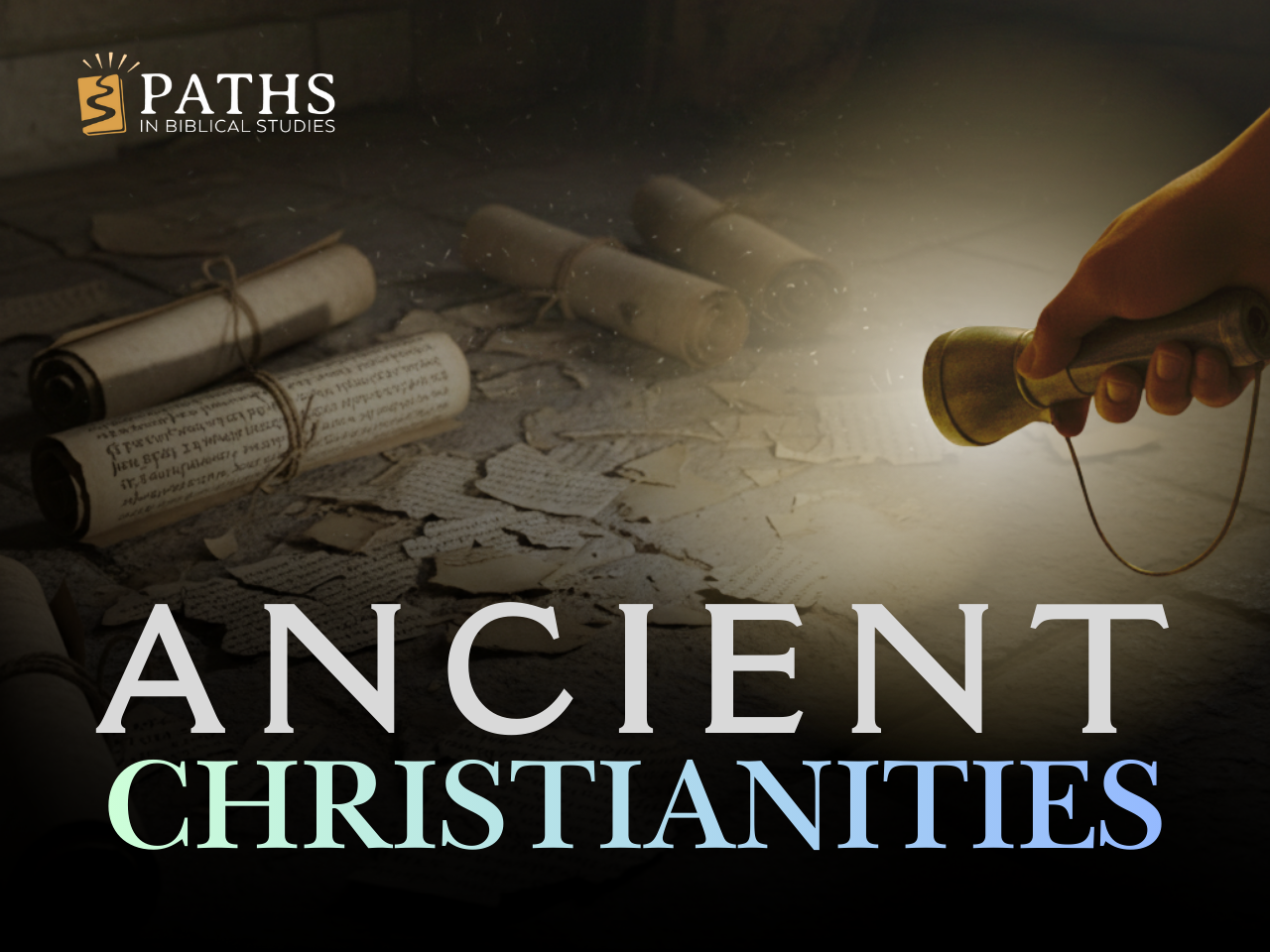
Ancient Christianities
20 Lectures: January 27th - April 23rd
learn How Early Christians Read, understood, and Argued About Scripture
 Register now to Attend Live and ask dr. Fredriksen your burning questions!
Power, Politics, and the Making of Christian Orthodoxy
About Dr. Paula Fredriksen
Aurelio Professor of Scripture emerita at Boston University
Paula Fredriksen, a fellow of the American Academy of Arts and Sciences, is Aurelio Professor of Scripture emerita at Boston University. In 2009, she became a member of the Department of Comparative Religions at the Hebrew University of Jerusalem, which awarded her an honorary doctorate in 2018. An historian of ancient Christianity, she also writes on pagan-Jewish-Christian relations in the Roman Empire. Among her recent publications are Paul: The Pagans’ Apostle and When Christians Were Jews. Her most recent study, Ancient Christianities: The First Five Hundred Years, has just appeared from Princeton University Press (2024). She also edited an anthology titled Paul within Paganism (October 2025).
BY THE END OF THIS COURSE, YOU'LL BE ABLE TO...
You'll come away with a richer, more diverse picture of early Christianity.
"Ancient christianities: from jesus to augustine"
course syllabus
semester length: 20 Lectures - starts Jan 27th
Rome inherited a world shaped by Alexander the Great (d. 323 BCE). It was a world full of various ethnic groups, thus, a world full of gods. These two introductory lectures will establish the historical and cultural context for our topic, tracing the ways that pagans and Jews interacted especially within the Empire’s fundamental religious institution, the ancient city.
Rome inherited a world shaped by Alexander the Great (d. 323 BCE). It was a world full of various ethnic groups, thus, a world full of gods. These two introductory lectures will establish the historical and cultural context for our topic, tracing the ways that pagans and Jews interacted especially within the Empire’s fundamental religious institution, the ancient city.
We begin our historical journey with the figure of Jesus of Nazareth and the movement that formed around him. We will explore the transition from the historical Jesus to the Christ of faith, examining the earliest Gospel accounts. Then, we turn to Paul, the "Pagans' Apostle," to understand his pivotal role in spreading this Jewish message to the Gentile world and the theological foundations he laid for the nascent church.
We begin our historical journey with the figure of Jesus of Nazareth and the movement that formed around him. We will explore the transition from the historical Jesus to the Christ of faith, examining the earliest Gospel accounts. Then, we turn to Paul, the "Pagans' Apostle," to understand his pivotal role in spreading this Jewish message to the Gentile world and the theological foundations he laid for the nascent church.
As the movement grew, early Christians grappled with their relationship to the Jewish scriptures and the nature of God. We will examine the radical ideas of Marcion, who proposed a complete break from the "Old Testament" God, and the Gnostic teachers like Valentinus and Ptolemy, who envisioned a higher, spiritual reality beyond the creator of this world. These controversies were crucial in spurring the formation of the New Testament canon and orthodox theology.
As the movement grew, early Christians grappled with their relationship to the Jewish scriptures and the nature of God. We will examine the radical ideas of Marcion, who proposed a complete break from the "Old Testament" God, and the Gnostic teachers like Valentinus and Ptolemy, who envisioned a higher, spiritual reality beyond the creator of this world. These controversies were crucial in spurring the formation of the New Testament canon and orthodox theology.
Defining "orthodoxy" often meant defining what it was not. We will study Justin Martyr's Dialogue with Trypho to see how early Christians constructed their identity in opposition to Judaism, claiming the title of the "True Israel." We will also look at Irenaeus of Lyons, who cataloged and refuted various "heresies," establishing the concepts of apostolic succession and the rule of faith as safeguards for the emerging catholic tradition.
Defining "orthodoxy" often meant defining what it was not. We will study Justin Martyr's Dialogue with Trypho to see how early Christians constructed their identity in opposition to Judaism, claiming the title of the "True Israel." We will also look at Irenaeus of Lyons, who cataloged and refuted various "heresies," establishing the concepts of apostolic succession and the rule of faith as safeguards for the emerging catholic tradition.
The early church was a community fueled by charismatic power and the expectation of the end times. We will explore the role of prophecy and the apocalyptic worldview that permeated early Christian thought. Furthermore, we will examine the phenomenon of martyrdom, reading the moving accounts of Perpetua and Felicitas, to understand how the willingness to die for the faith became a powerful tool for identity formation and resistance against the Roman state.
The early church was a community fueled by charismatic power and the expectation of the end times. We will explore the role of prophecy and the apocalyptic worldview that permeated early Christian thought. Furthermore, we will examine the phenomenon of martyrdom, reading the moving accounts of Perpetua and Felicitas, to understand how the willingness to die for the faith became a powerful tool for identity formation and resistance against the Roman state.
How did early Christians view the physical body? We will investigate the rise of asceticism, from Paul's teachings on celibacy to the radical renunciation of family and society found in the Acts of Paul and Thecla and the early monastic movement. We will discuss how the discipline of the body became a path to spiritual perfection and how these practices offered new roles and agencies, particularly for women, within the church.
How did early Christians view the physical body? We will investigate the rise of asceticism, from Paul's teachings on celibacy to the radical renunciation of family and society found in the Acts of Paul and Thecla and the early monastic movement. We will discuss how the discipline of the body became a path to spiritual perfection and how these practices offered new roles and agencies, particularly for women, within the church.
The conversion of the Emperor Constantine marked a seismic shift in the history of Christianity. We will trace the transformation of a persecuted sect into an imperial religion, examining the political and theological consequences of this alliance. We will also discuss the "Arian" controversy, the Council of Nicaea, and the brief pagan revival under Julian the Apostate, analyzing how the church adapted to its new status as a pillar of Roman power.
The conversion of the Emperor Constantine marked a seismic shift in the history of Christianity. We will trace the transformation of a persecuted sect into an imperial religion, examining the political and theological consequences of this alliance. We will also discuss the "Arian" controversy, the Council of Nicaea, and the brief pagan revival under Julian the Apostate, analyzing how the church adapted to its new status as a pillar of Roman power.
Origen of Alexandria stands as the intellectual giant of the pre-Nicene church. We will delve into his masterwork, On First Principles, to understand his grand synthesis of Christian scripture and Greek philosophy. We will explore his daring speculations on the pre-existence of souls, the nature of the Godhead, and the ultimate restoration of all things, seeing how he established the framework for future theological debate.
Origen of Alexandria stands as the intellectual giant of the pre-Nicene church. We will delve into his masterwork, On First Principles, to understand his grand synthesis of Christian scripture and Greek philosophy. We will explore his daring speculations on the pre-existence of souls, the nature of the Godhead, and the ultimate restoration of all things, seeing how he established the framework for future theological debate.
Augustine of Hippo's City of God is a monumental response to the crisis of the Roman Empire's collapse. We will read key sections of this masterpiece to understand Augustine's theology of history, his doctrine of original sin, and his distinction between the City of God and the City of Man. We will also examine his complex views on the Jewish people and the role of the church in a fallen world.
Augustine of Hippo's City of God is a monumental response to the crisis of the Roman Empire's collapse. We will read key sections of this masterpiece to understand Augustine's theology of history, his doctrine of original sin, and his distinction between the City of God and the City of Man. We will also examine his complex views on the Jewish people and the role of the church in a fallen world.
In our final sessions, we conclude our study of Augustine with his vision of the end times, the resurrection of the body, and the eternal blessedness of the saints. We will then look at the "end" of ancient Christianity as the Western Empire disintegrated, discussing how the church, through its bishops and the cult of the saints, survived the political collapse to become the foundation of medieval Christendom.
In our final sessions, we conclude our study of Augustine with his vision of the end times, the resurrection of the body, and the eternal blessedness of the saints. We will then look at the "end" of ancient Christianity as the Western Empire disintegrated, discussing how the church, through its bishops and the cult of the saints, survived the political collapse to become the foundation of medieval Christendom.
When you enroll in this course, you will also receive a bonus course
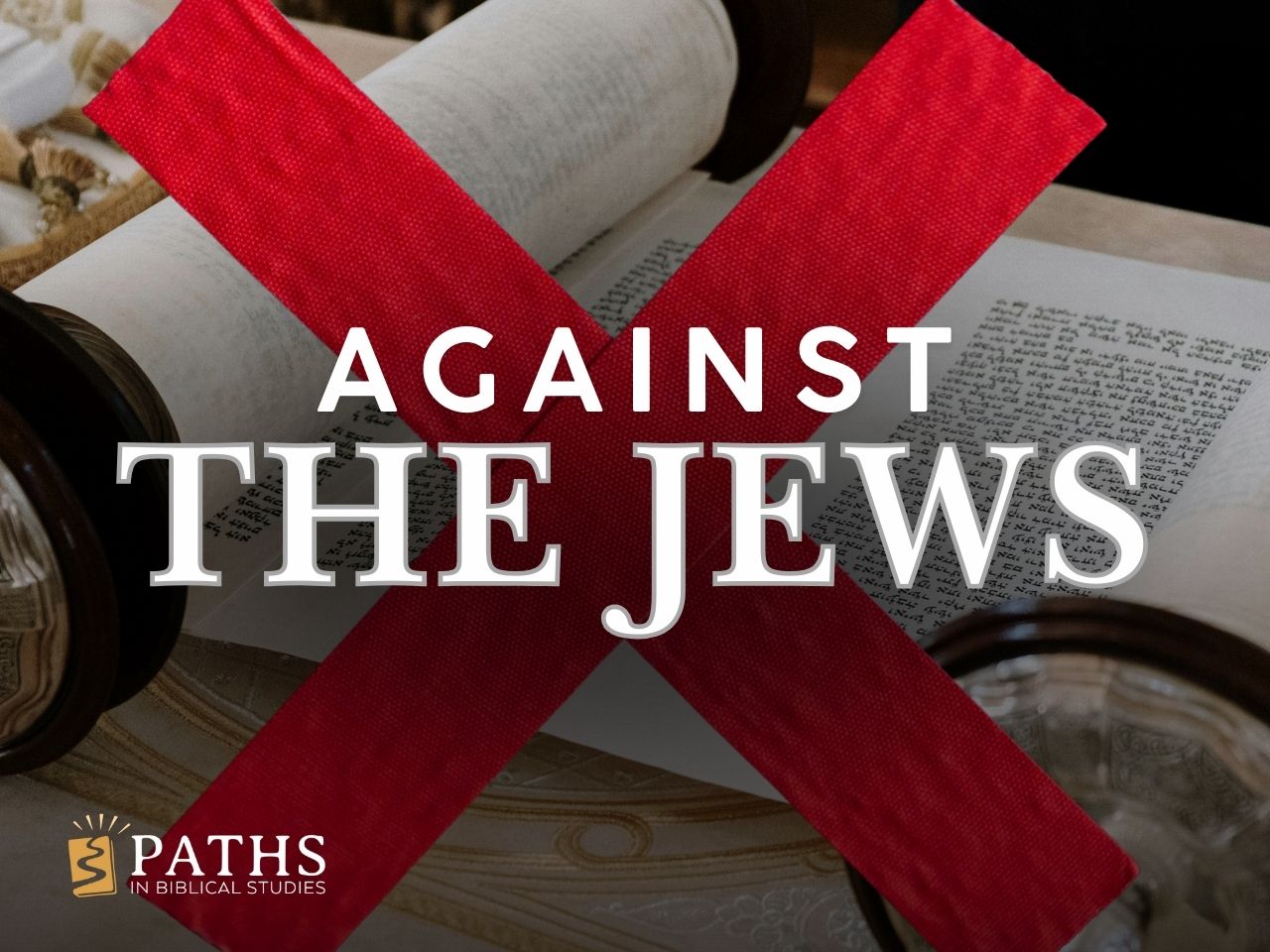
Against the Jews
World-class biblical scholarship
without the price of university tuition
2 ways to purchase this course
Stand-Alone Purchase
Enjoy University-level learning at a fraction of the cost
$1499 Value
$295
Included in Your Purchase: Lifetime Access to This University-Level Course With:

Access this Course PLUS Every Course in Our Vault (250+ Hours of Biblical Learning!)
then special rate $49.95/month
FAQ
The regular price for semester-length university-level courses is typically $2,000 to $4,000. While we do not offer college credit, we value this course at $1499. However, you can now purchase the full course, including lifetime access to ALL 28 lectures, Q&As, quizzes, and bonus materials, for the SPECIAL 20-lecture price of just $295 Early-Bird price of just $229.
Plus, you’ll have the option to attend the live recordings of each lecture, running from Jan 27 to Apr 23, 2026, making it an interactive and engaging experience that mirrors the real-time learning of attending in-person university classes.
If watching Stand-Alone, replays of all the lectures will be posted within one week of the live recording our course platform, ThriveCart. If watching in BSA, the replay will be available within a day or two of the live recording inside of the community.
Dr. Paula Fredriksen will present twenty 50-minute lectures between Jan 27th and Apr 23rd, 2026.
Yes, we will be using Zoom Webinar which allows you to attend by desktop computer, tablet, or cell phone.
The Zoom Webinar conference software only allows the presenters to speak. Attendees are hidden during the lecture recording so you don't need to worry about having a camera or being seen.
Once you have purchased your course you will receive instructions via email to log on to our online course platform, ThriveCart. Once logged in you will find your Zoom link for each day of the live online lectures. We will also email you with the Zoom link and reminders. If you're in BSA, you will also get email reminders and event reminders inside the community.
Zoom has a variety of options for creating closed captioning in webinars you attend, which provides subtitles of the spoken in-meeting communications. This may be used for participants to easily follow the conversations or to meet accessibility requirements.
We accept Paypal and all major credit cards.
Absolutely! If you don't love the course send us an email at [email protected] and we will refund 100% of your investment. You will have 30 days from the date of purchase or in the case of BSA, 30 days from the date of your first payment.
Live Recording Jan 27th - Apr 23rd
Virtual Class
Fraction of the Price for University Class
Completion Certificate
Listen on all devices

Contact
1204 Fayetteville Street #1068, Durham, NC, 27707
(602) 529-8162
Social
Copyright 2026 Bart Ehrman Professional Services, all rights reserved.