A 5-Day Live Course
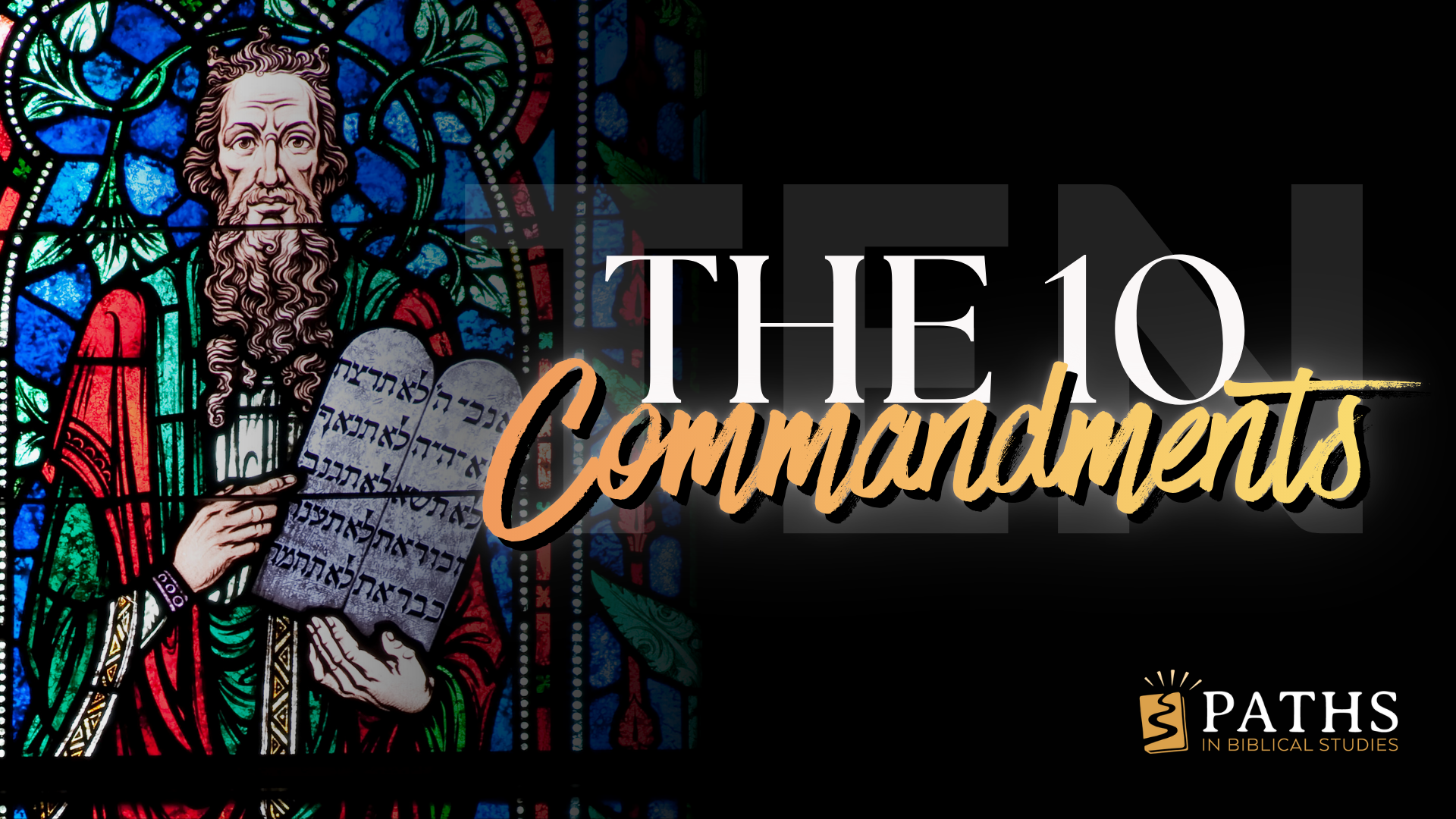
They're the most famous laws in the Bible. They're also not as old as we've assumed, don't mean what we think they mean, and underwent a seismic transformation two millennia ago.
About the Course
Beyond the Stone Tablets
Perhaps the Most Famous Passage in the Entire Bible
For Christians, for nearly two thousand years, these have been the only Old Testament laws still considered binding.
They are the pinnacle of biblical law and divine revelation. And…what if they weren't?
This course will explore their history: where and when they came from, what they probably meant when first created (which is different from what most people think!), and how they became so central to our culture today. We'll closely examine the text, explore the historical context, and trace how interpretation has changed over time. For anyone who takes this course, the Ten Commandments will never look the same.
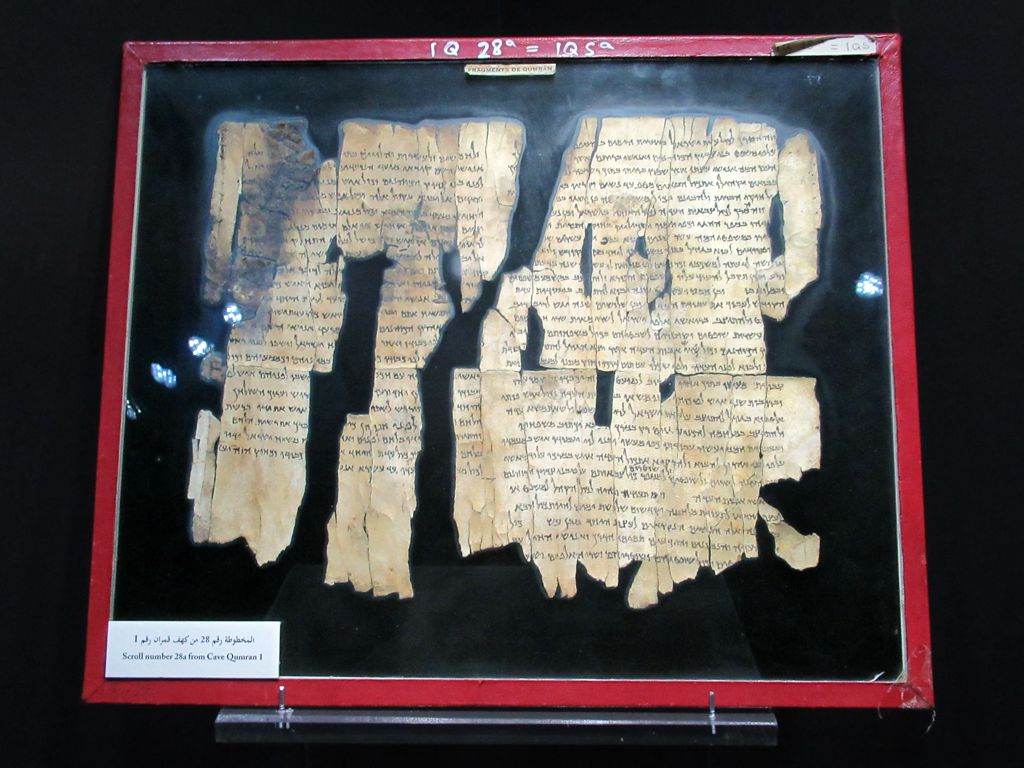



Dead Sea Scrolls
Code of Hammurabi
Mount Sinai, Egypt
Rembrandt — Moses with the Ten Commandments
Your Instructor
Joel Baden
Professor of Hebrew Bible, Yale Divinity School
Joel Baden is a leading scholar of the Hebrew Bible and the Pentateuch. His research focuses on the composition of the Torah, the history of biblical interpretation, and the intersection of the Bible and modern culture.
What You'll Explore
Five Days of Discovery
From the original context of biblical law to the legacy that shaped Western civilization
Literary Sleuthing
Compare the two versions in Exodus and Deuteronomy, discover why they differ, and uncover the narrative role they play in the story of the golden calf.
Historical Context
Examine what each commandment originally meant — from "taking the Lord's name in vain" to the surprising reality behind "thou shalt not kill" and "you shall have no other gods before me."
History of Interpretation
Trace how an important early Jewish text became the cornerstone of Christian ethics — and how that transformation changed their meaning for two millennia.
Prepare to Rethink
Common Assumptions This Course Will Challenge
Common Assumption
“They're the oldest laws in the Bible”
The Ten Commandments aren't as old as we've always assumed. Their origins and dating reveal a far more complex — and more interesting — story than most people realize.
Common Assumption
“They mean what we think they mean”
"Thou shalt not kill," "taking God's name in vain," even "honor your father and mother" — none of these meant what we take them to mean today.
Common Assumption
“They were always central to the faith”
The evidence suggests the Ten Commandments weren't well known outside the stories in which they appear. Their elevation to supreme status happened much later than most people think.
What You'll Walk Away With
- The Ten Commandments aren't the oldest or most central laws of the Bible
- They didn't originally mean what we take them to mean today
- Their transformation into a Christian symbol happened two millennia ago — and changed what we've understood them to be ever since
- The ability to read these famous passages with fresh, historically informed eyes
What Students Say About Dr. Baden
From His Course on the Hebrew Bible
Dr. Baden is an exceptional lecturer. The course provides an outstanding and readily understandable overview of ancient Israelite literature in its historical and cultural context. Dr. Baden is one of those rare scholars able to make difficult material accessible to non-scholars.— MJ Mills
Joel's insight into the Hebrew text was mind-blowing — he approached it not as a rigid system of belief, but as stories told around a campfire. That perspective made the material come alive.— Alban Vesprey
I loved the course. Dr. Baden was both very informative and very entertaining. The man has a great sense of humor. He gave me insights into the Hebrew Bible that I had completely missed despite having read it numerous times.— Hebrew Bible student
Dr. Baden makes even the most banal books of the Bible come alive. Rather than a pedantic approach, he provides nuanced insights that make his lectures entertaining and informative.— Keith
I never thought Leviticus and Deuteronomy could really be that interesting. Dr. Baden is a very compelling presenter. My only disappointment is that this was only a semester course!— Tony
It is a real joy to listen to his easygoing but insightful lectures!— Anders Willart, Sweden
If you've never studied the Bible from outside a faith setting, you are in for a mind-opening experience. If you've already read books on the Hebrew Bible, this course is still fresh, vibrant, and fascinating. Superb!— Hebrew Bible student
Testimonials from Dr. Baden's course on The Hebrew Bible, offered through the Paths in Biblical Studies.
Course Details
Dates
April 19–23, 2026
Time
4:00–6:00 PM ET
Format
Live via Zoom
Sessions
10 Lectures + Daily Q&A
Full Schedule
Five Days, Ten Lectures
Each day includes two 50-minute lectures, a short break, and a 15-minute Q&A
1 Day Apr 19 What Are the Ten Commandments & The Twenty Commandments
4:00 – 4:50 PM
What Are the Ten Commandments
Setting the stage: the basic assumptions most people bring to the Ten Commandments, and the kinds of questions that lead to a radically different picture.
5-minute break
4:55 – 5:45 PM
The Twenty Commandments
The Ten Commandments appear twice in the Pentateuch — once in Exodus, once in Deuteronomy — and they aren't identical. Comparing the two versions is fundamental to understanding their origins.
Q&A · 5:45 – 6:00 PM
2 Day Apr 20 The Story & Status of the Ten Commandments
4:00 – 4:50 PM
What the Ten Commandments Do in the Story
Usually isolated from their narrative context, the commandments actually play a specific role in the story — including their surprising connection to the golden calf.
5-minute break
4:55 – 5:45 PM
The Status of the Ten Commandments
Were they really the famous, central set of laws everyone assumes? We'll examine the evidence — and discover they don't seem to have been well known outside the stories in which they appear.
Q&A · 5:45 – 6:00 PM
3 Day Apr 21 The First Commandment(s), the Divine Name & the Sabbath
4:00 – 4:50 PM
The First Commandment(s)
Often read as a great monotheistic statement, the opening commandments are nothing of the sort. We'll explore what these verses are really about and how they set the tone for everything that follows.
5-minute break
4:55 – 5:45 PM
The Divine Name and the Sabbath
Two classics that didn't mean back then what we think they mean now. What did it really mean to "take God's name in vain"? And what was the Sabbath originally imagined to be?
Q&A · 5:45 – 6:00 PM
4 Day Apr 22 Honoring Parents, Killing & the Rest of the Commandments
4:00 – 4:50 PM
Honoring Parents and…Killing
Two commandments that seem simple — but few things are as simple as they look. What did "honor your father and mother" mean in ancient Israel? Is the prohibition really on all killing?
5-minute break
4:55 – 5:45 PM
The Rest of the Commandments
Adultery, theft, false witness, and coveting. Why did some interpreters insist "theft" meant "kidnapping"? And how can you make it a crime to covet something?
Q&A · 5:45 – 6:00 PM
5 Day Apr 23 Early Judaism, Christianity & Conclusion
4:00 – 4:50 PM
The Ten Commandments in Early Judaism and Christianity
How the commandments went from an important Jewish text to the cornerstone of Christian ethics — and how that two-thousand-year-old shift reshaped their meaning for everything that followed.
5-minute break
4:55 – 5:45 PM
Conclusion
Stepping back to retell the story of the Ten Commandments with all the insights gained over the course — and thinking about how we might understand them differently now.
Q&A · 5:45 – 6:00 PM
Exclusive Bonuses
Included with Your Course Purchase
WITH
PURCHASE
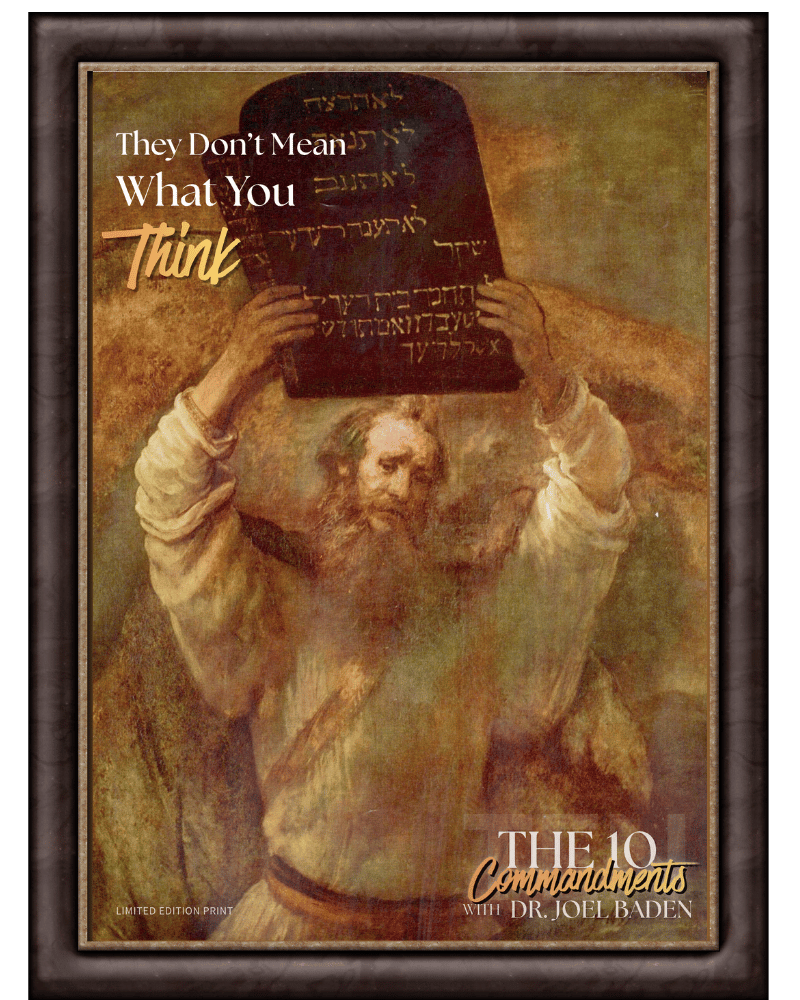
Ten Commandments Print
As a special bonus, you'll receive an exclusive 11x14 fine art print featuring Rembrandt's Moses with the Ten Commandments. Printed on gallery-grade, 220gsm matte paper, this piece is designed to look and feel like something you'd find in a museum shop.
Frame not included. Offer valid in U.S. only.*
Valid through April 18th.
Five 15-Min Q&A
Enjoy lively recorded sessions where audience questions spark rich discussion, history, and tradition.
Lecture Slides
Download professionally designed slides highlighting the main arguments for easy review.
Transcripts
Full searchable transcripts of all lectures and Q&A sessions, ideal for quoting, note-taking, or deeper study.
Audio Downloads
Listen on the go with downloadable MP3s of every lecture and Q&A, perfect for commutes or study breaks.
Bonus Lesson
Enjoy Lesson 1 of "Rise and Fall of Biblical Israel" by Dr. Joel Baden, expanding your understanding of the historical context.
*Purchasers outside the US will get to choose any course in our catalog valued at $24.95 or less in lieu of the print.
2 ways to purchase this course
Stand-Alone Purchase
Enjoy University-level learning at a fraction of the cost
$499 Value
$119.95 $99.95
Early-Bird Pricing Through 4/11
Included in Your Purchase: Lifetime Access to This University-Level Course With:
Access this Course PLUS Every Course in Our Vault (250+ Hours of Biblical Learning!)
then special rate $49.95/month
Limited Edition 10 Commandments Print not included
Frequently Asked Questions
Everything You Need to Know
How many lectures will be presented?
Dr. Joel S. Baden will present ten 50-minute lectures over five days, from April 19 to April 23, 2026. Each day features two lectures with a short break in between, plus a 15-minute live Q&A session.
How will I join the course?
Once you have purchased your course you will receive instructions via email to log on to our online course platform, ThriveCart. Once logged in you will find your Zoom link for each day of the live online lectures. We will also email you with the Zoom link and reminders. If you're in BSA, you will also get email reminders and event reminders inside the community.
What if I can't attend the live lectures?
If watching stand-alone, replays of all the lectures will be posted within one week of the live recording on our course platform, ThriveCart. If watching in BSA, the replay will be available within a day or two of the live recording inside of the community.
Will subtitles or captions be available?
Zoom has a variety of options for creating closed captioning in webinars you attend, which provides subtitles of the spoken in-meeting communications. This may be used for participants to easily follow the conversations or to meet accessibility requirements.
What payment types are accepted?
We accept PayPal and all major credit cards.
Do you offer a money-back guarantee?
Absolutely! If you don't love the course, send us an email at [email protected] and we will refund 100% of your investment. You will have 30 days from the date of purchase.
Is this budget-friendly?
The regular price for university-level courses of this caliber is typically $2,000 to $4,000. While we do not offer college credit, this course delivers the same depth and rigor at a fraction of the cost — making world-class biblical scholarship accessible to everyone.

Contact
1204 Fayetteville Street #1068, Durham, NC, 27707
(602) 529-8162
Social
Copyright 2026 Bart Ehrman Professional Services, all rights reserved.